Needle Felting Realistic Animals: Beginner’s FAQ & Guide 🐾


Do you ever look at beautifully crafted needle-felted animals and think “How do they make it look so lifelike?”.

Whether you’re brand new to felting or have a few projects under your belt, creating realistic animals can feel both exciting and overwhelming. This quick guide is here to answer the questions I get asked most often—packed with practical tips, essential tools, and links to my most-loved tutorials that will help you sculpt animals with personality and precision.

1. 🧶 What wool should I use for realistic animal sculptures?

Have you ever felt overwhelmed with all those wool options and not knowing where to start?

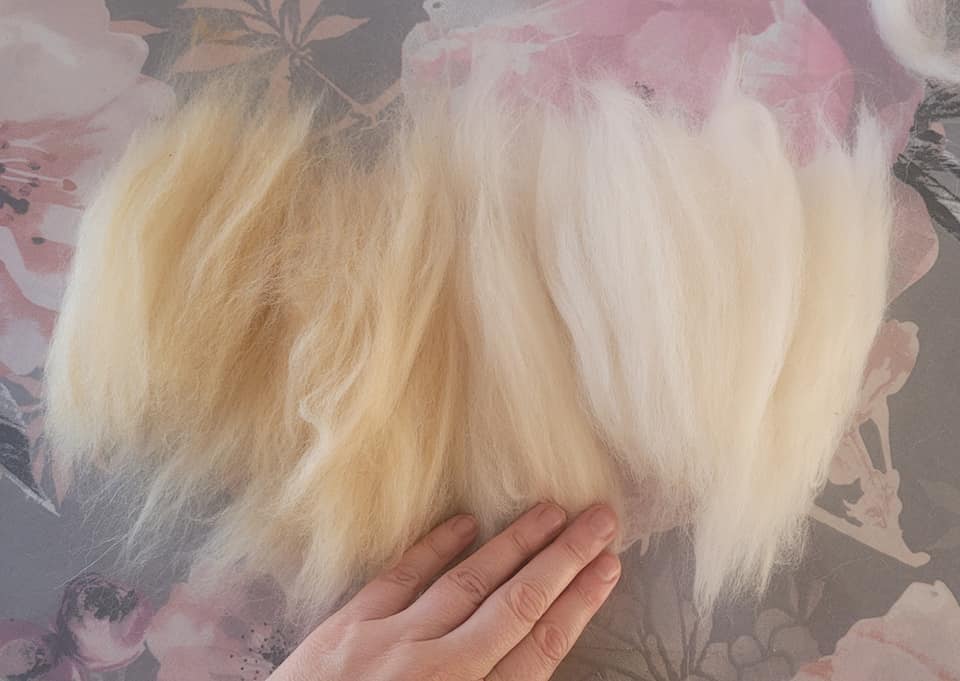
When I start sculpting an animal, I usually grab some corriedale batts or slivers to build a solid core. This type of wool felts quickly and gives a sturdy base without too much effort. Then for the outer layers—the visible fur and details—I love using dyed merino tops or alpaca blends for their smooth soft animal fur finish or for a more natural, slightly fuzzy fur texture, I love some of the rougher undyed wools e.g. Shetland.

Here’s a summary from my Needle Felting Wool: A Guide To The Different Types…:

  • Corriedale batts/slivers: Great for core work; felts quickly and firmly
  • Merino tops: Fine and smooth; excellent for top layers and a sleek finish
  • Alpaca & Suri blends: Slightly looser fibres that add softness and realism to fur
  • Shetland & Romney: Useful for more coarse or textured coats
  • Natural vs Dyed: Natural wool shades add lifelike tone variation, while dyed fibres help with specific colour choice and effects.

If you prefer to use synthetic or plant fibres — these are great (especially if you are looking for vegan options) though you might want to try a variety to get a feel for the ones you prefer as some may be harder to felt with than wool!


2. 🪡 Which needles are essential for detail and realism?

Having the right felting needle makes a world of difference in your results. My go-tos are:

  • 36–38G triangular: for shaping and sculpting
  • 38G star: for blending and smoothing
  • 40G triangular or twisted/spiral: for face details and delicate areas

Want to know what tool changed everything for me? The reverse felting needle—it’s brilliant for texture! there are so many ways I use this needle ….

Here’s some needle related highlights from My Top 15 NEEDLE FELTING TOOLS & MATERIALS….guide

  • Reverse needles: Pull out fibres – ideal for creating fluffy fur, blending colours
  • Needle storage: I recommend keeping your needles organised to avoid bending or breaking
  • Tool handles: Multi-needle tools reduce hand/arm fatigue when working on larger pieces
  • Needle sharpness: Replace worn needles to maintain precision and efficiency
  • Different gauges do different jobs—don’t just use one needle for everything!

3. 📏 How do I accurately shape heads, bodies, and limbs?

Do you struggle with proportions? You’re not alone. Reference photos and sketching really help.
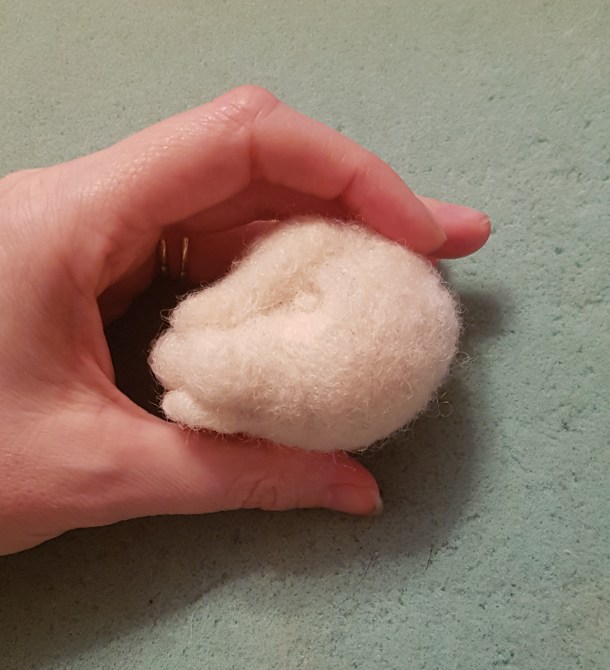
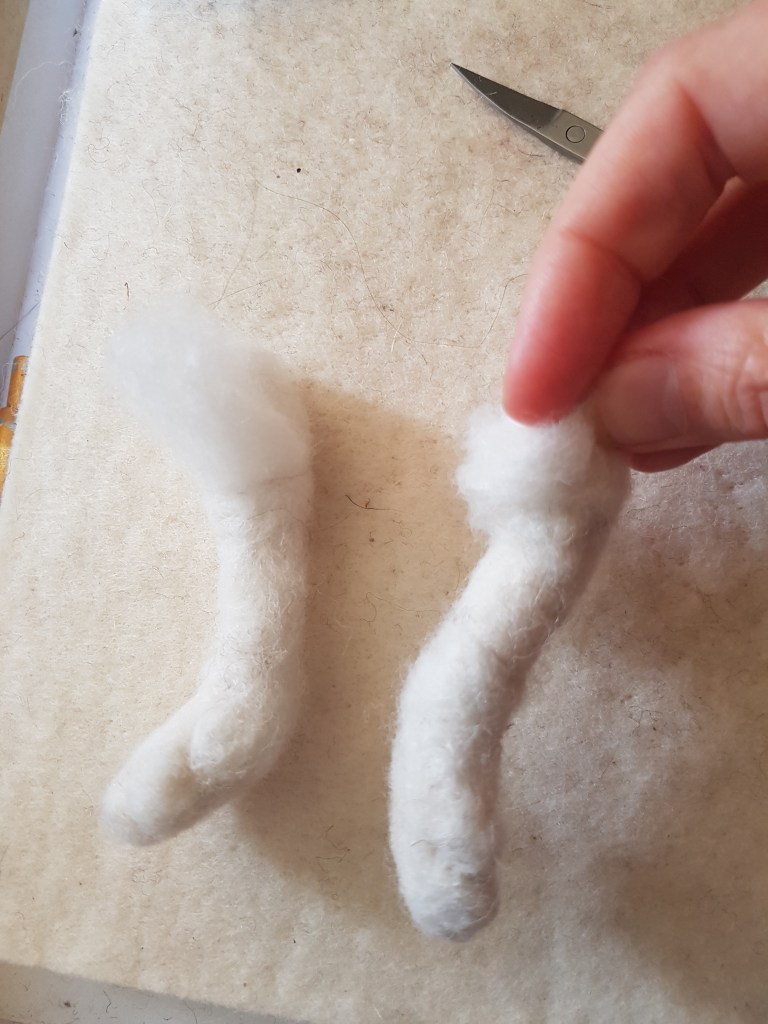
I always start with simple shapes. Think:

Limbs = cylinders or cones

Head = oval or sphere

Body = sausage or teardrop

For how I attach parts, head over to How to add head and limbs….

These techniques from the tutorial can help give your animals a more realistic look:

  • Use reference photos and anatomy diagrams to help with proportions, pose, colours etc
  • Consider armature/pipe cleaners to help keep with proportions and size. Great for support and stability too.
  • Always compare body part size before attaching
  • Anchor parts before fully felting: Position head, legs, or tails with loose fibres (for easier adjustment) before securing.
  • Use a coloured pin/ mark with a pen/ add a strand of bright wool to plan where features will be added This helps keep limb symmetry and alignment with the body
  • Build up wool gradually: Start small and add more wool slowly to control size – easier to add more than take away later
  • Smooth joins with a fine needle e.g. 40G : Light pokes enable seamless transitions between pieces
4. 🎨 How do I blend wool for natural fur?

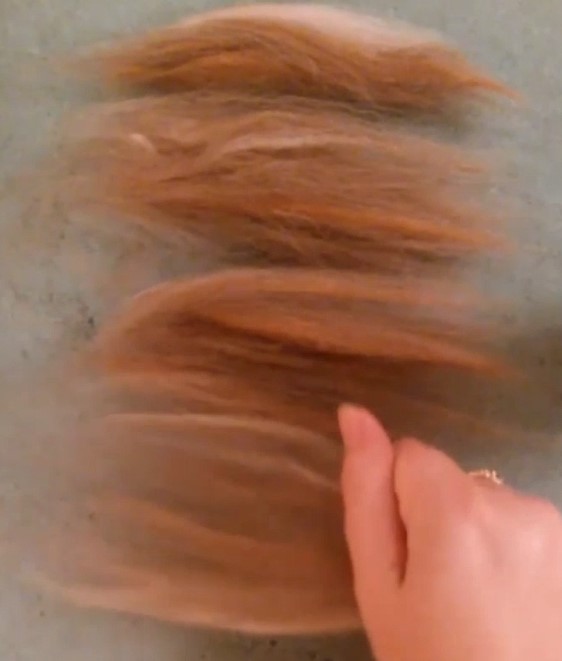
Blending wool is one of my favourite creative parts. I use hand-blending—no carders necessary! Here’s how:

  1. Stack wool lengths of different colour shades in the same direction
  2. Pull apart gently with your fingers
  3. Re-stack and repeat

Rather than covering your animal in one colour – have you tried layering 2–3 shades for lifelike fur colour tones? It really adds realism.

Key takeaways from my guide on How to HAND BLEND WOOL…:

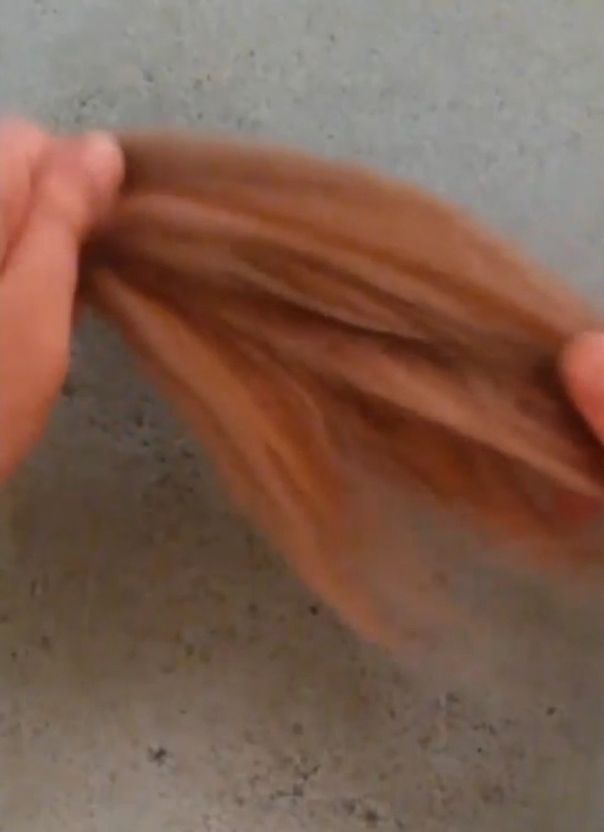
  • When needing long fur, blending by hand helps preserve the wool’s length for a realistic look
  • Use light, mid and dark tones of the colour you wish to use to create depth
  • Pull and stack small amounts at a time
  • Perfect for adding subtle gradients and creating natural fur transitions
  • Hand blending can give a more natural result than carders

5. 🦴 Should I use wire armatures?

This is up to you!! A wire armature acts like the skeleton of your sculpture. It gives strength, structure, and the ability to pose your creations.

Ever had your animal’s legs sag or the head tilt oddly? A strong frame can fix that.

Key takeaways from my guide on wire armatures:

  • Wire gauge matters: Thicker wire for bigger animals, thinner for smaller ones
  • Anchor joints: Twist wire securely where limbs meet the body to prevent wobbly parts
  • Wrap tightly with core wool: This helps prevent slipping and adds padding. wrapping with pipe cleaner before adding wool can help with this.
  • Test movement: Bend arms or legs gently before felting over to ensure they hold their pose
  • Stability check: Check your animal can stand or sit securely before covering with wool

6. 🐕 How do I make various fur effects—smooth, curly, long?

Do you prefer realistic tufts of fur? or a more simple finish?

  • Layer wool tufts in small patches
  • Use reverse needle to create fluffs of fur
  • Brush gently for a softer finish
  • Consider how fur length and direction vary across different parts of the animal

Depending on your animal, you can use different methods:


7. 👁️ How to sculpt eyes and facial features?
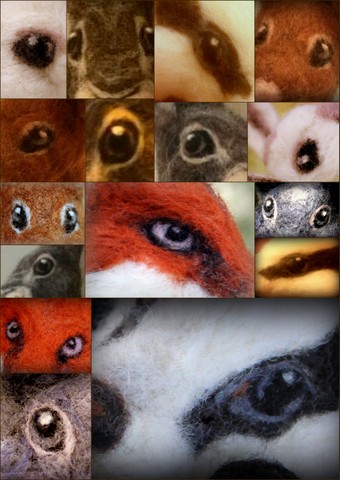
I love bringing animals to life through their expressions. For eyes:

  • You could use glass or resin
  • I create felted wool eyes which are realistic
  • Add eyelids
  • Use several different colours for light and shade and to make the eye look shiny

Want to capture a sleepy expression? or wide eyes looking up or down? My tutorials walk you through how to create eyes in pure wool – there’s a video for cat eyes and one for dog eyes.

Quick top tip from my tutorials:

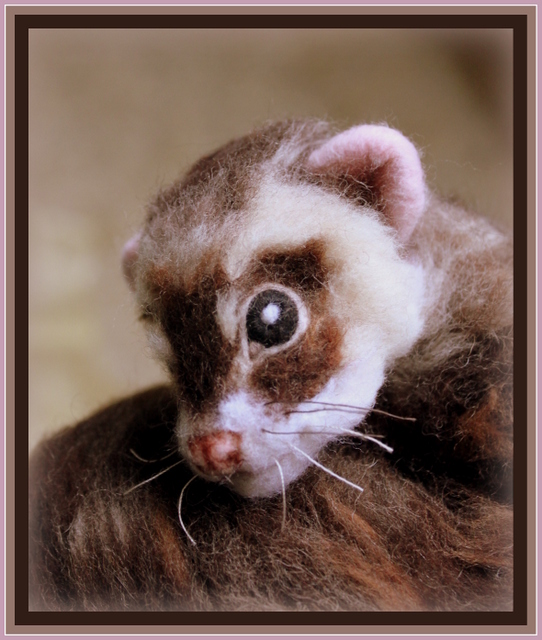
To achieve a bright, lifelike eye, I always add a tiny white dot to simulate the reflection of light. It brings instant realism and personality to the face!


🐾 8. How do I create realistic animal feet/paws?

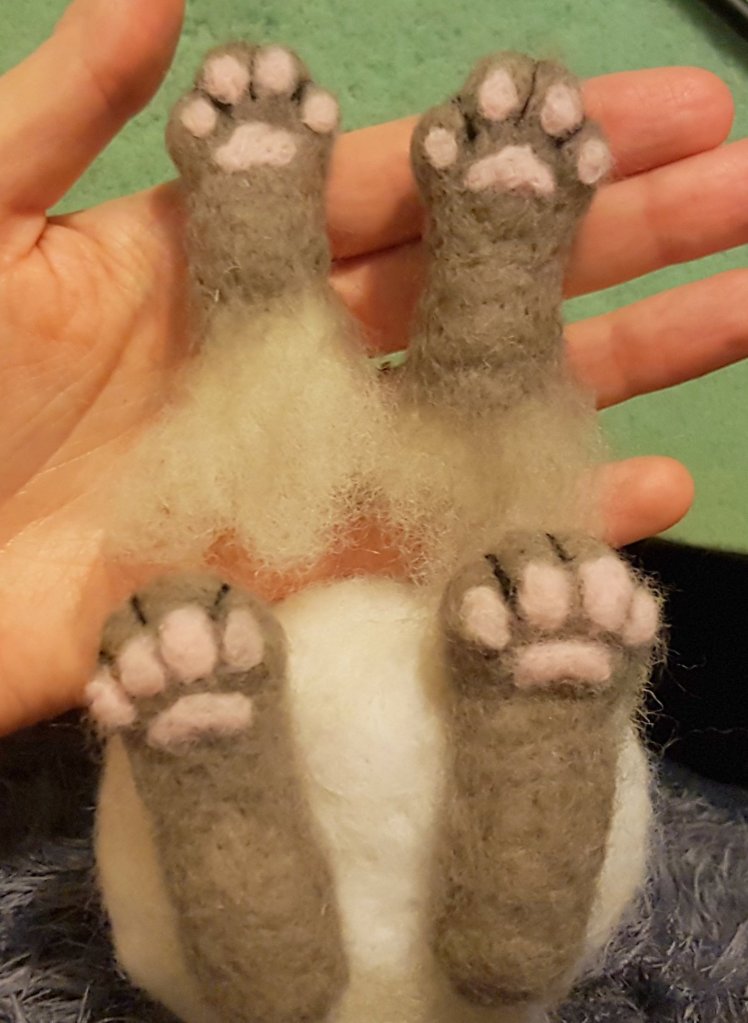
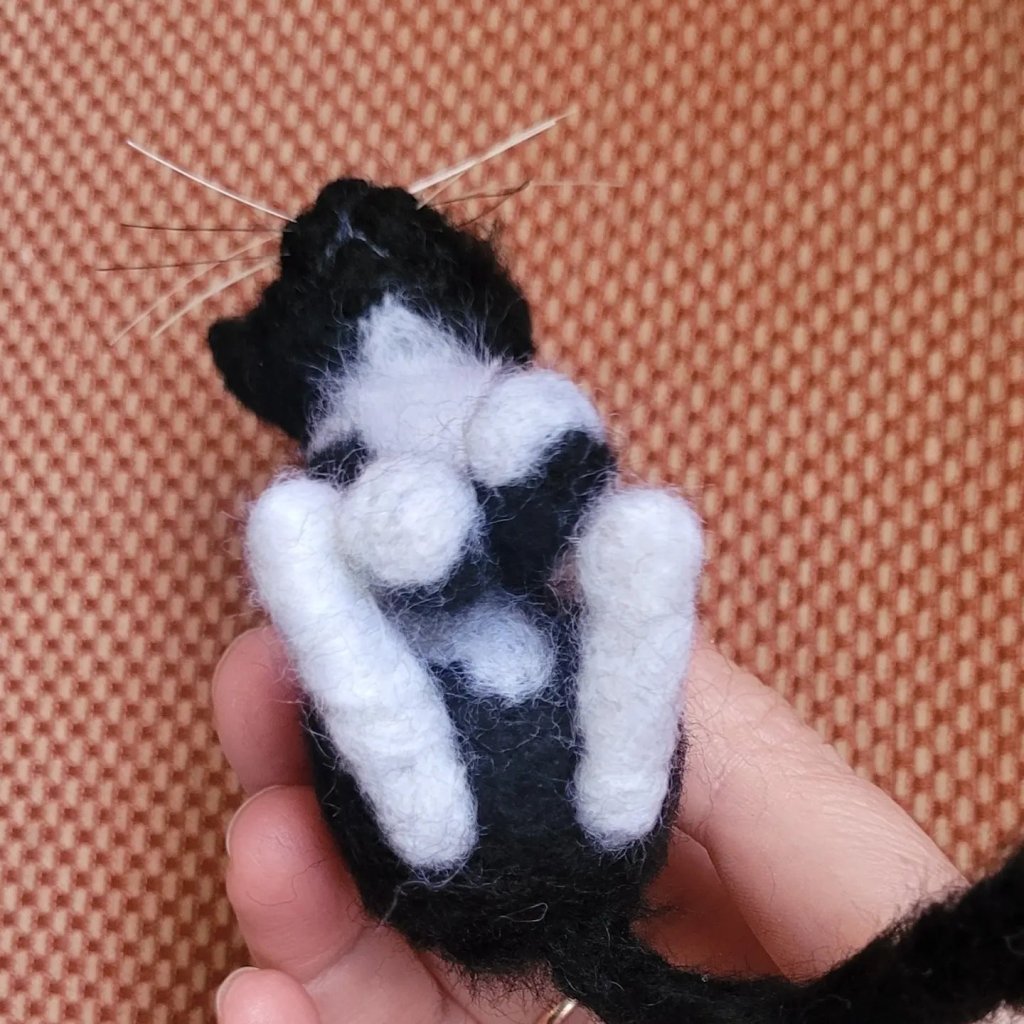
It’s all in the details when it comes to making realistic animal feet! you can make tiny well formed toes or add some cute paw pads underneath the foot (“toe-beans”) … these make my friends say “squee” when they see the underside of my sculptures! They do take some practice to get right but it’s so worth spending that bit of time!

💡 Quick & Easy Paws

In my quick-start tutorial Quick and Easy Needle Felted Paws I walk through:

  • Forming a foot shape just from pure wool – I use core wool, then a layer of merino tops
  • Defining individual toes with fine black wool lines
  • Adding paw pads – tiny circular blobs of wool for adorable realism
  • Tips on attaching feet —simple and effective

🐇 Tiny Toes

  • Roll wool or wrap wool around thin wire to sculpt little sausage-shaped toes
  • Build the foot shape around the toes
  • Add wool hardened with wax or leave wire bare at the ends as claws/talons
  • A demo of how I create tiny toes can be seen in my rodent feet tutorial.


9. 🐱 How do I add realistic animal whiskers?

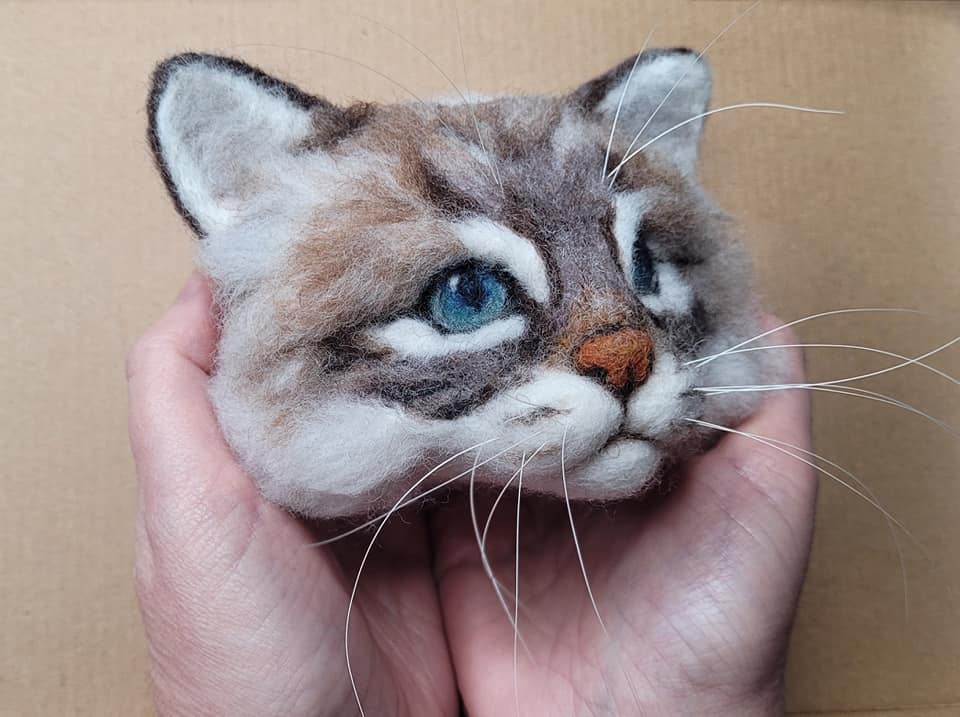
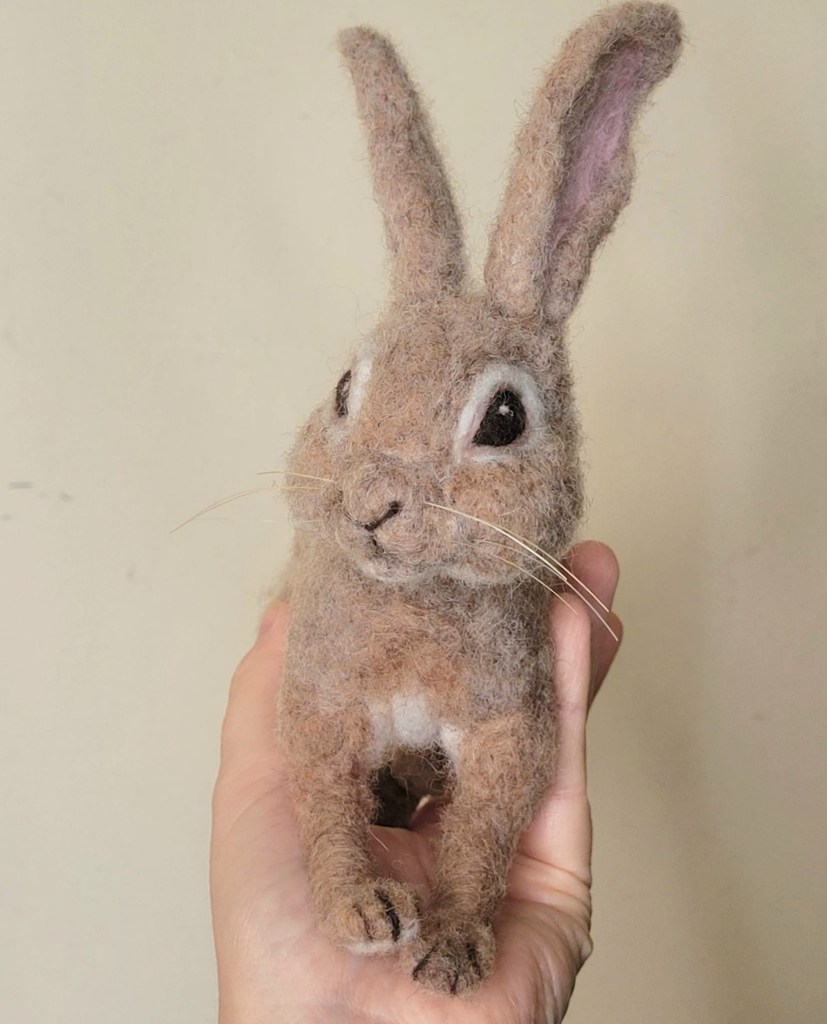
Whiskers may be tiny, but they make a big impact! Whether you’re making a cat, dog, mouse, or bunny, adding whiskers can enhance the realism and charm of your animal sculpture.

My favourite whisker materials:

  • Horsehair : These have the stiffness and fine look of real whiskers
  • Fishing line: Thin and clear, great for strong, semi-invisible whiskers
  • Paintbrush bristles: Snip a few from an old paintbrush
  • Real cat whiskers! – the most realistic of them all as they are REAL! – but you need to wait for them to drop from a real cat and be quick enough to find them! 🙂
How to attach them:

  • Use a fine needle or felting awl to poke a small hole in the wool of your animal face
  • Dab the tip of the whisker in glue
  • Insert carefully with tweezers—angle matters!
  • With longer strands you can also thread the whisker through a sewing needle and sew them into place! one strand can make 2 whiskers (one on each side of the face) – add a little glue at the point where the whisker enters the wool.

🎥 I walk through my favourite techniques and tools in my whisker section of my cat head series

Tips:

  • Keep lengths uneven and natural-looking
  • Add 6–12 whiskers depending on the animal
  • Pair with subtle shading around the muzzle to make them even more realistic,

10. 🛠️ How to fix mistakes or redo parts?

Mistakes are part of the process! you can pull or snip parts off or gently lift fibres with a reverse needle and reshape. You can rebuild and add a layer of fresh wool to cover over any join / ripped areas

Remember, you can always change your mind—needle felting is very forgiving.

Fix-it checklist:

  • Hide joins with layers of fur
  • Use reverse needle or pull wool apart carefully
  • Add new wool in thin layers to blend

✅ Need more ideas? Try these!


💡 Bring Your Creations to Life

Needle felting animals is a wonderfully creative process. With the right materials, tools, and a touch of guidance, you can shape wool into lifelike, expressive animals full of personality.

Have a specific animal in mind that you’re dreaming of making? Message me or tag me on Instagram @Fit_to_be_loved — I’d love to cheer you on!


Happy felting!

Amanda x

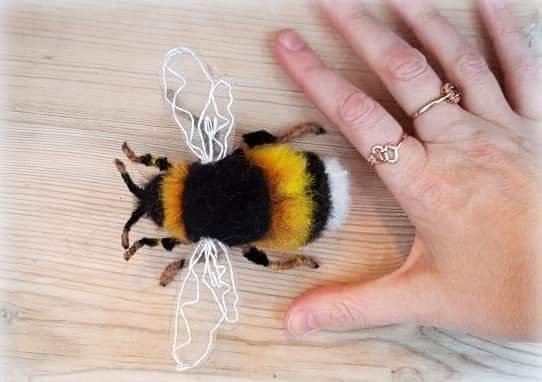
Mr Bumbley Bee Tutorial Black Friday Sale

If you’ve not already got a copy, i have a Black Friday sale on my Mr Bumbley Bee PDF Tutorial over in my Etsy shop! You’ll get a 30% discount. Grab it while you can as the offer ends tomorrow 🐝

Read the rest of this entry

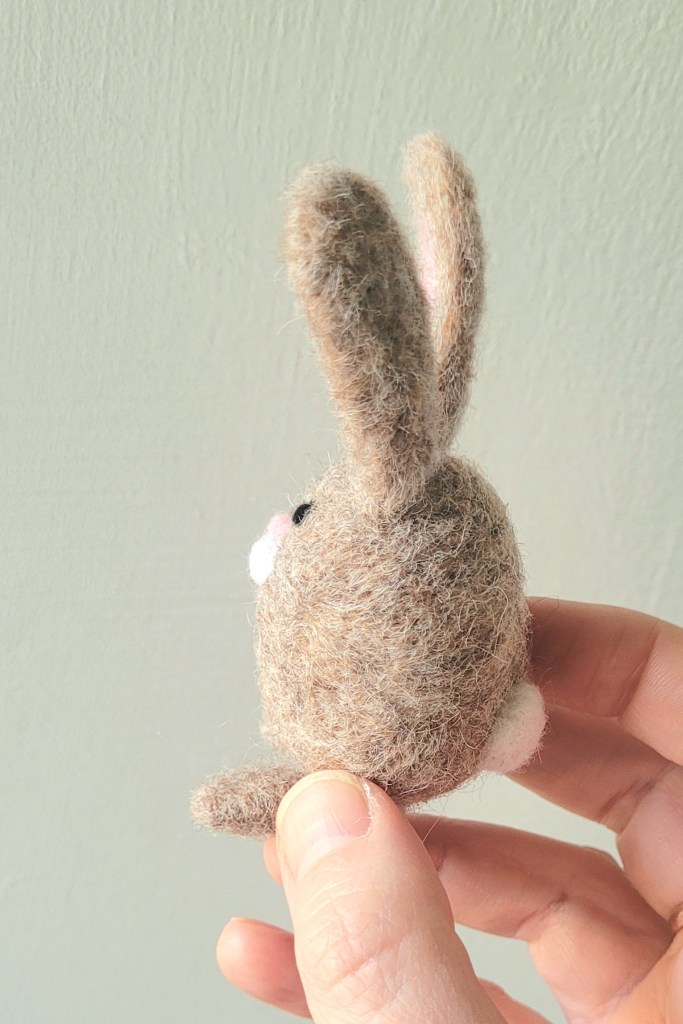
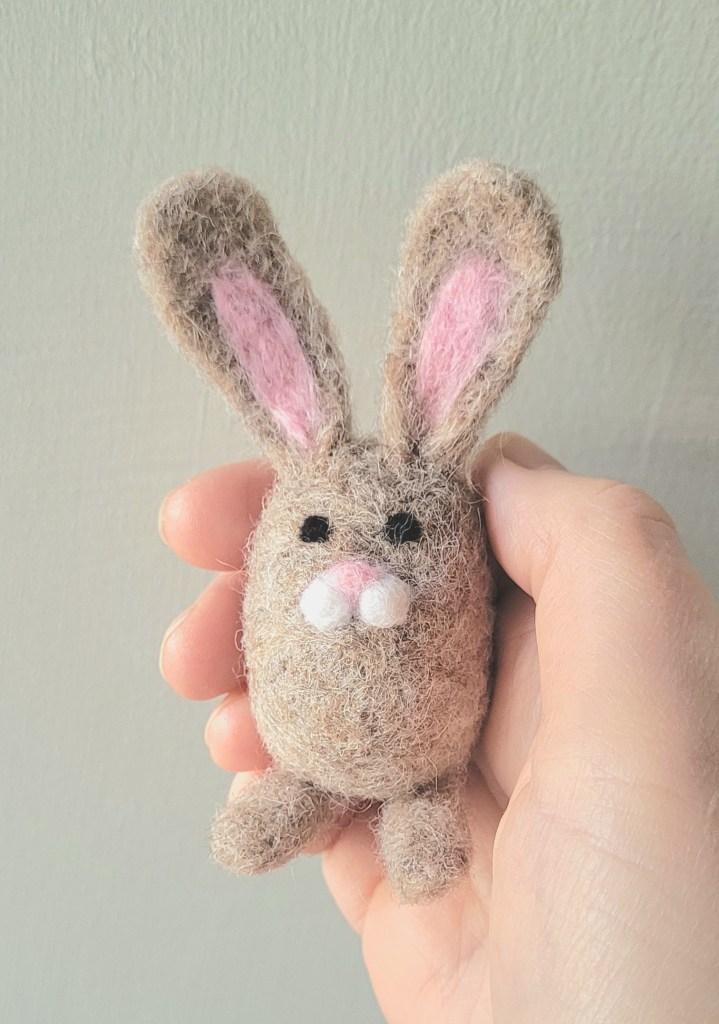
Easy and Cute Needle Felted Easter Bunny

Two weeks today is Easter Sunday!

If you are a beginner and would like an easy Easter project, I’ve made a tutorial on how to needle felt a cute bunny 🐰 that can be hung on your Easter tree.

It’s a condensed version of the in person workshop I had the pleasure of running last year.

I hope you enjoy it. 😊

How to HAND BLEND WOOL for Realistic Needle Felted Animals

Would you like to learn how to hand blend wool?

In this tutorial I explain why hand blending wool is so effective when needle felting realistic animals and then I’ll show you how I do it. 

It is perfect for long furred animals when you need to mix wool tops/roving colours together.
Read on or watch the video here 🙂

Why hand blend your wool?

When you closely study the lovely colours and textures of a real animal’s fur you’ll notice there are often many different tones rather than just one block colour.  you’ll especially see this when looking at them in the natural daylight.

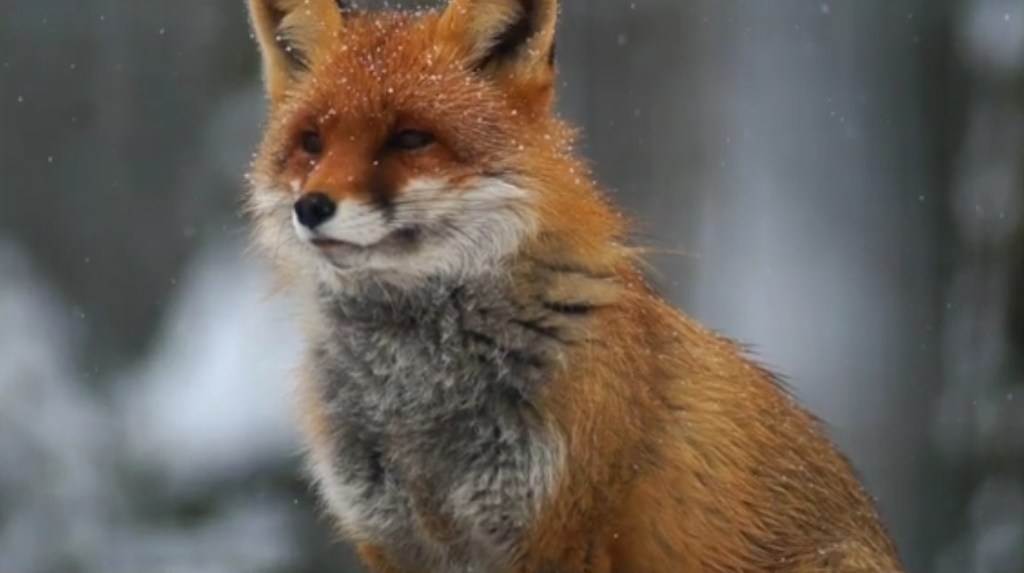
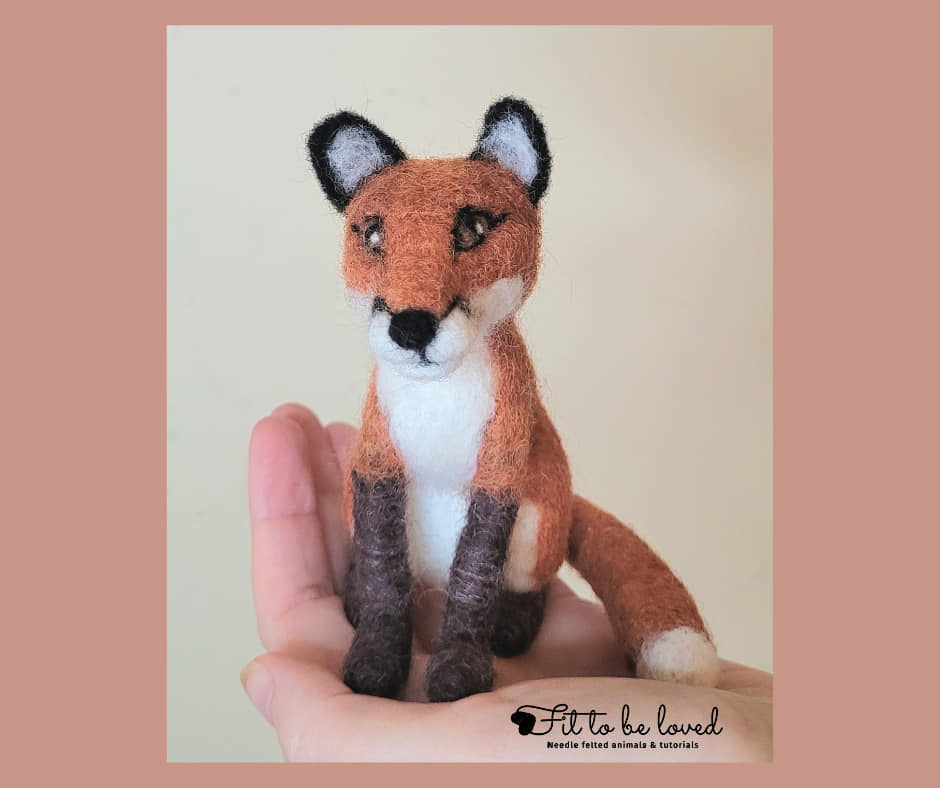
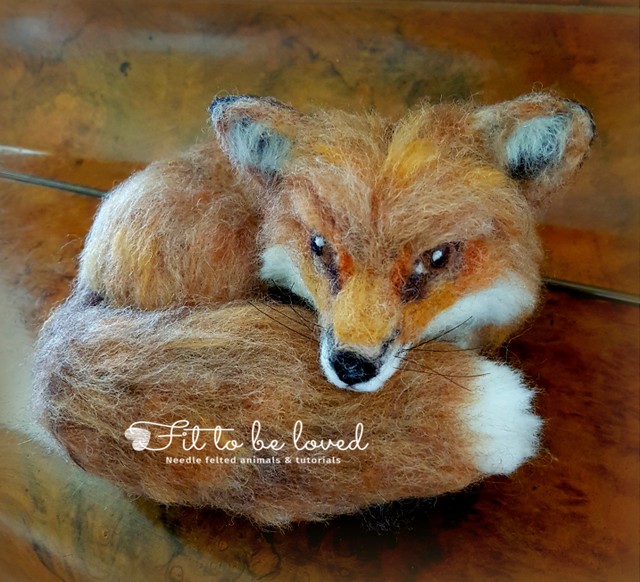
When replicating a fox I chose a variety of colours rather than just one or two to make the fur look as realistic as possible. I prepared my palette of wool colours much like a painter would prepare a palette of paints. 

But how, then do I mix those colours together? …now that is where hand blending comes in…

You could use carding brushes or dog brushes to blend several colours of wool to get the tone you need …and that’s great especially for smaller animal creations or where the animal has shorter fur..  

BUT with hand blending, though it can take a bit longer, I feel I have a bit more control over how much I blend the colours and it’s brilliant for long furred animals. 

Hand blending enables you to keep your wool tops/roving fibres lined up all in the same direction with no matting!

Those luscious long lengths can then be added as long fur to your animal…

And if you want to you can easily still see individual strands of colour for a more natural textured look

So, how do I hand blend? 

For long fur you’ll want to keep the fibres all going in one direction as much as possible. And then simply use your hands to blend the wool.

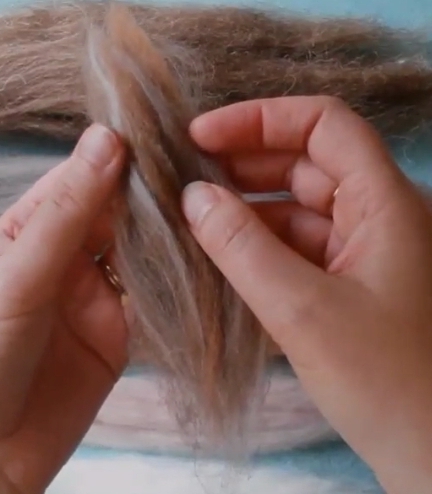
One easy way to achieve this is to stack lengths of each colour on top of each other…

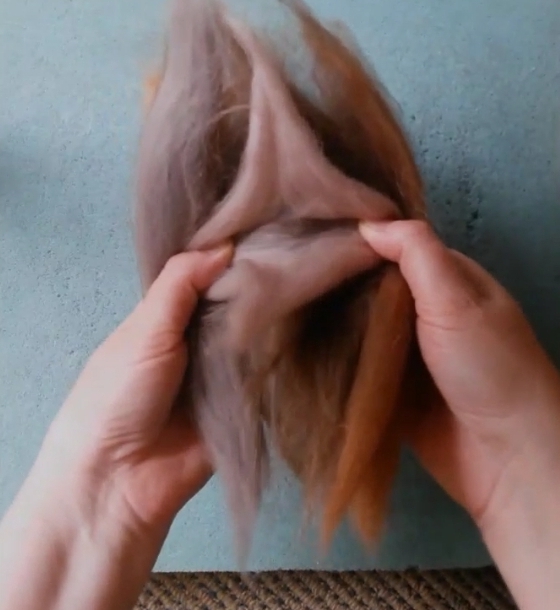
and then hold one end of the wool firmly with one hand and then using your thumb and first finger of the other hand, carefully but firmly pull the wool away. 

Lay each layer again on top of each other (fibres all in same direction) and keep going until all the wool is blended as much as you want it to be.

Make sure you split the piles of wool up into smaller manageable sizes and not too much to blend in one go.

You can also split the piles lengthways if you see too much of any one colour.

I used hand blending for my sheltie dog…

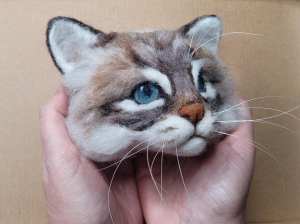
Tabby Birman cat…(full series on needle felting a cat head is here)

Guinea pigs…

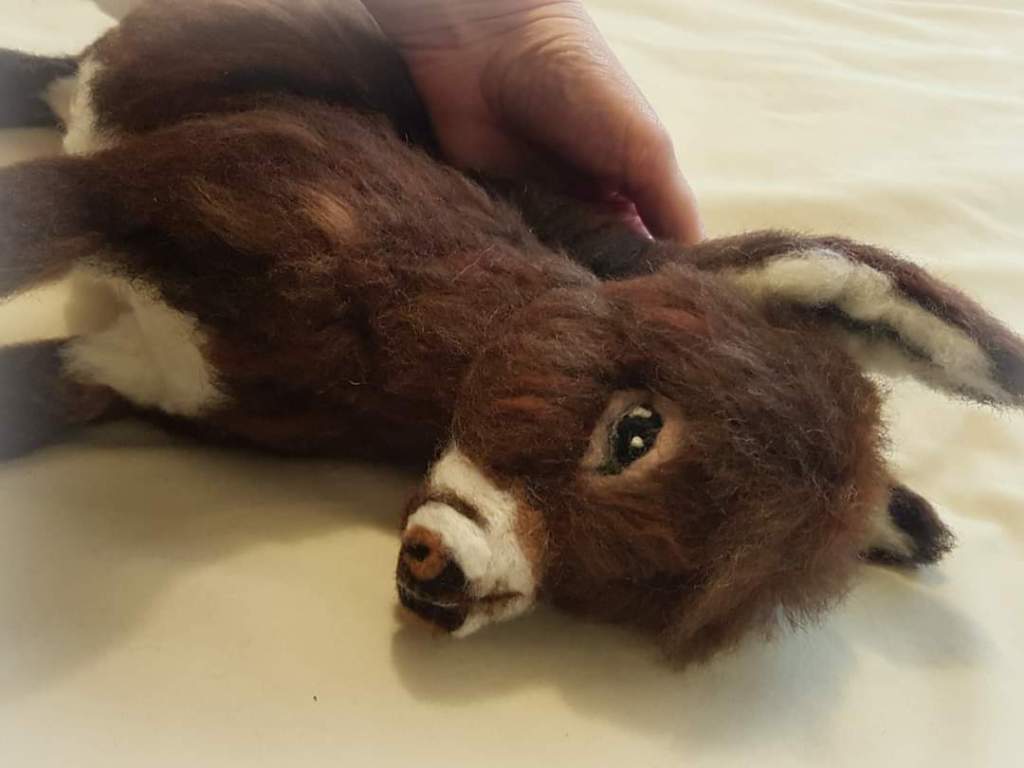
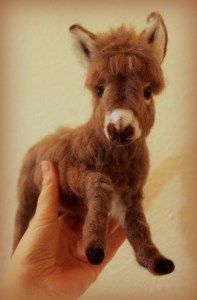
and donkeys….

Which felted animal are you going to use this hand blending technique on? Let me know in the comments.

If you need some tips on how to add long fur you might like these tutorials.

What is Needle Felting? And Why learn? – a poem

👋 Happy New year everyone!

For a bit of fun I wrote a poem about needle felting and made it into a video. It’s particularly aimed at those who may be new to it and who may be wondering what it is and why learn.

But even if you have been needle felting for years, I hope you enjoy it (especially to see some ideas for needle felted animals you could make) and feel inspired to get stabbing this new year!

Come with me on an exciting journey to explore this amazing art form.

Have a wonderful New year! 😊

If you would like to learn how to needle felt realistic and detailed animals, head over to the tutorials page for an ever growing catalogue of free tutorials.

Bee Tutorial Sale Ends today

The 30% discount on my Mr Bumbley Bee PDF Tutorial ends today. Grab it here while you can. 🐝

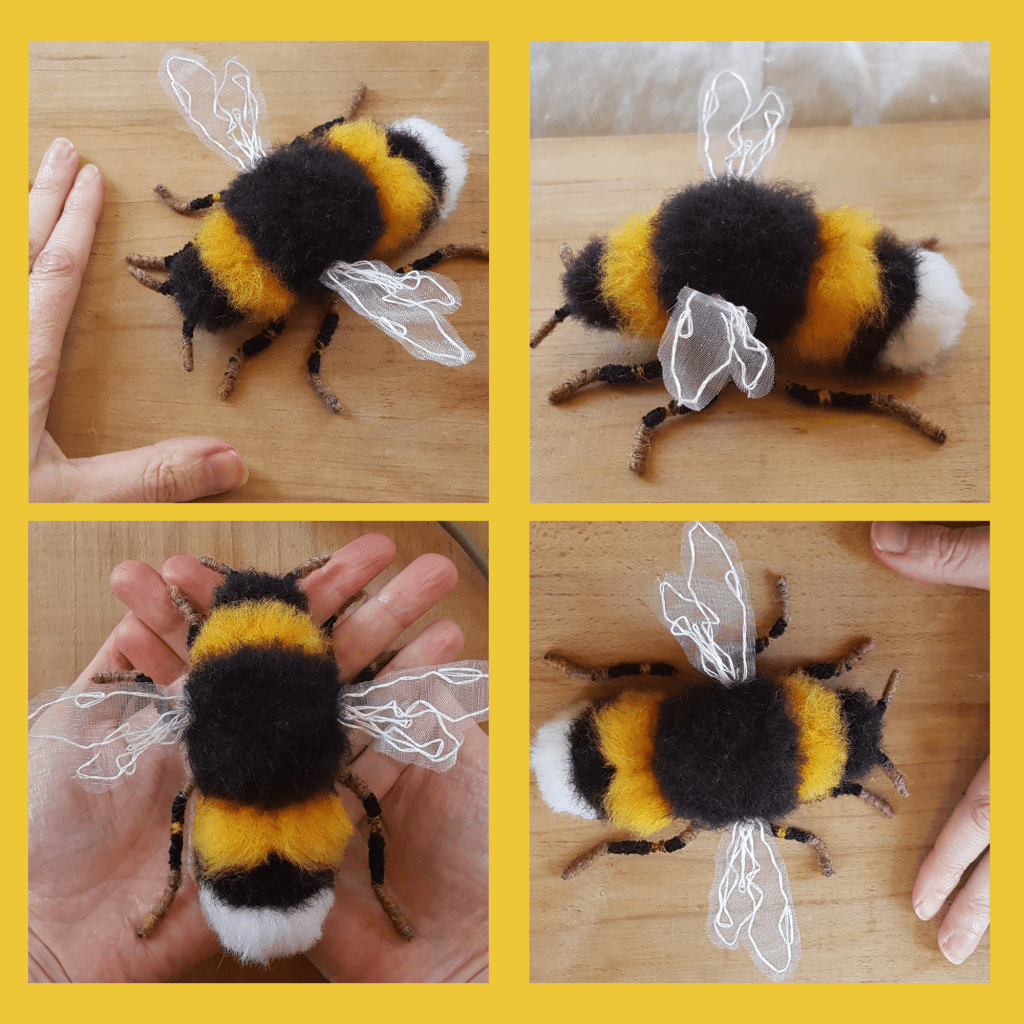
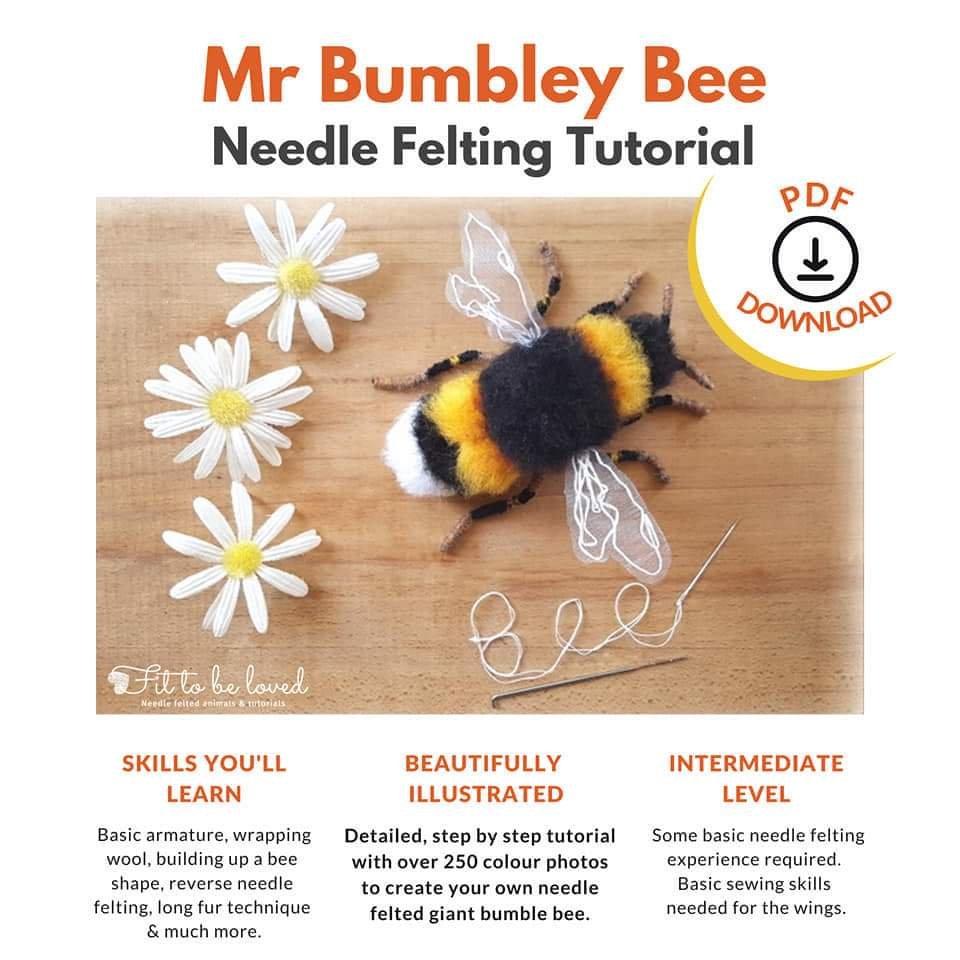
This tutorial is beautifully illustrated with over 250 instructional colour photos across 108 pages.

Includes Bee Anatomy diagram, Size Guides with wing template, Felting safety advice and Care instructions for your finished bee.

You will learn how to:

  • Twist pipe cleaners together to form a basic armature structure.
  • Emphasise the leg segments and antennae by adding small pieces of wool to them.
  • Wrap wool over the armature and build up layers of wool to sculpt a bee shape.
  • Use a reverse needle to create fluffy bumble bee hair.
  • Create the bee’s white tail using a long fur technique.
  • Add depth of colour to the yellow bands.
  • Make wing shapes from organza material and hand sew a pattern and attach wings.

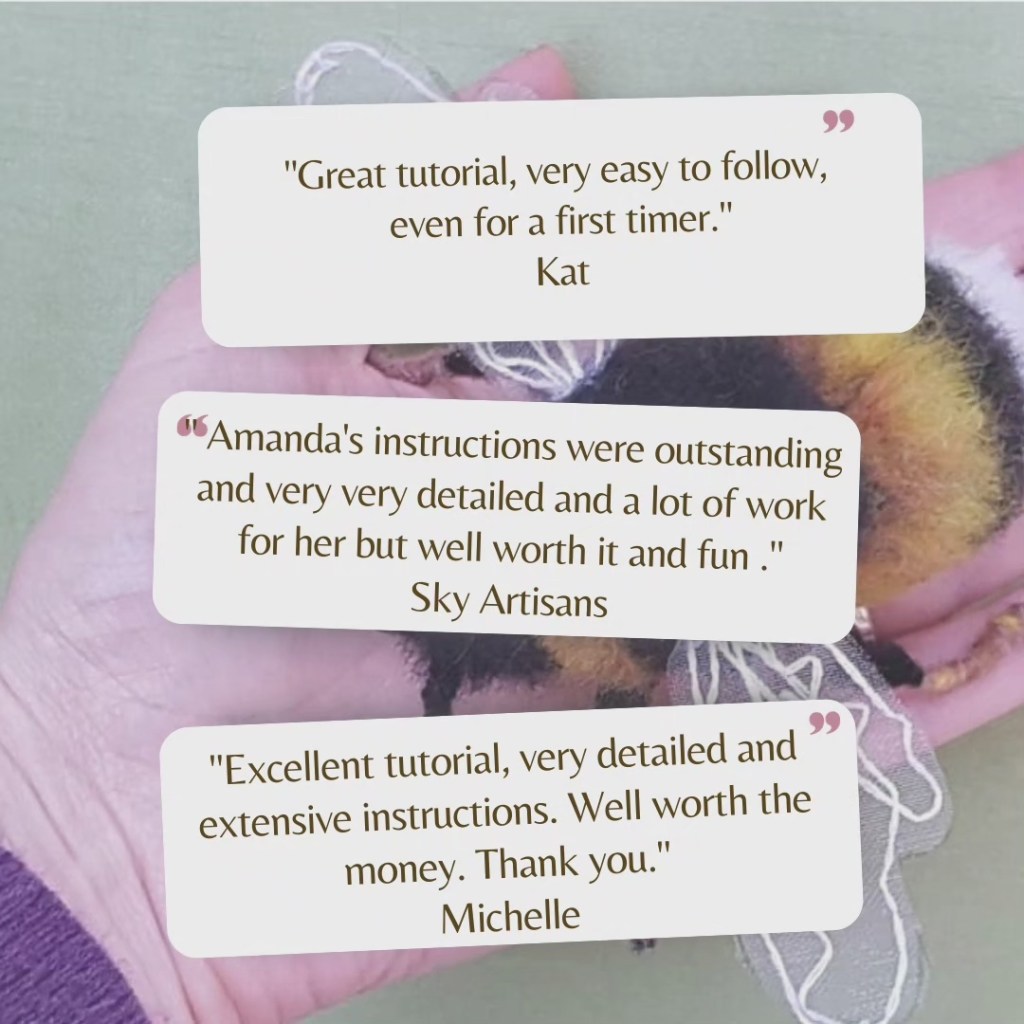
What customers are saying about the Tutorial:

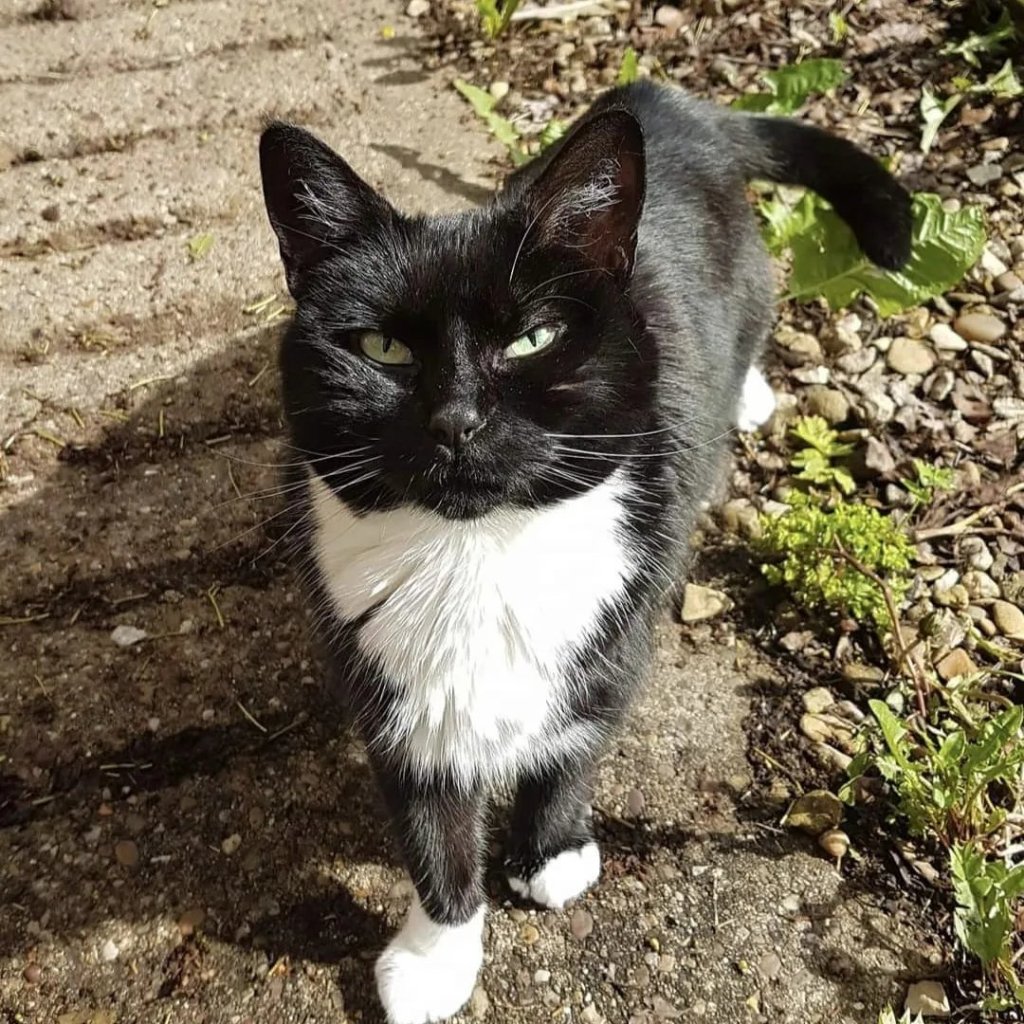
Mini Sophie Felted Cat: in memory of Real Sophie

Sophie. 🖤🤍

The most beautiful and sweet loving soul inside a fluffy black and white fur suit and with the most green eyes you ever did see. 🐈‍⬛

She had epilepsy her whole life but no illness she went through would stop her from being a snuggly cuddle bug and loving her under the chin rubs.

She was the sunshine cat! And perfect girl! She truly surpassed her 9 lives and was so determined and strong until she could be strong no more. 😪

How do you mend a heart that is broken from the loss of such a dear cat? 💔

Sweet Sophie belonged to my sister and she meant so much to me too as I cared for her like my own whenever her mum needed me to.

Sophie is sorely missed everyday as she has left the biggest pawprint on our hearts and we’ll remember her always. 🐾

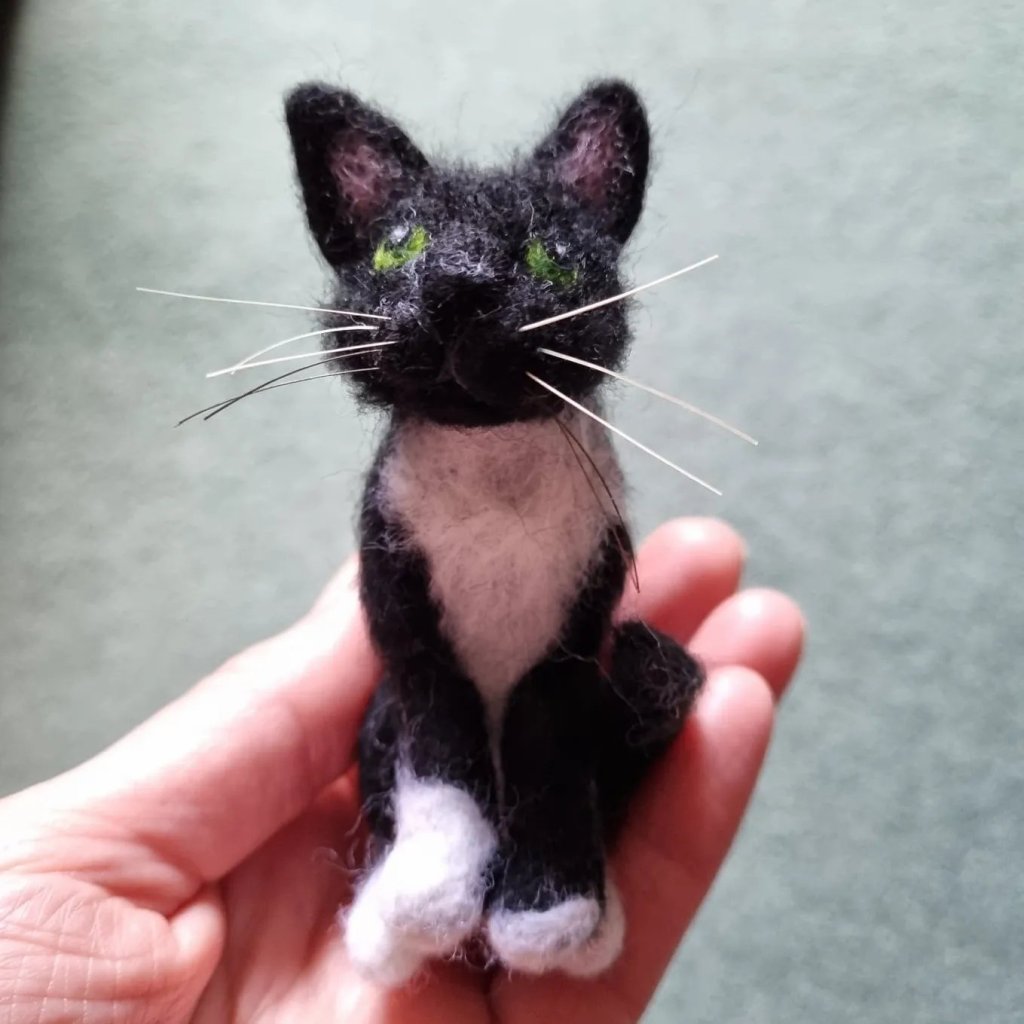
It was a privilege to have time with my sister recently to complete a mini Sophie together out of wool in memory of real Sophie. My sister did so well being an absolute beginner in needle felting! 🙌

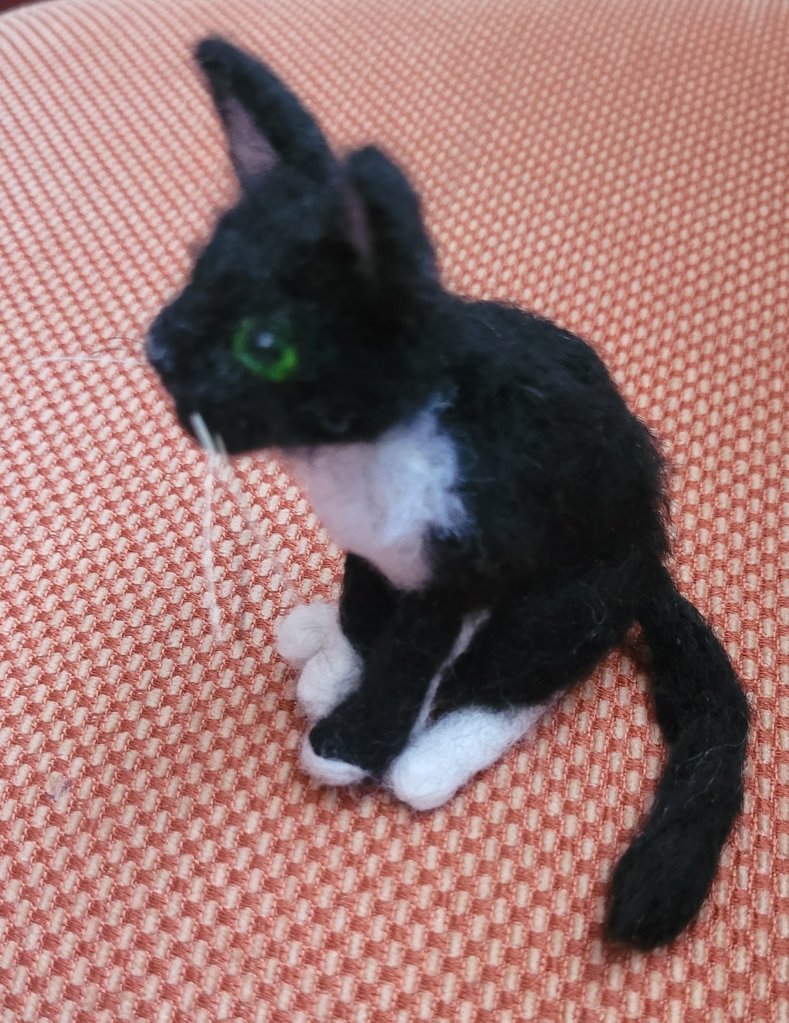
I think together we’ve captured Sophie’s sweet features such as her green eyes, her slim build, her cute white paws (one full white and one half white at the front), some black and some white whiskers (made of horsehair and real cat whiskers).

Mini Sophie will be treasured always just like the real one 🖤🤍

Have you ever made your own needle felted cat in memory of a real loved one?

Mr Bumbley Bee Tutorial Easter Sale

If you’ve not already got a copy, the 4 day Easter sale on my Mr Bumbley Bee PDF Tutorial starts Today over in my Etsy shop! You’ll get a 30% discount. Grab it while you can as the offer ends on Sunday 🐝

Read the rest of this entry

Planning a Needle Felting Workshop – What you’ll need

Are you planning a needle felting workshop this year?

I thought you’d find it useful if I shared what you might need.

This will hopefully help you get organised and prepare well knowing the items I used in my recent workshops for the robin and the fox.

Even if you’ve run workshops before there may be a few items on the list that you haven’t considered.

Or maybe you are a little intrigued as to what needle felting tutors do when they plan a workshop.😄

Felting Base

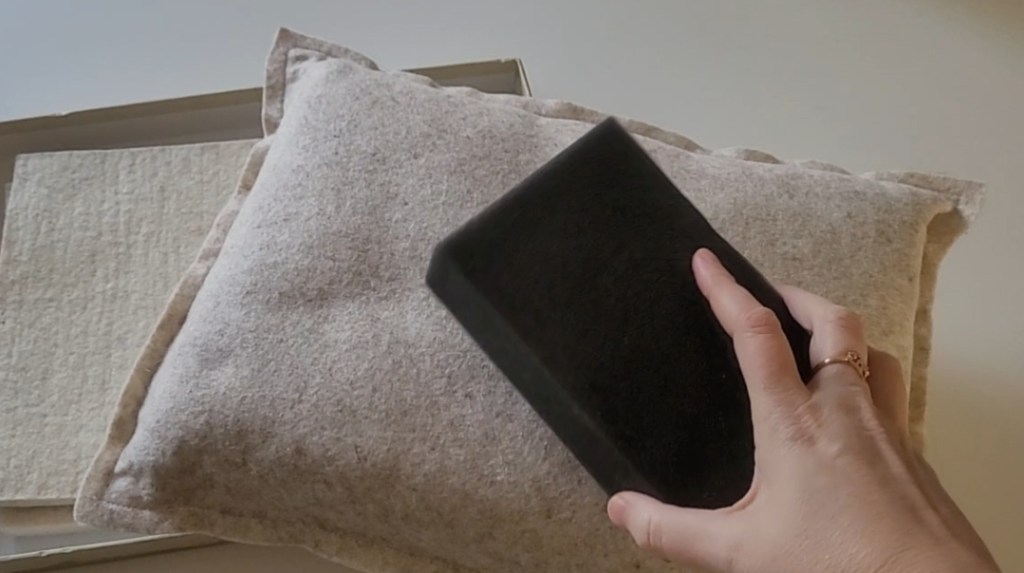
I include a felting base in the cost of the workshop. I bought a multipack of small black foam pads. They’re perfectly sized for a beginner project at one and a half inches thick, four inches wide and six inches long.

They’re really dense and very high quality but low in cost. We use these during the workshop but I also like to take along other options to show what’s available.

So I’ve got my Eco Wool Mat (extra large) from Heidifeathers and my Earth Mat from the Makerss. You can see my review on the the Earth Mat here).

I also show my students a hard surface for doing wire armature and keeping the wool from going frizzy on the felted mat.

This can be a table/ tray or even the inside lid of a decent box (this is what I use).

Barbed Needles

At the very beginning of my workshop I like to demonstrate how the needles work in the wool. So I’ll take a variety of different sizes of barbed needles (thicker ones right down to my finer ones). The ultimate mix from Heidifeathers has pretty much all you would need for felting and to show the differences between for example the star and triangle and also the more unusual ones like the reverse needle.

I chose Heidifeathers as my supplier as they offer good quality needles and have a great range. I find it cheaper to buy containers of each size for my workshops. They are colour coded and there is a guide I show my students.

It’s good to include the needles that they need in the cost of their workshop (I supply 2 of each size but take extras in case of any breakages). But it’s also good to show what’s available for future projects. They could perhaps buy some needles from you too on the day.

Needle Holders

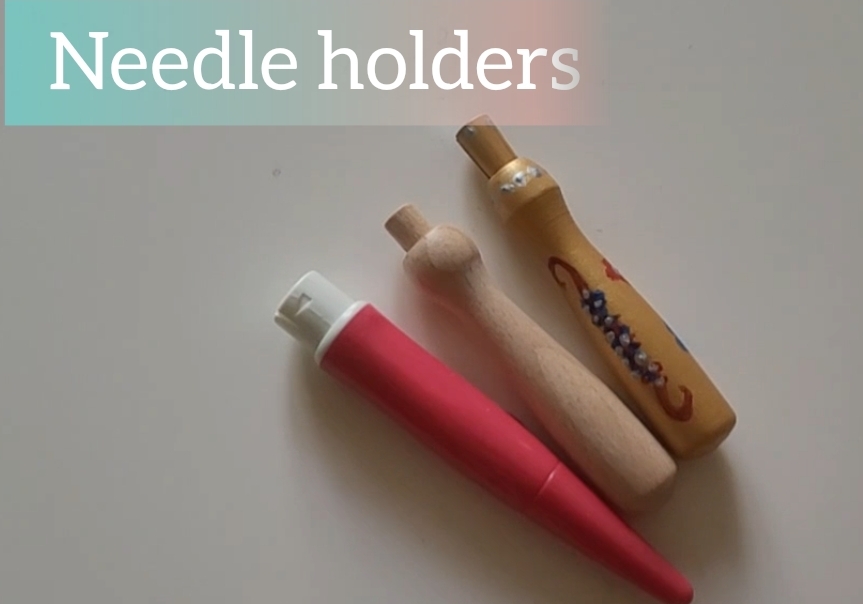
It is a good idea to take along some felting needle holders. I have the Clover multi needle holder that can hold up to three needles at one time.

Then I’ve got the single needle holders made of wood. These are lovely as they are or you can paint them (my mum gave me one she’d painted in gold with cute flowers on it). The needle can be stored inside the holder when not in use (please see my guide to needle holders here).

Some of the ladies at my workshops had arthritic fingers and it was more comfortable to use a holder for the needles so I let them borrow these. However you could offer the holders as added extras to purchase in addition to your basic cost of the workshop.

Stationery

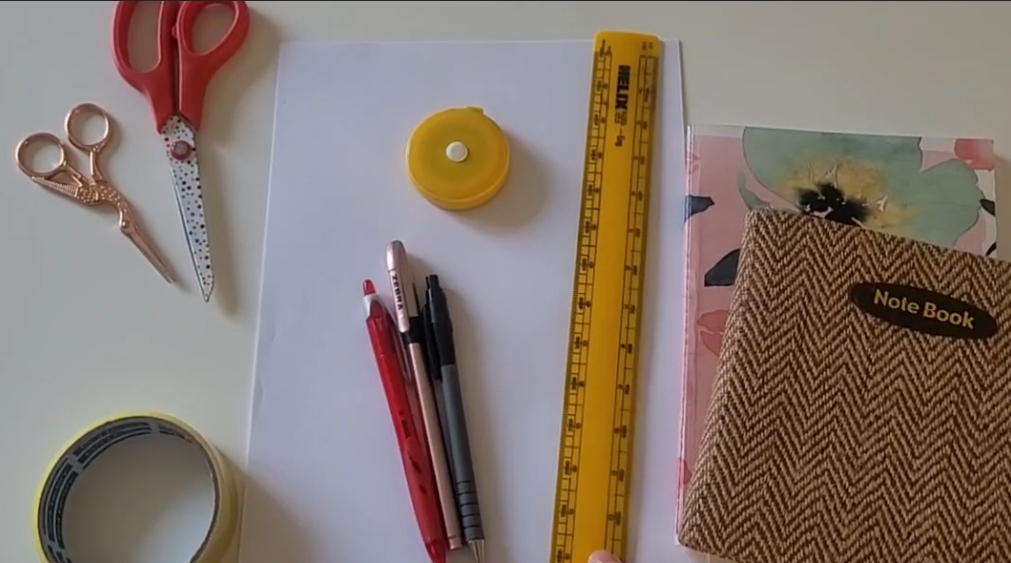
Notebooks – are ideal for taking further details from the students for example you may want to follow up on questions they have asked. Make sure you follow GDPR data protection guidelines if recording anyone’s personal contact details.

Rulers and/or tape measures – for your students to be able to take measurements of what they’re making and keep to proportions.

Pens/pencils and paper are also really useful for sketching ideas or showing shapes or sizes in a different way to the actual 3d creation they are trying to replicate.

Cellotape can always come in handy – I’ll mention why a bit later on.

Then at least one pair or maybe some sets of scissors of different sizes for cutting wool. I mainly use my rose gold stork scissors.

Sticky labels are brilliant for name tags, so you don’t forget names and also to label anything else on the day (eg bags – see futher down).

Guides/ Hand-outs

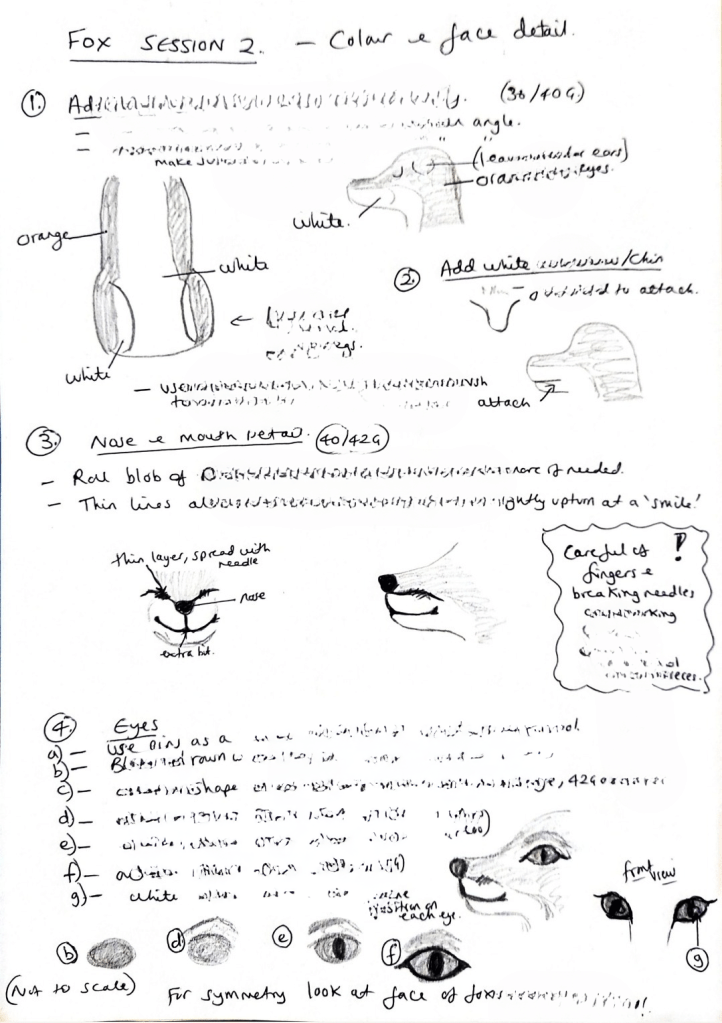
For my workshops as well as taking along the actual needle felted animal they will be making, I also provided some pre-prepared sketches, size guides and summarized step by step notes as visual tools to accompany the lesson.

I also scanned these and kept them as pdfs on file. They can be given in person and /or emailed.

One student was unfortunately ill on the second week of a three week needle felting course so they were able to catch up with my guides. Some students may also be a little slower than others so the guides enabled them to finish their creations at home if needed.

The guides also ensure I am following the steps myself too 🙂

Health and Safety Items and Insurance

Now when it comes to health and safety, you know how sharp those needles are so you can never be over prepared!

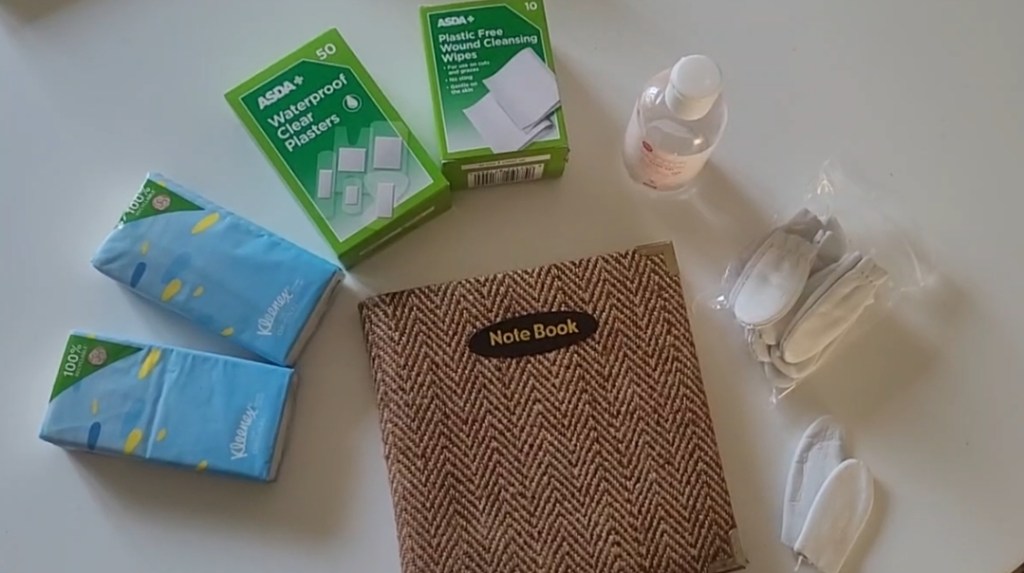
I took along a basic first aid kit of tissues, waterproof plasters, alcohol wipes and also some alcohol gel (the gel was particularly for those concerned about spread of germs/covid and for after touching food).

I bought some packs of finger and thumb protectors from here. Being made of leather they really do protect your finger and your thumb from being stabbed with a needle. You wear them on your less dominant hand and use dominant hand to hold the needle.

You can include these in the cost of the workshop or wash and reuse them. I found that washing them leaves them looking a bit used/worn so I did include them on my 3 weeks course and my students took them home and brought them back each week. So it is worth shopping around to get them as cheap as possible, though don’t go too cheap- some were not great quality and far too big for some of my students’ small hands.

It’s wise to keep a note of any accidents that do happen so you have them on record but with any workshop I do recommend that you take out public liability insurance cover! You can shop around to get the best deals. For me I joined the International Feltmakers Association as their annual cost is a really good price and includes the magazine, discounts on courses, a place to advertise your workshops and you can attend their meetings etc.

There’s no doubt that needles will be broken with any beginner class so I have a separate little container to collect any broken needles and they go straight in my sharps box later (you could take a sharps box along on the day of course).

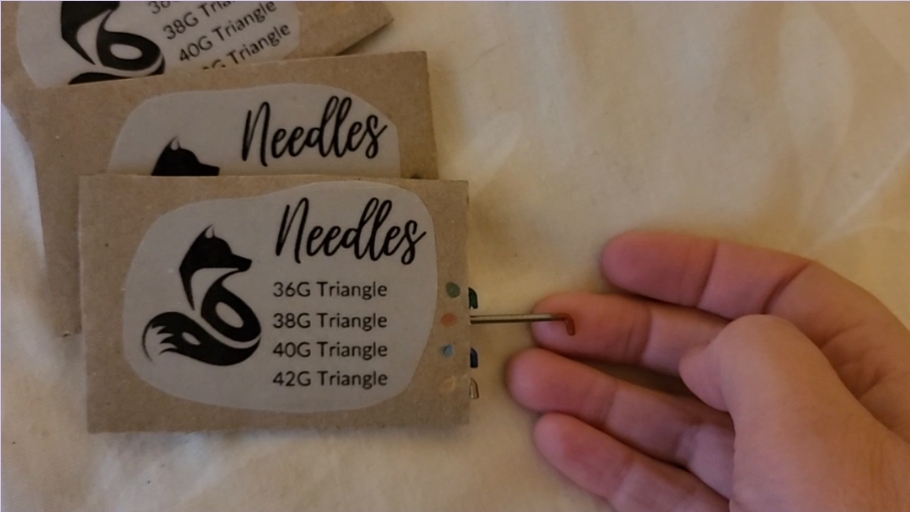
I don’t allow sharing or reusing of needles so that there’s no risk of contamination etc so I provide a corrugated cardboard piece with sticker on it to put the needles in for them to take them home. It’s a sweet way of containing the needles. The sticker on the front shows them what needles they have. This is simple to make, cost effective and reduces the need for plastic.

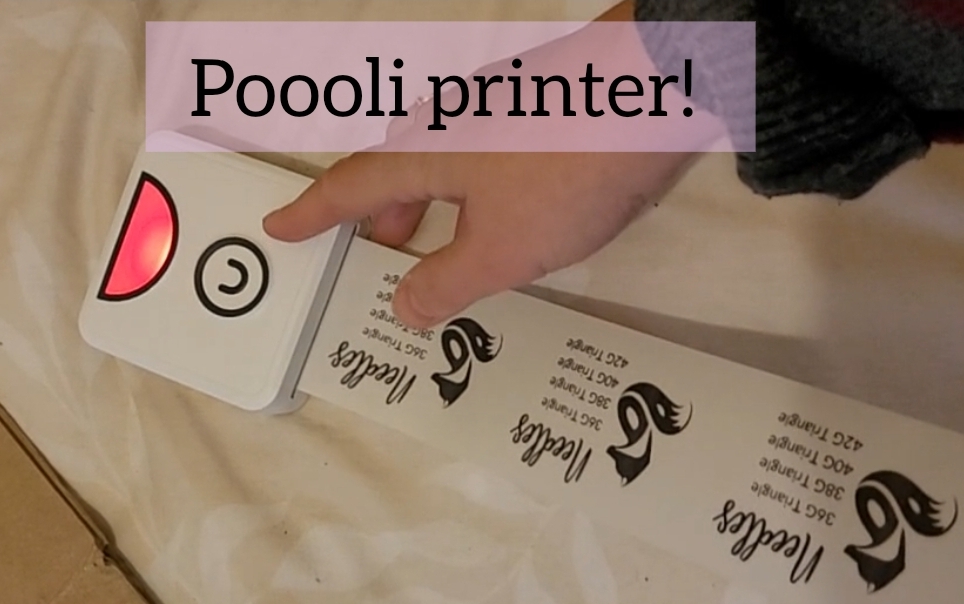
All I did to make then was I got some old Amazon boxes that were corrugated cardboard, cut out the size that I wanted. Used my little Poooli printer to print off some labels (I’d designed these in Canva). Then used a felt tip pen or coloured pencil to make a coloured dot where the needle will go. You quite simply pop the needle into the side. You could always add some cellotape over the tops of the needles to stop them falling out, but it’s just to get them home.

Alternatively you could use your business card, lay the needle across one side and cellotape them down.

Other Tools

A few little extras that you might also want to take to the workshop:

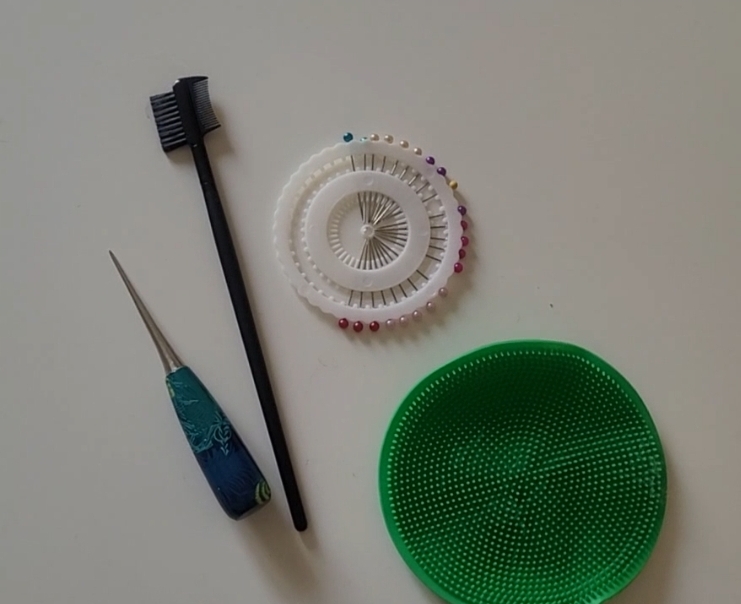
An awl – for making holes

An eyebrow brush – for brushing fur or smoothing out wool.

Colour headed pins – to mark where you’re going to put body parts eg eyes and noses.

Cleaning brush for the felting base – removes wool very well from the top of my wool pads or foam mats

Wool

Of course your students can’t felt anything without the actual wool. So I take along my bag of previously weighed wool in amounts for each student plus a little extra.

I also like to teach about the different wool types that you can get so I take some core wool, carded wool (slivers and tops), merino tops. You could include other animal fibres eg camel or some vegan fibres. I showed some Suri alpaca wool which is absolutely lovely as it’s silky and soft for using as long fur. If you’d like to learn more about wool types I have a guide on these here.

Marketing/ business promotion

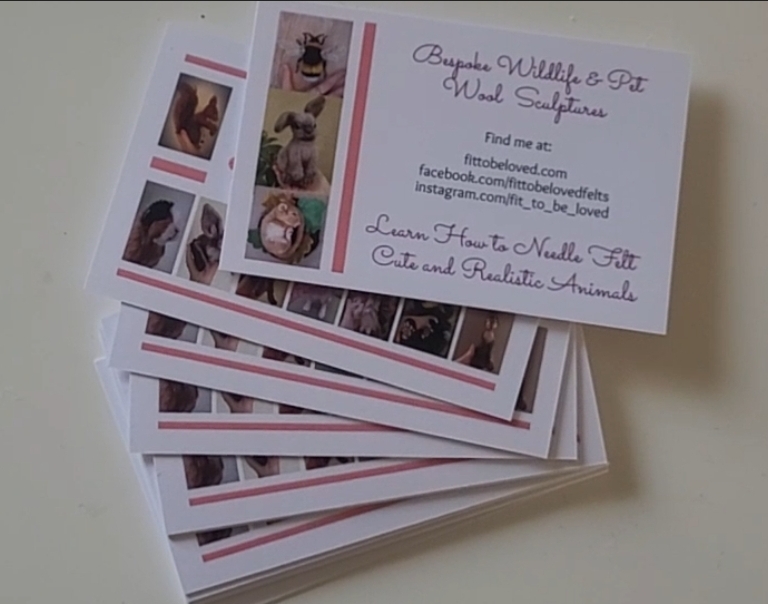
I take business cards for my students and also for the passers by who come into the wool shop where I hold my workshops.

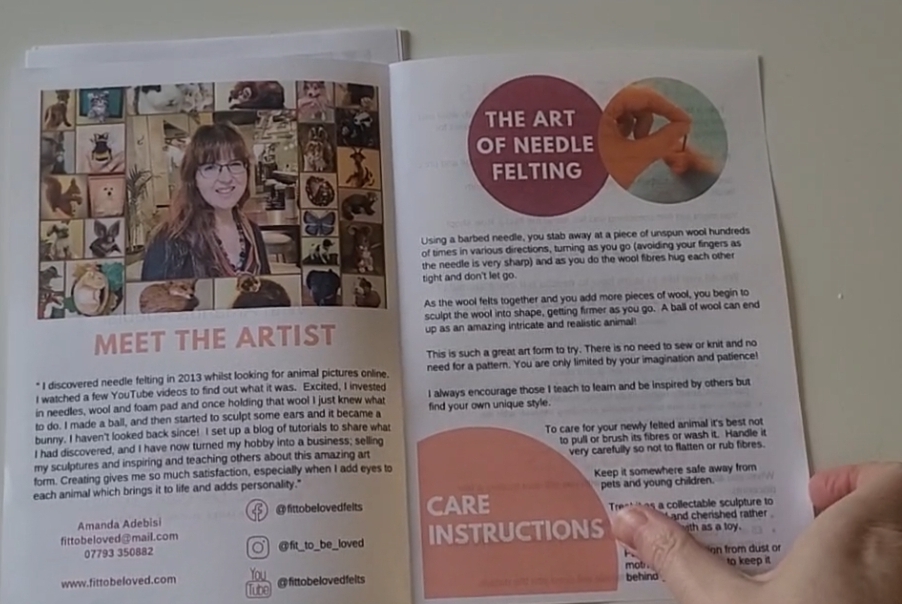
I’ve also give each student a leaflet (designed in Canva) which includes;

  • info about the needle felting classes,
  • a bit about myself and my social links,
  • care instructions for their needle felted animal they’ve made,
  • recommendations of where they can get some more wool and tools,
  • a list of how and where they can learn more – eg my other courses, PDFs etc, and
  • a section about discounts they are entitled to as an attendee of my workshop.

The workshop is the perfect opportunity to also take along some other creations that you’ve made.

This is to promote the other courses that you might be able to offer. So if they’re starting on a beginners course, they might then want to look at what they could achieve at an improver course.

So on my one day robin workshop I took along my fox. I had several students book onto my 3 week fox course.

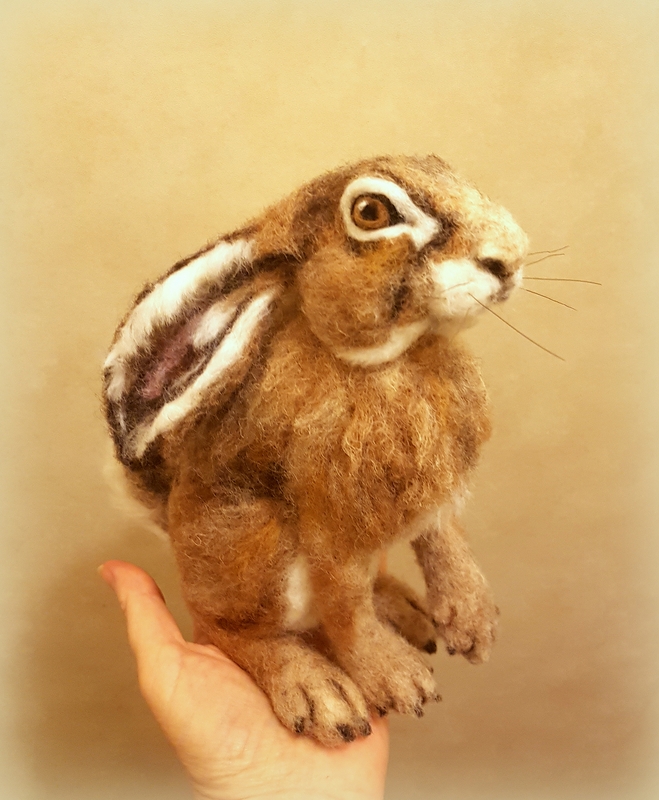
I took along my hare to promote a hare PDF I am making and also the dog and cat head which feature on my YouTube channel. Shop customers can also see my needle felted animals and potentially book on the next workshop or take a business card.

It’s one of the very few times I get to take my creations out in public.

Refreshments

It’s nice to offer some refreshments during the break. I offer tea, coffee and biscuits for a morning break at a 3 hour workshop. You might need to consider lunch if a day workshop and factor that into your costings.

You’ll need to consider dietary requirements too.

Containers

Boxes or bags are useful to keep all your items stored tidily and organised and also safe for transporting them to the workshop. It is worth making sure you have something waterproof to cover items in case of rainy weather. I used a few boxes and bags for mine.

Paper bags – for students to take home their newly acquired wool and tools as well as their creation they’ve made at the workshop. I got these really cheaply from Asda (usually advertised as large party bags or lunch bags).

Organisation and the day itself!

I kept a checklist of everything that I needed to buy and then once bought I had a list of what I needed to take to the workshop and an ongoing to do list to make sure I hadn’t forgotten anything.

It’s wise to get to the workshop at least 20 min early to lay everything out on the table.

THEN meet the students, have lots of fun! This is a wonderful time to share your skills!

I set my alarm for various times to make sure that I kept to my timing!

Be sure to take along your enthusiasm and love for this amazing art form. I love the look on my students faces as they learn to needle felt for the first time. Its amazing to be their first step in their needle felting journey!

I hope this has given you some ideas on how you might prepare for your workshop. Please let me know in the comments what you thought of these ideas. And also, let me know how your workshop goes. I’d love to hear from you. xxx

Here is the video version of this guide if you’d like to watch it 🙂

Absolute Beginners Needle Felting Class – Easter Bunny

Would you like to learn the amazing art of needle felting?

This coming spring I invite you to join me at the Purl a row wool shop in Grantham and create this super cute Easter Bunny.

What you’ll get:

🔶️ 3 hours of in-person tuition in a small group setting, with me – Needle Felting Artist and Tutor Amanda Adebisi of Fit to be loved.
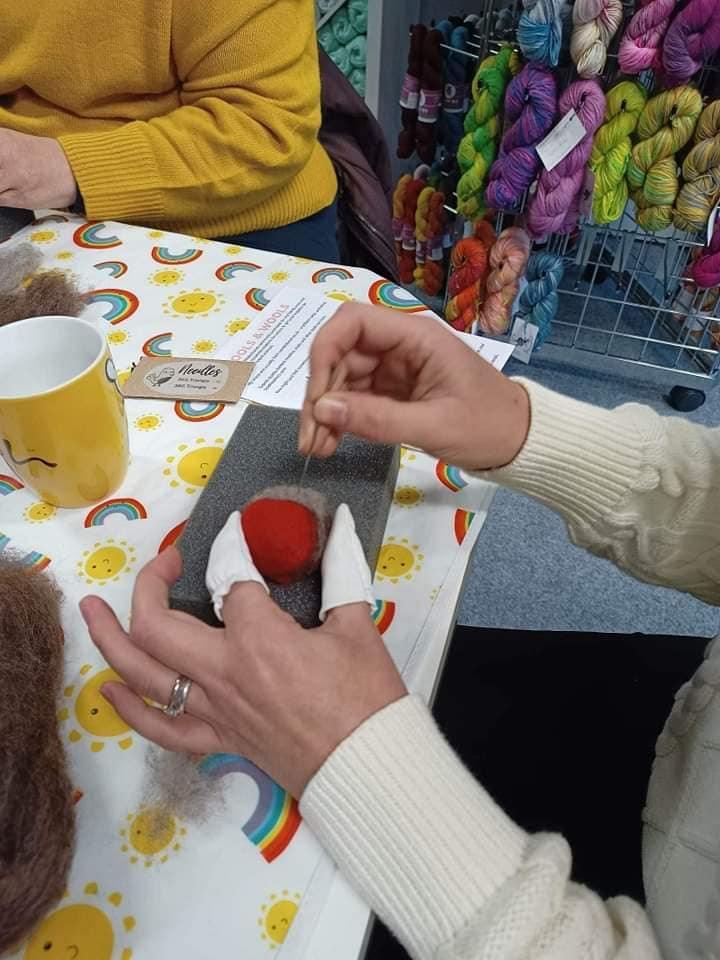
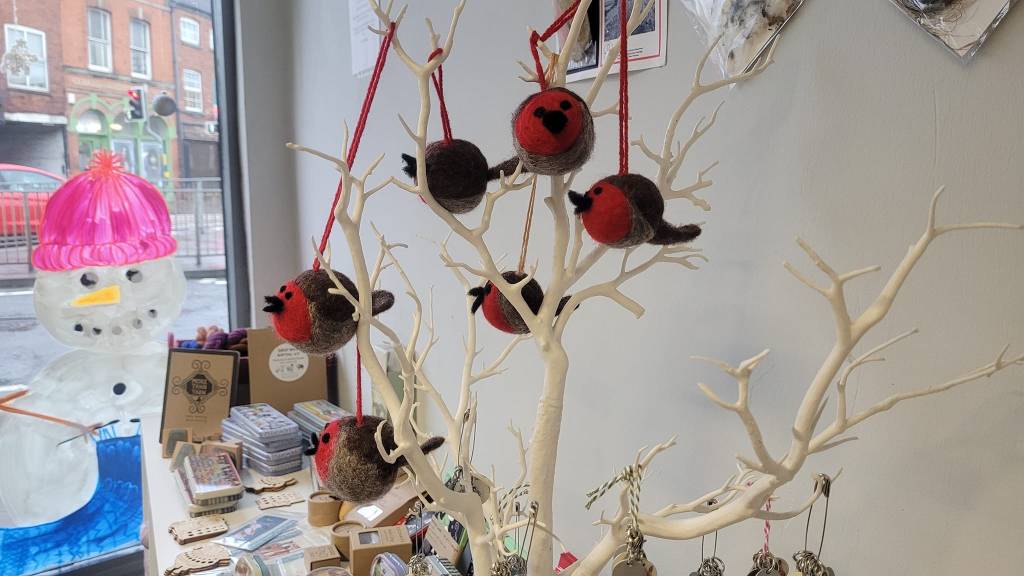
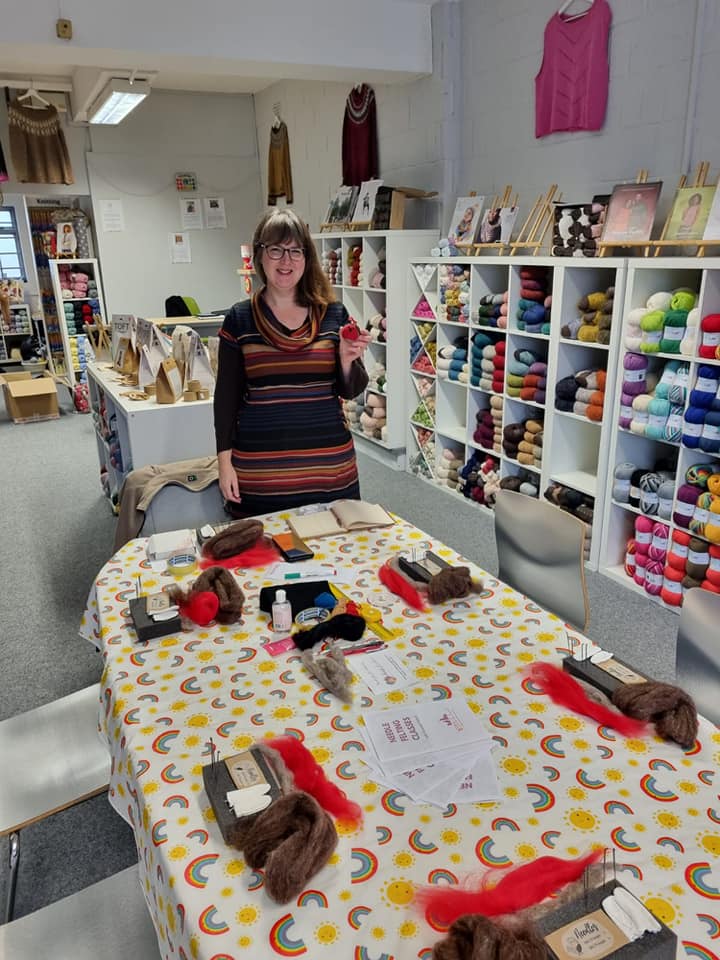
🔶️ You’ll learn about needles and wool types and gain the skills of basic shape making, attachment of body parts, adding colour and detail, smoothing techniques and more.

🔶️ Your barbed needles, felting foam, finger guards and enough wool to make 2 bunnies (one to make at the class and one to make at home). Wool loops to hang your bunnies on an Easter tree if you’d like.

🔶️ Opportunity to connect with others who are also starting their needle felting journey. It’s a morning of felting fun together!

🔶️ Tea, coffee and biscuits on the day (please let me know of any dietary requirements).

🔶️ Discounts off my PDF Bee tutorial & one to one tuition.

All for £30pp.

There are only 5 spaces available on each date so if you would like to come, please book early to avoid disappointment.

Previous Classes – Gallery

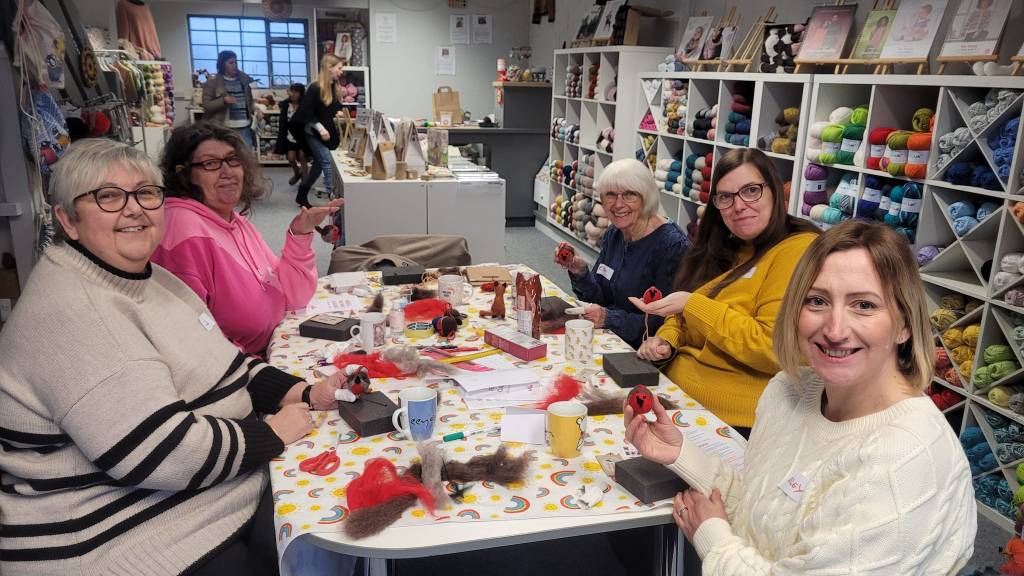
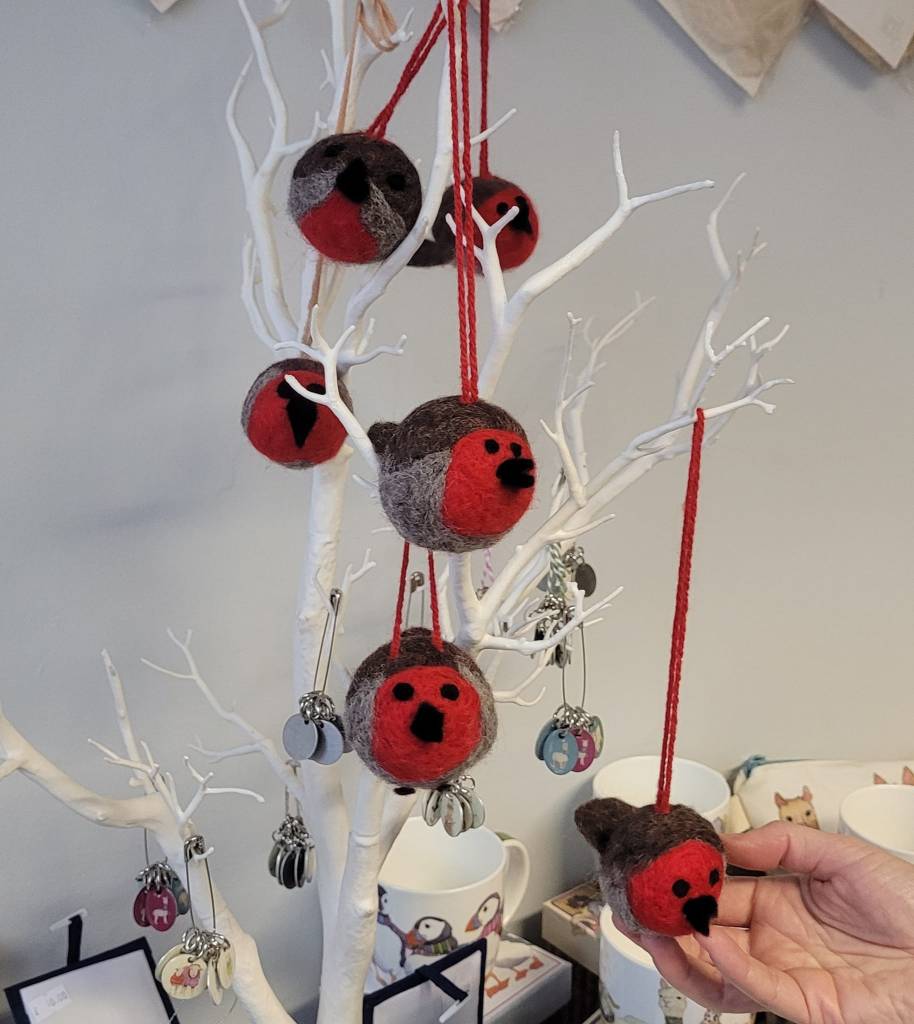
The last absolute beginners class on how to make a little robin Christmas tree decoration went really well. We had 5 lovely students who arrived having never felted before and left with their first ever felted creation!

Whiskers for Needle Felted Animals

Wondering what to use as whiskers for needle felted animals? or maybe you would like to see what other materials are possible that you’ve never tried before?

In this video I compare 7 materials that can be used for whiskers so you can decide on the best one for you!

I demonstrate how to attach whiskers on my Tabby Birman cat head as this is the 5th and final part of the needle felted cat head series.  If you haven’t seen the first 4 in the cat head series they are here.

I explain the pros and cons of the options and share my top 3 favourites. 

I hope you enjoy it! Thanks for watching!

What to use for whiskers

Easy Needle Felted Fox for Christmas

Would you like to make some cute and easy needle felted Christmas decorations? Here is a tutorial that I hope you’ll all enjoy especially if you are a beginner!

I’ll show you how to create a little needle felted fox that you can easily hold in your hands. He is sleeping with his tail wrapped round him and has a lovely teal blue scarf round his neck to keep him warm for the winter. I think the teal colour looks great against the foxy orange colour though of course you could opt for any colour you like!

You could create one to add to your own collection of Christmas ornaments or make a few as gifts for family and friends 🙂

I demonstrate how to add a hanging loop so you can hang him on a branch of your Christmas tree or from a hook on your mantle piece. Perhaps you’d like him as an ornament without one! Maybe even attach him to a woodland themed wreath?

He is made of pure wool and there’s no need to crochet or knit his scarf, simply plait it!

I hope you find this tutorial useful and enjoy it too!! 🙂

Easy Needle Felted Christmas Decorations: a cute NEEDLE FELTED FOX Tutorial

Here are my recommendation for where to buy the materials and tools (if you live in the UK)

Needles

Triangle 36G https://amzn.to/3UyLsYr

Triangle 38G https://amzn.to/3oKvTPK

Triangle 40G https://amzn.to/2YEct4E

Wool

Creamy white Corriedale Slivers https://amzn.to/30dsfEf

Carded Slivers in animal shades – Menagerie mix – 10 colours https://amzn.to/3wZi2b0 or wildlife mix – 18 colours https://amzn.to/3a2aVa8

Merino tops – packs of 6 (choose from 8 different shade packs) https://amzn.to/3oMB5Tz

Scissors

Stork Shaped Rose Gold Embroidery Scissors https://amzn.to/3AtdJVp

Armature Guides for Needle Felted Animals

If you are needle felting animals of the canine kind🐕🐶🐕🦊🐺 or felines 🦁🐈🐱🐆🐅🐯, I’m sure you’ll love these PDF armature guides just released by a good friend of mine from KawaiiYokaii Studios.

They are beautifully illustrated, easy to follow diagrams and instructions. You can not only use them as a reference for measuring your wires to make the armature but also as a size guide for when building up the wool to get the body shape of your animal just right and to proportion too!

They are a very useful aid when following my free armature tutorial here.

Don’t see a dog breed or type of cat you are planning to needle felt? – she gladly takes requests and offers these updates for free so once you’ve purchased the pack you can come back and download the most up to date version!

They are in my opinion a great bargain at the price she offers them at and very handy to have in your needle felting tool kit!

Guides in the canine pack:

*Pug *Fox/Coyote *Large Breed Dog/Wolf
*Dachshund *French Bulldog *Fennec Fox *Terrier *Shiba *African Wild Dog *Racoon Dog

(She added these 3 based on requests after the launch)
*Greyhound *Springer Spaniel *Border Collie

Plus more to come…!

Guides in the feline pack:

*Domestic Cat *Tiger *Lion *Panther *Iberian Lynx *Caracal *Cheetah *Clouded Leopard *Puma *Serval

Plus more to come….!


She’ll be adding more animal groups soon too. 😊

How to Needle Felt a Smooth Finish

Are you wondering how to get a smooth on your Needle Felted Animals?

In this tutorial I share my 13 Top Tips for how to get a smooth finish! No more holey, lumpy or fuzzy sculptures! Get stabbing and needle felt a smooth surface with confidence!

I include advice on the process, needles, wool, use of tools and much more! Look out for my extra FAQs (about long furred animals and reverse felting) at the end.

Do you prefer to learn by watching instead of reading? if so please do skip to the bottom of this page to watch the video on YouTube 🙂

What are you wanting to achieve?

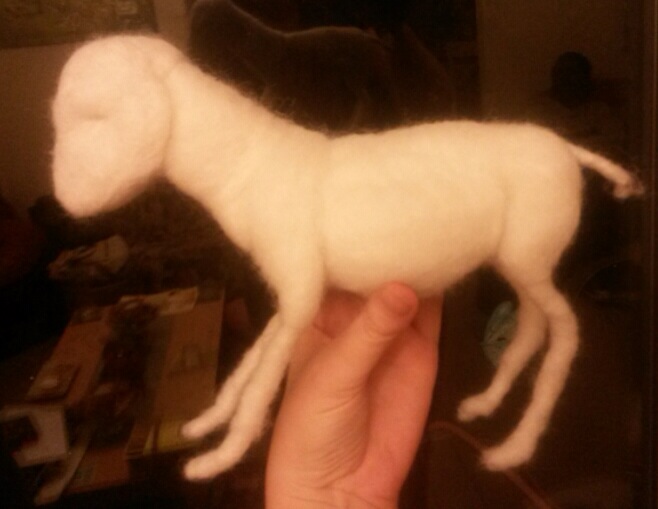
Are you wanting to needle felt a short furred animal like a horse or short haired dog breed? or maybe you want to felt a part of the animal such as around the muzzle so that it’s smooth and soft?

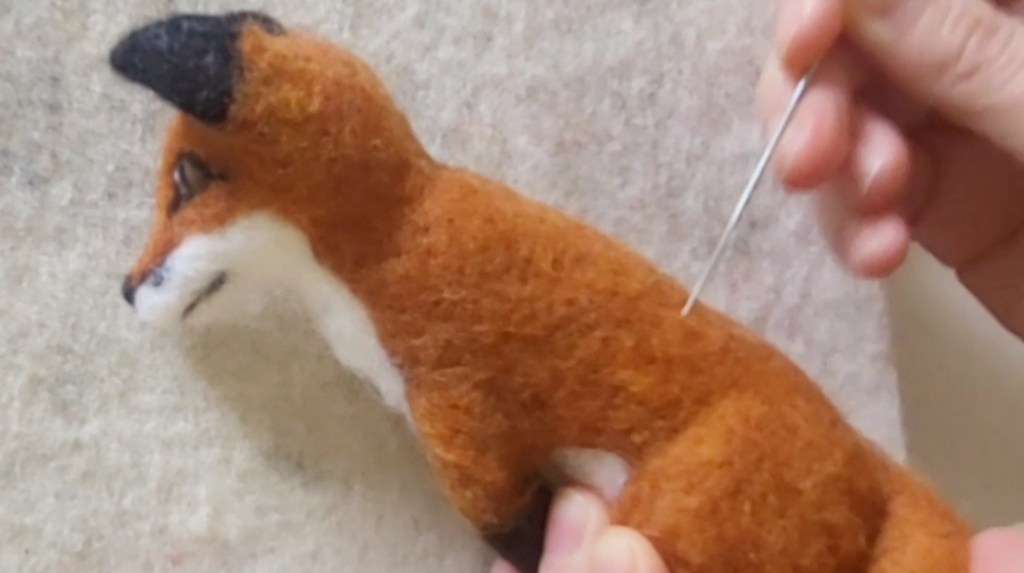
Or maybe the style of your sculpture is that you want it to look firm and no fluff but smooth looking, for example with my sitting foxes I made in preparation for an upcoming needle felting course, I wanted them to be quick and easy to make for my students without all the long fur attachment which can take hours.

Tip 1: It’s about the Entire Process!

Think of this in terms of it being about the entire process. It’s not just about the end result. You can’t grab your wool and stab it any old how and then expect a sudden smooth finish by the end. It is possible but it could take a lot longer to achieve. So start off really well, have intension and a plan! Through the process of stabbing, layering carefully and keeping it firm and using some of the other tips below you’ll hopefully end up with that lovely smooth finish!

Tip 2: Wool

It’s important to understand about wool and consider the type of wool you will use for your needle felted animal.

If using merino wool, this is soft and fine so is going to look and feel soft and smooth. Be careful though if using merino tops (tops are where the wool is in long lengths which go in the same direction). The structure can mean that stabbing will show holes so you need to use finer and finer needles for it to look smooth and it can take a while to get the result you like.

Carded Wool usually comes in batts (sheet) or slivers (long lengths). Carded wool is where there are short fibres that go in different directions so fibres will felt fast and you can firm up your sculpture much quicker but the overall look can be more messy and less smooth so you’ll need some effort to prevent fuzziness and not show holes.

If you would like to know more about wool. Here is my Guide to Wool

Tip 3: Barbed Needles

Barbed needles for needle felting come in different gauge numbers (thicker or thinner), the end you stab with comes in a few different shapes e.g. star, triangle, spiral, crown, and they have varying numbers of barbs. So it’s vital to know which needle to use at the different stages of the sculpting, firming and finishing process.

When starting off you’ll need a lower gauge number (thicker needle) and when you finish off you’ll need a higher gauge number (thinner needle). For example when making the core shape of my fox I used a 36G triangle, then after a while I moved to a 38G triangle to firm it. I then smoothed the surface with a 40G triangle needle.

Tip 4: Keep Stabbing

If you find that your needle felted creation is not firm enough and is therefore too soft when you squeeze it, or there are areas that are lumpy, then you’ll need to keep on stabbing!

If you keep stabbing and then feel some resistance as you stab into the wool with the needle you are using, then you’ll need to move up to the next number gauge needle e.g. move from a 38 to a 40.

When I am sculpting with wool I like to keep my shapes medium firm while I perfect their form. Once I have manipulated the wool with fingers and happy with the overall look, then I go ahead and firm up further and keep stabbing.

Tip 5: Even out any Dips

If you have continued to stab but the odd indent is still there in the surface of the sculpture (sometimes this can happen with core wool where areas are thicker or thinner) then you may need to fill with more wool to even out and smooth the surface.

Tip 6: Felt Shallow and at an Angle

Once you are using higher gauge needles to smooth the surface (e.g. 40G or 42G) these will leave very tiny holes compared to the lower gauge needles but make sure you also shallow felt by only felting with the thin end tip of your needle. Felting at a slight angle e.g 45 degrees and not stabbing at right angles (90 degrees straight down) into the wool also shows less holes!!

Tip 7: Spiral/Twisted Needle

Once at the stage to smooth your surface you can also use a spiral (also known as a twisted needle). This is a great needle for getting a smooth finish. When you look at the needle close up you’ll see that the end of the needle is twisted as a spiral, shaped like a mini drill.

Tip 8: Layering wool

When layering wool e.g. when adding a coloured layer of carded wool over core wool, avoid creating harsh edges and bumps in your wool by looking for and removing any unusual blobs or strands and vegetation matter before you add it. Also be careful to select the right amount of wool as a wad to lay so that it is not too thick nor too thin in thickness and the fibres are evenly spread. Lay it over your core base without folding edges then lay the next piece along side it but slightly overlapping.

Stab the wool with your higher gauge needle shallowly and at an angle as described above and you should end up with a nice smooth finish.

An extra Tip for Merino tops

A merino top can be more of a challenge to layer and look hole free – don’t worry if this is all you have in your supplies- it is possible but needs lots of stabbing with fine needles to finish off. Sometimes though I take the top and pull it apart with my fingers to shred it up into shorter strands and to ensure the fibres end up in different directions. Then I add evenly spread wads of this to my animal. It really helps with blending along any edges with another colour. Why not try it out and see what you think 🙂

Tip 9: Use Hands/Fingers

If you’ve used your fine and spiral needles and shallow felted at an angle but still seeing holes, others may not notice but maybe you do …. what do you do? Well it’s a simple thing but really works! Just use your hand/s or fingers to carefully rub over the wool surface! the warmth of your hands and movement will manipulate the surface and move fibres over any holes. Be careful not to do this too briskly as this can add to the ‘too much fuzz’ problem. You can roll a ball shape or long cylindrical shapes such as legs or tail of an animal between your hands with some pressure , you can rub large areas of the animal over a warm palm of your hand in a circular motion or back and forth, or rub a finger end in circular motion over patches of wool that need it.

Tip 10: Needle Brush

Another way to help cover holes is to use your sharp needle end (can also use a normal sewing needle) to carefully brush fibres. This is a tiny movement but can be really effective. You might quite like this look to add a little texture at times so more animal-like whilst still being soft and smooth to the touch.

Tip 11: A Tiny brush

If you have a soft tooth brush or baby brush or an eyebrow brush then you can also brush tenderly over the fibres to again move strands over holes. If choosing the eyebrow brush it will need to be one that has a bristly brush rather than a comb edge. I like to press against the wool surface with my brush and move in a circular motion a bit like I would with my fingers rather than actually ‘brush’ the fibres. Brushing or rubbing too vigorously will certainly create more texture and possibly fuzz the surface but this may be a look that you like too!

Tip 12: Scissors

If your issue is still that your needle felted animal looks too fuzzy, messy or there are stray strands then this is time to get out your small scissors and give it a really good trim. Sometimes though fuzz on an animal is a great look… this is the wonderful thing about needle felting and playing with textures. You can try both looks and see what you prefer!!

Tip 13: Super Smoothness Ideas

Using pressure and heat is a brilliant way to smooth down any fuzz and you can achieve this with your every day iron if you are careful or you could try a mini crafting iron over the surface of your small needle felted creations.

If you want sleek slim smooth animal ears or feathers (or other flat pieces you are making) then how about try some hair straighteners? you can lay your felted item between the plates for as little as 5 seconds on a fairly high heat and wow what a wonderful result! those stray fibres proper flatten down.

Bonus FAQs

1: What if I’m making a long furred animal, Does it really matter if the core wool is firm or smooth?

Well, you don’t need the surface perfectly smooth no as you won’t see it. However it is important to get the core of your animal firm and be free from any lumps or dips. If too soft then when attaching the long fur the animal core can shrink slightly, the surface may become uneven and the whole creation can become misshapen. If you start with a firm smooth surface the fur will layer nicely and flow well. If you’d like to learn how to add long fur to your animals there is a video series here.

2: What if I’m reverse felting? Does it matter about the wool being firm or smooth then?

Again it doesn’t need to be perfectly smooth but you need the wool firm with an even surface so that when you pull out the fibres with your reverse needle the wool maintains its stability and shape. You want to be pulling out even tufts of fibres that will look like fluffy fur not pulling out big chunks! If you’d like to know how to reverse felt, your ultimate guide to the reverse felting needle can be viewed here.

Here is the video version for how to get a smooth finish on your needle felted animals.

I hope you found this tutorial useful. What smooth surfaced animal are you making?? 🙂

Needle Felting Classes In Grantham

Hi Everyone!

I have exciting news to share that I will be running some Needle Felting Classes local to me in Grantham, Lincolnshire this November-December and in the New Year in January!

There’s a cute robin Christmas Tree decoration to make for absolute beginners and an adorable fox for those who have made something simple before but can’t wait to learn more!

Here’s the page to tell you all about the classes. I hope to see some of you there! 🙂