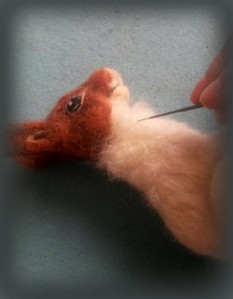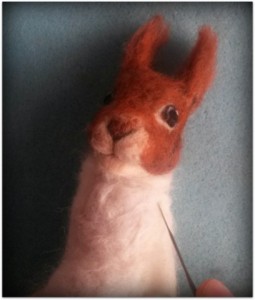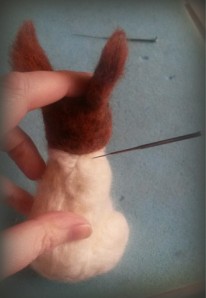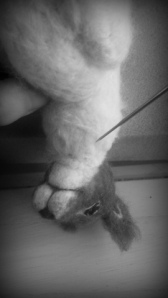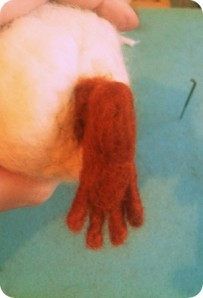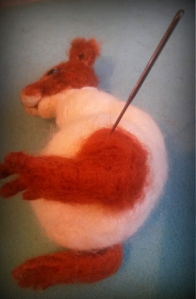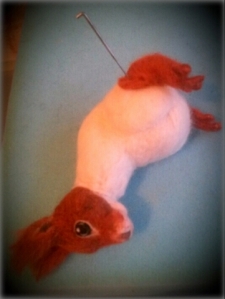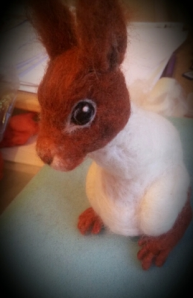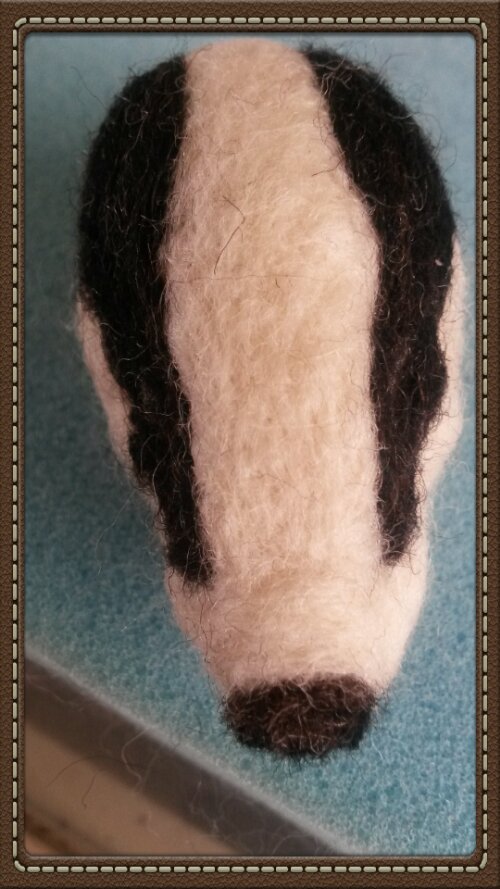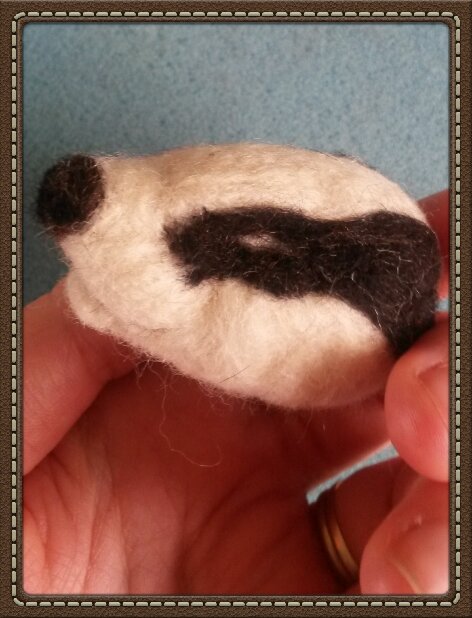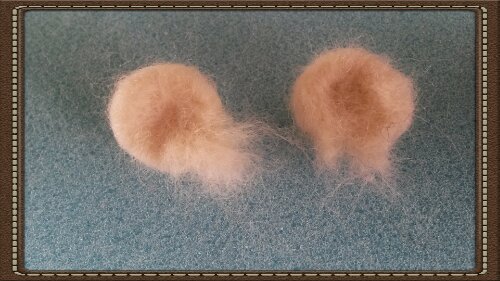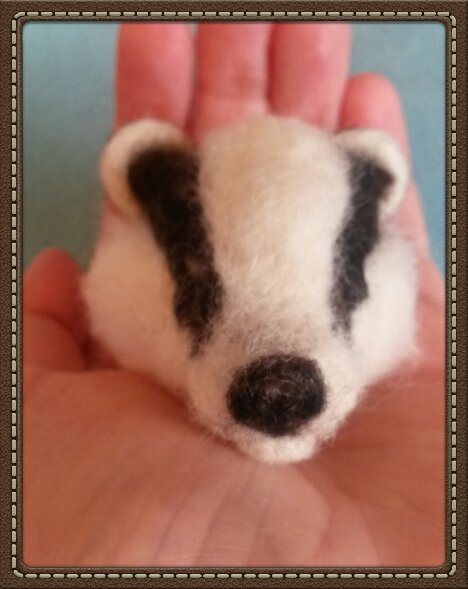
Tiny feet and tiny toes – needle felt tutorial

Tiny feet and tiny toes – needle felt tutorial

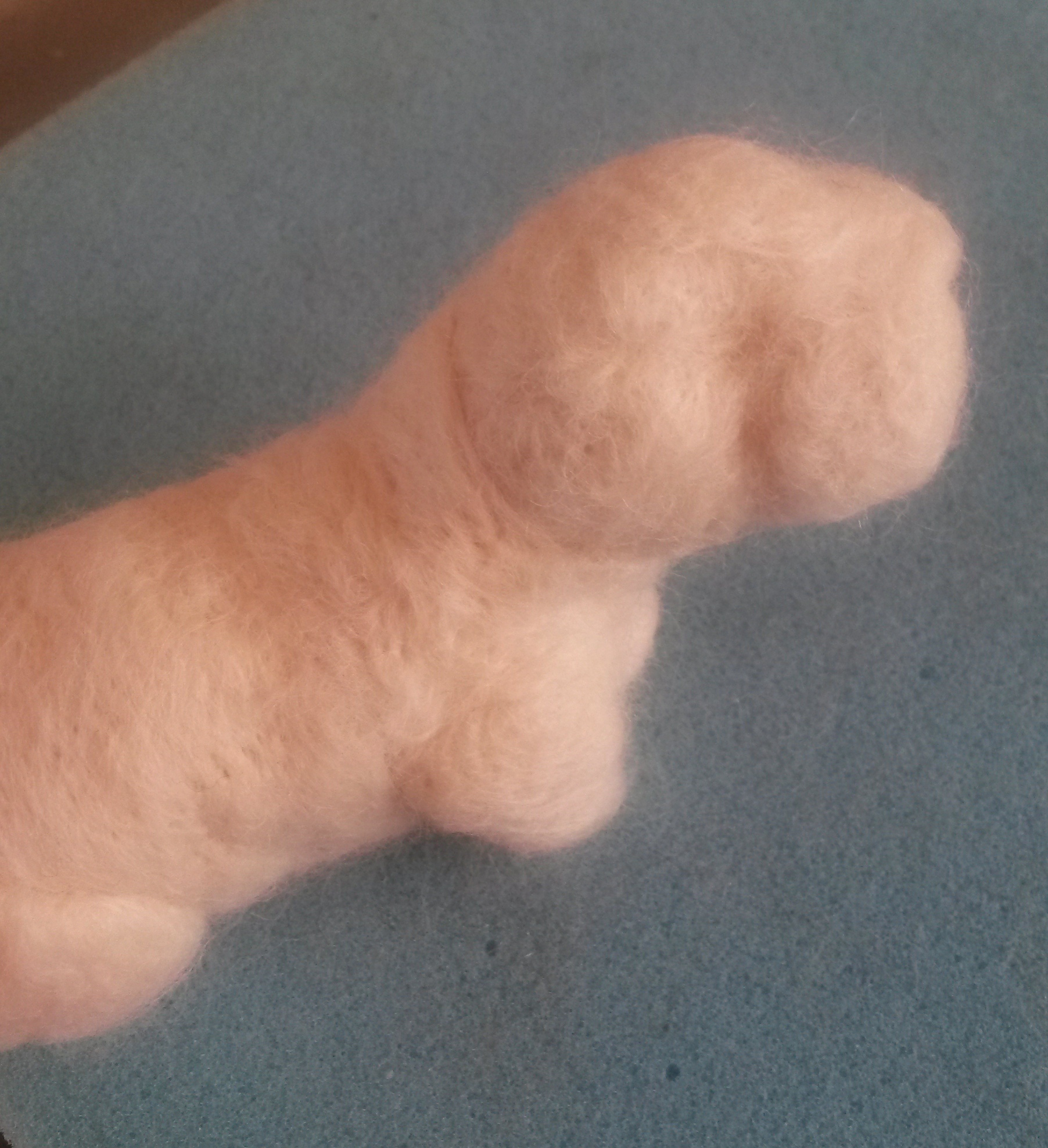
How do I give my needle felted animal cute detailed feet or tiny toes?

This tutorial will hopefully inspire you with some ideas for how you might tackle felting animal feet and a step by step guide to making individual toes using wool wrapped over wire.

Basic feet

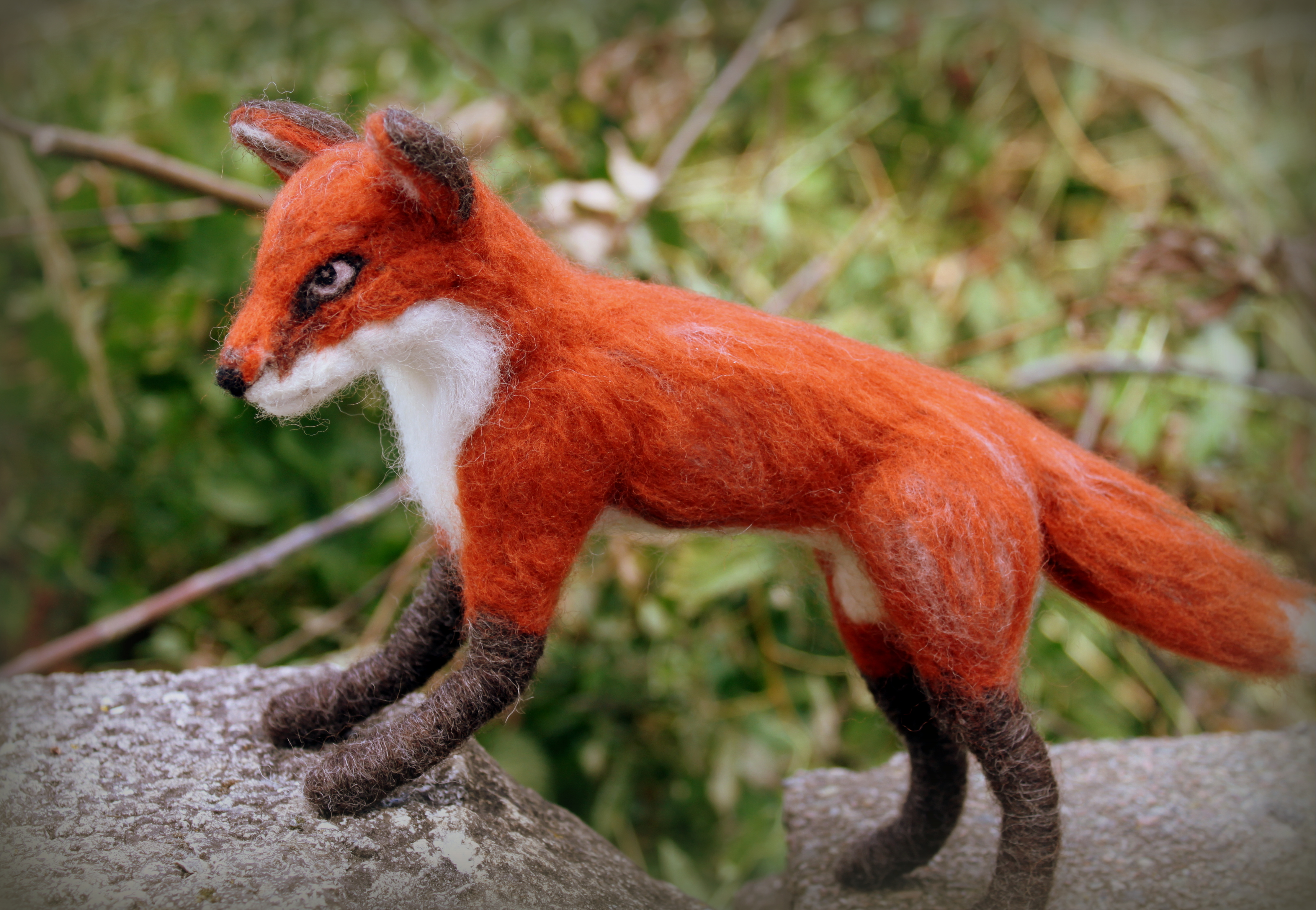
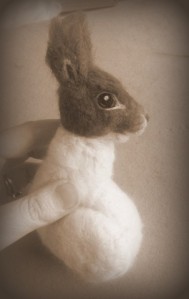
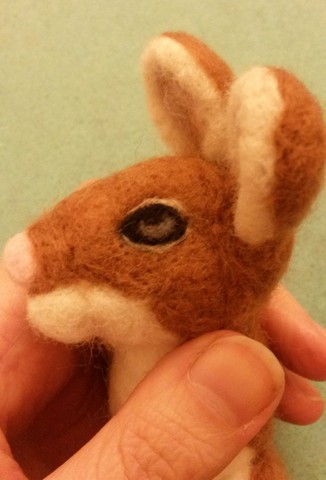
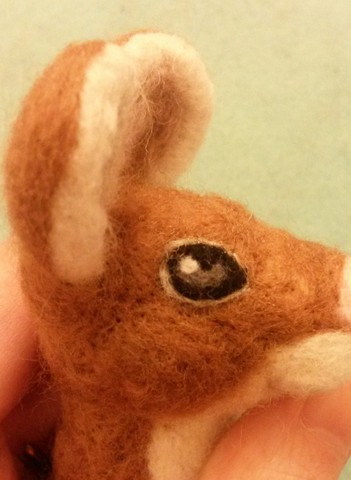
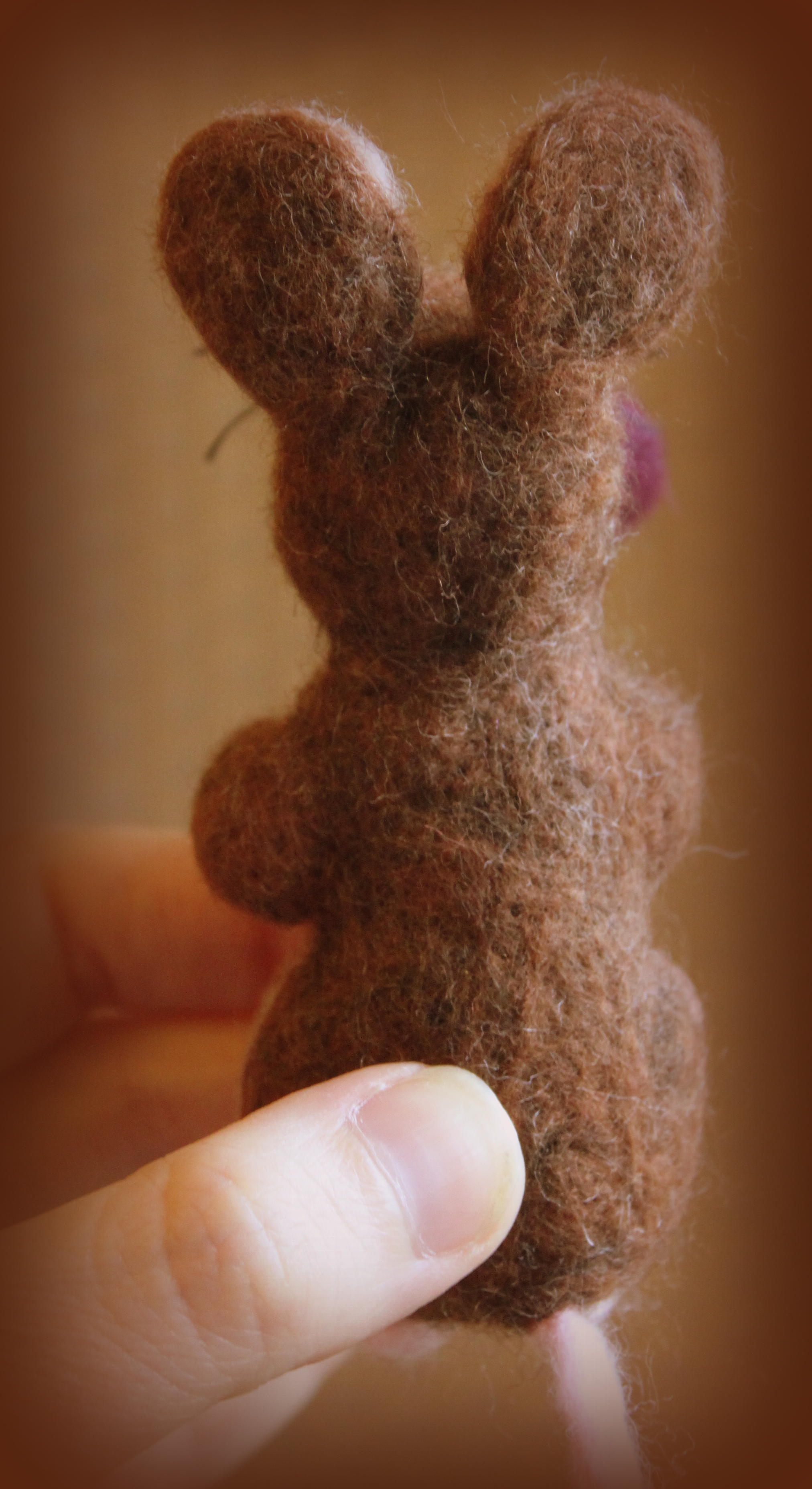
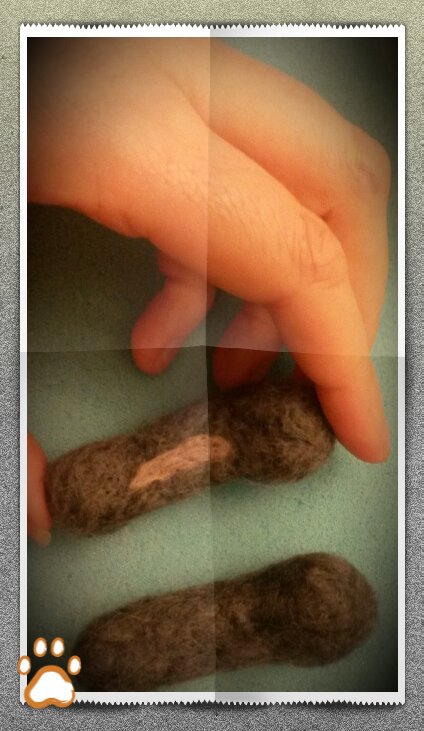
For some of my felted animal sculptures I decided not to give their feet too much detail. Here you can see that my hare and fox merely have simple dark rounded feet. Their sitting or standing positions mean that you only really see the top of their feet. Of course I could have spent more time on them but I didn’t want to over emphasise their paws and was satisfied with how they looked as they are. Their expressions and character come through enough in their faces and other cute features.

Needle felted bunny IMG_3400

A bit more detail

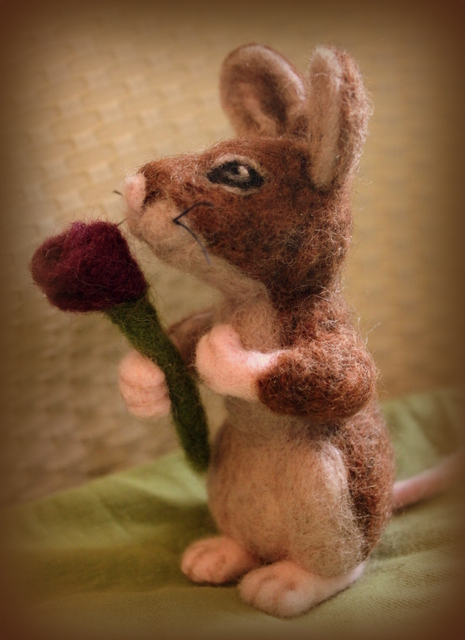
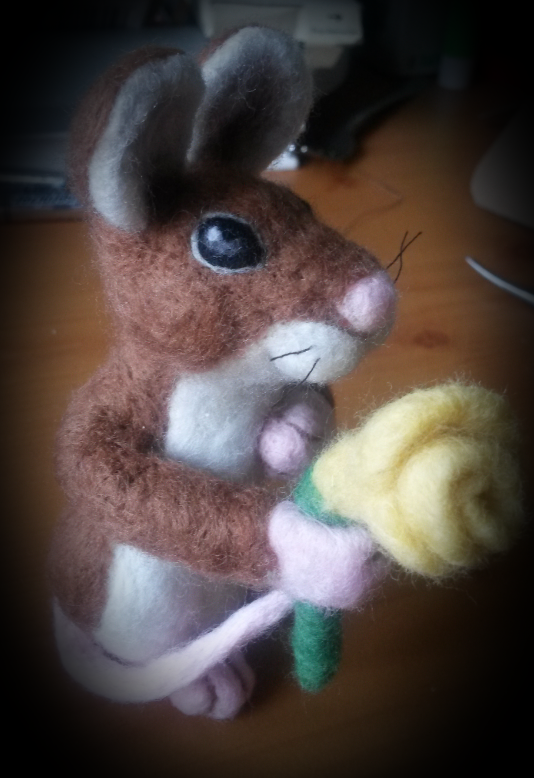
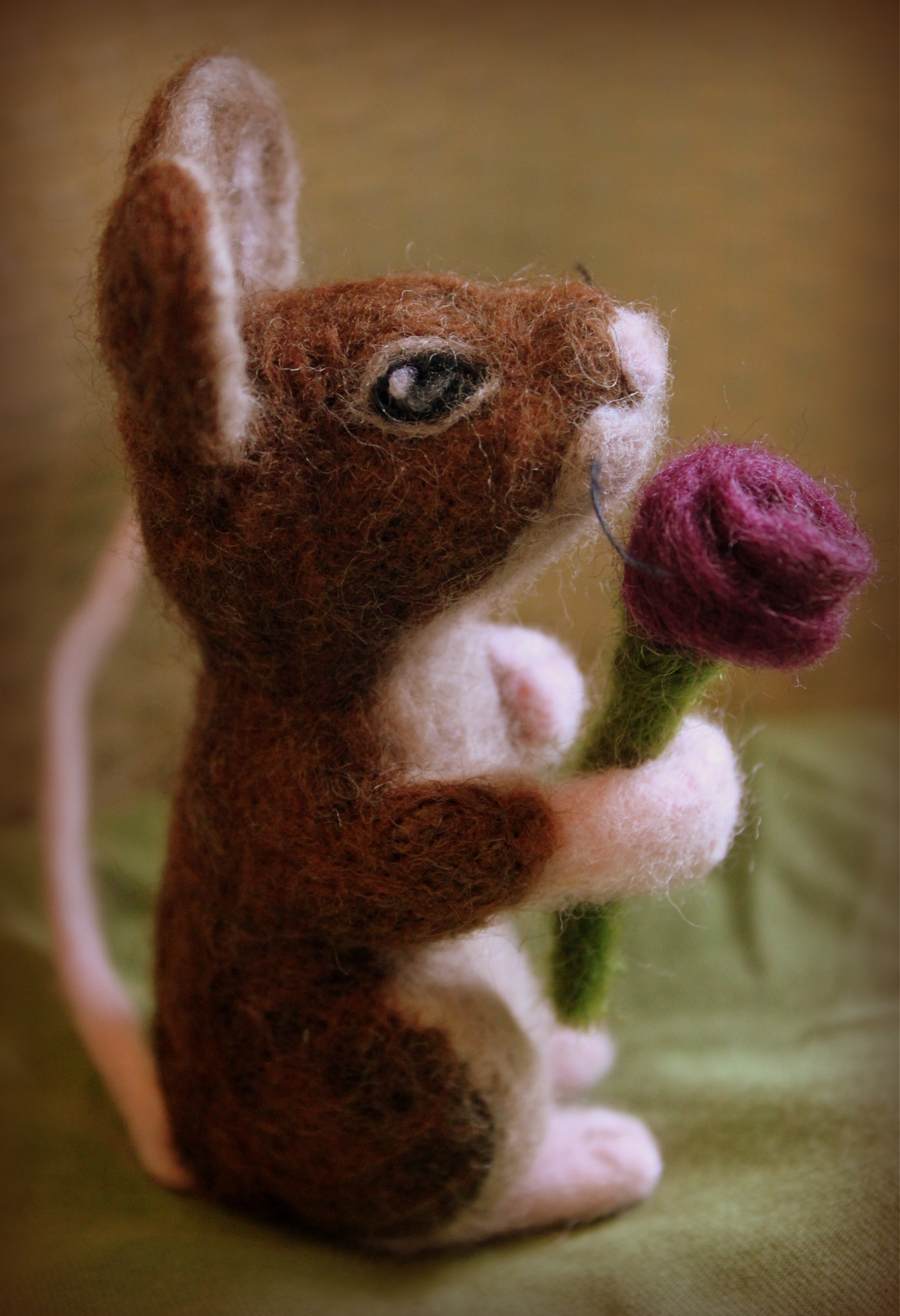
When it came to the mouse I made for my mum; his little feet were pink and would have looked a little bare with no detail. Again he is standing up so you don’t see his paw pads anyway for his back feet but I decided to add some tiny threads of wool fibre with a thin needle to show that he has separate toes. I also stabbed away to sculpt obvious paw shapes for his ‘hands’; one holds a beautiful flower and the other is pressed against his humble mouse heart to say ‘I love you!’
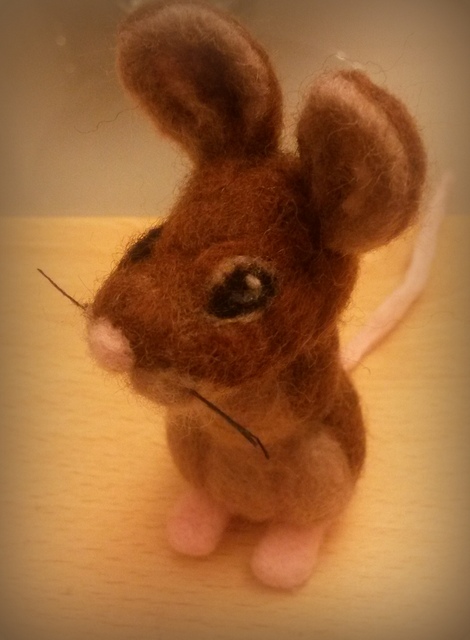
06-Needle felted feet (6) 08-Needle felted feet (8) 09-Needle felted feet (41)

Cute paw pads

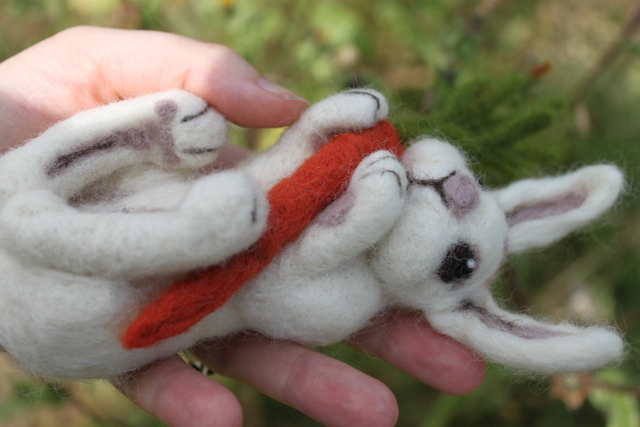
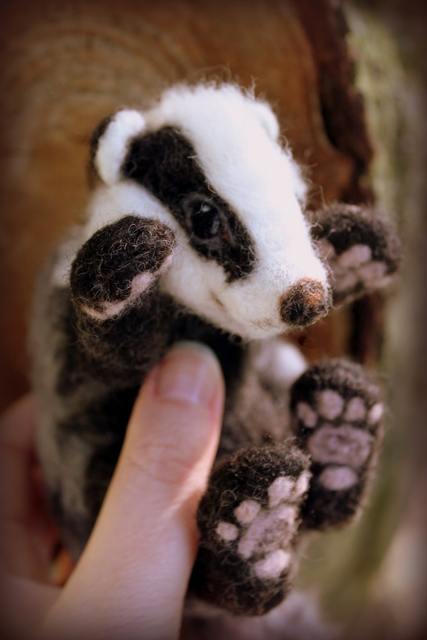
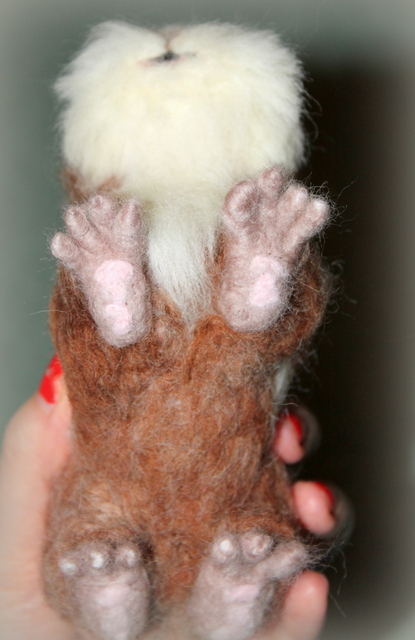
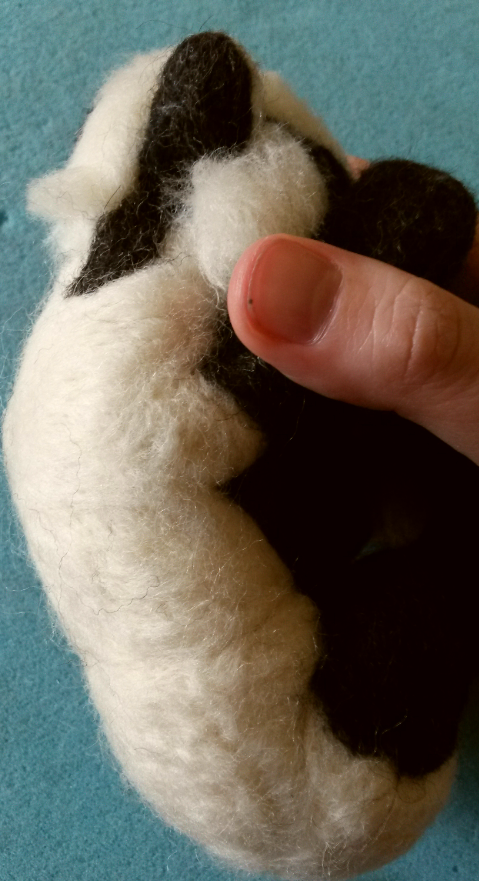
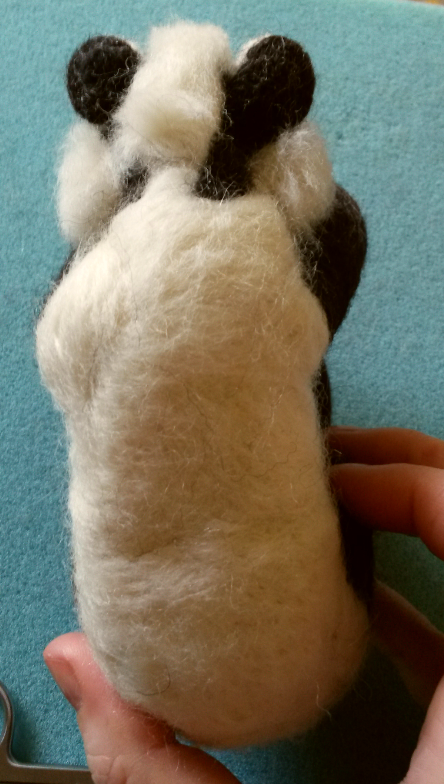
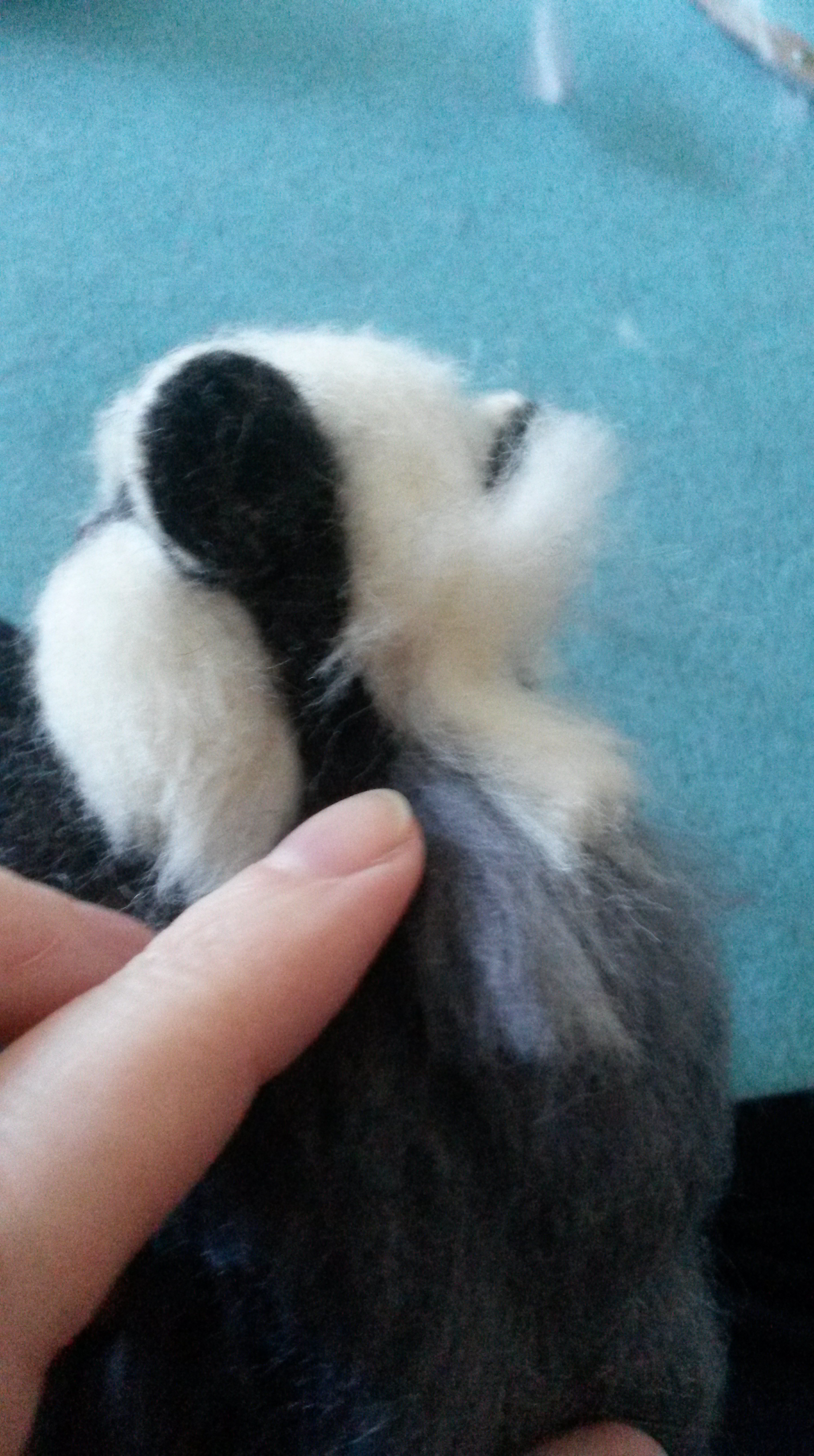
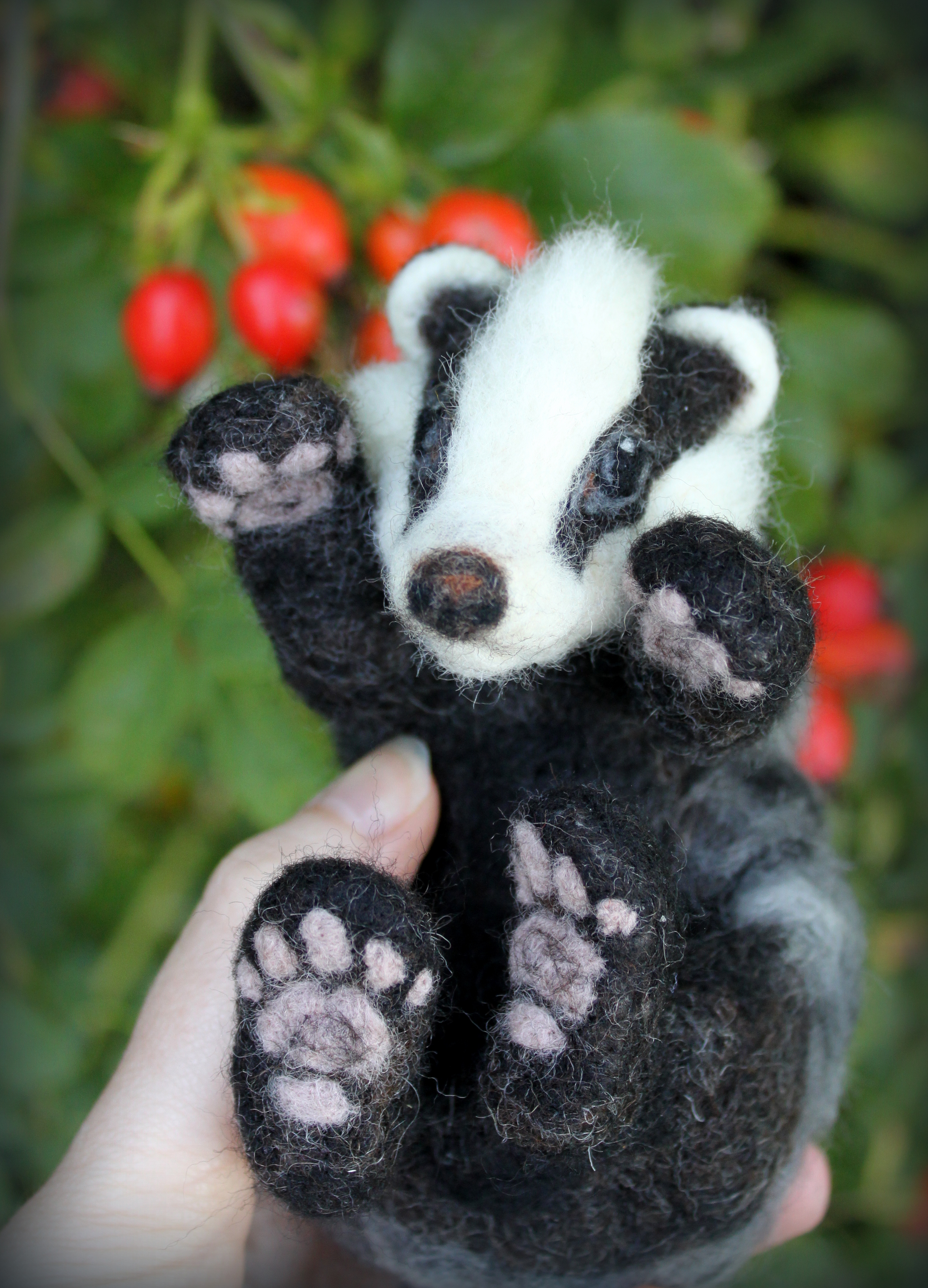
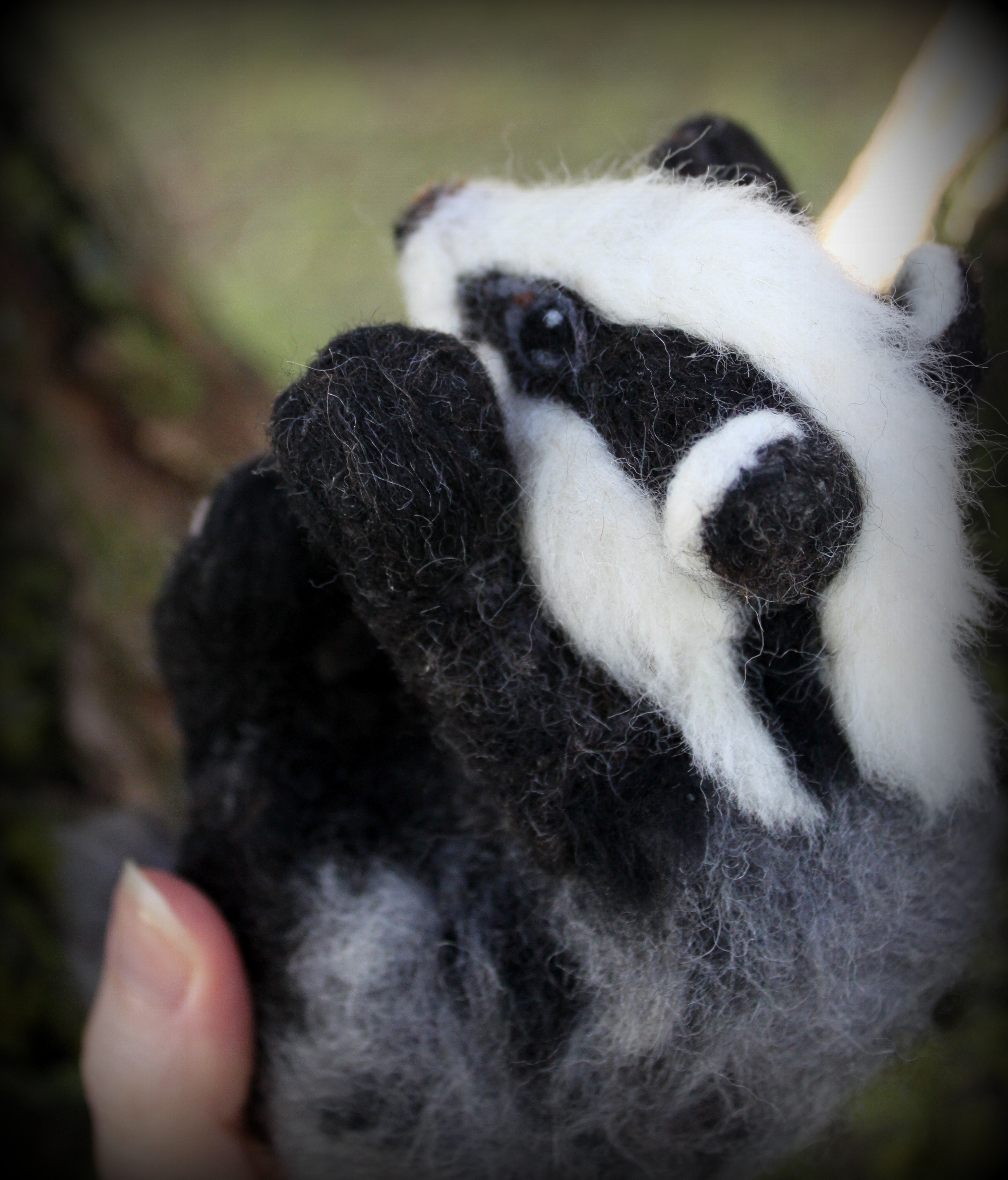
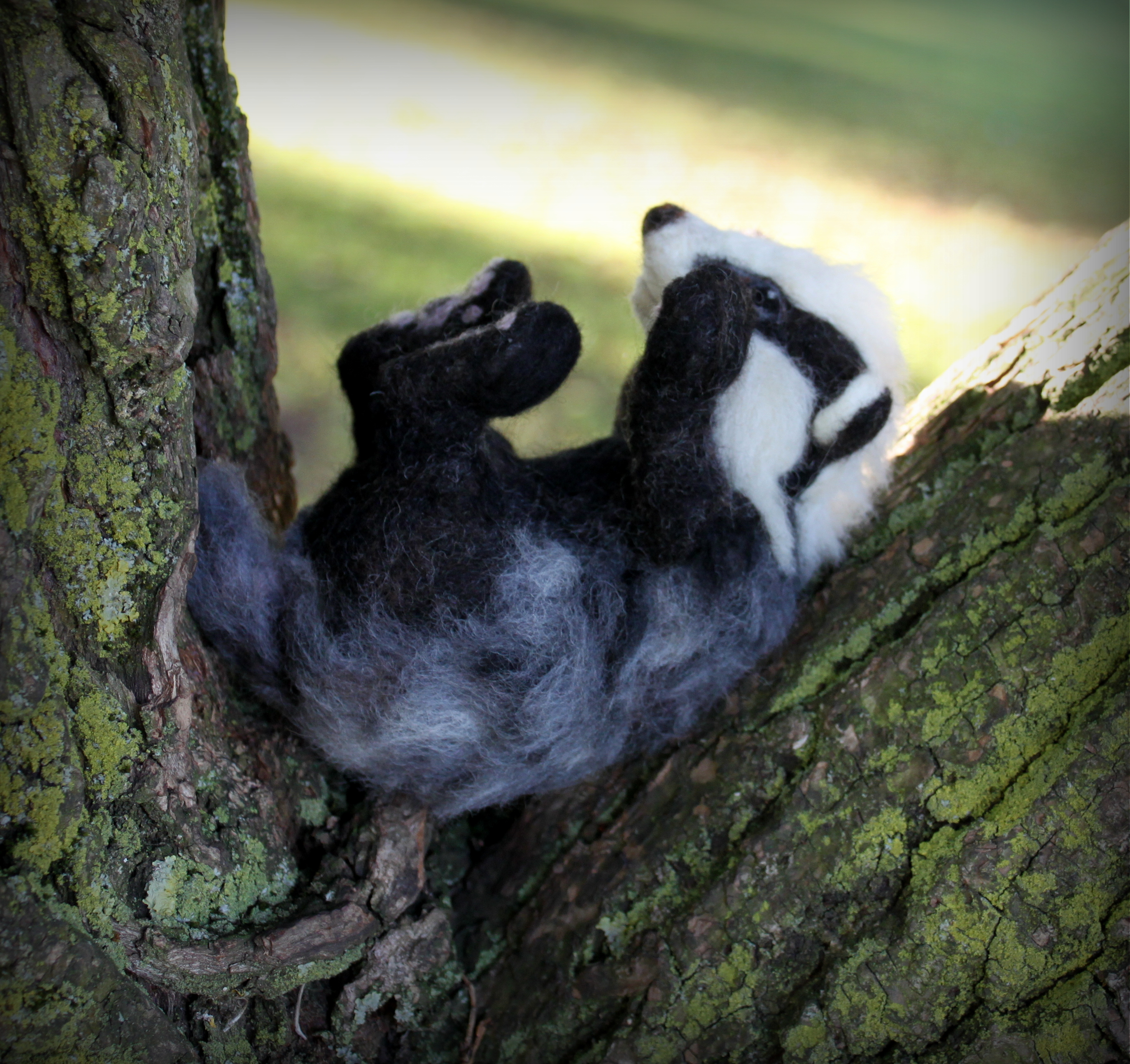
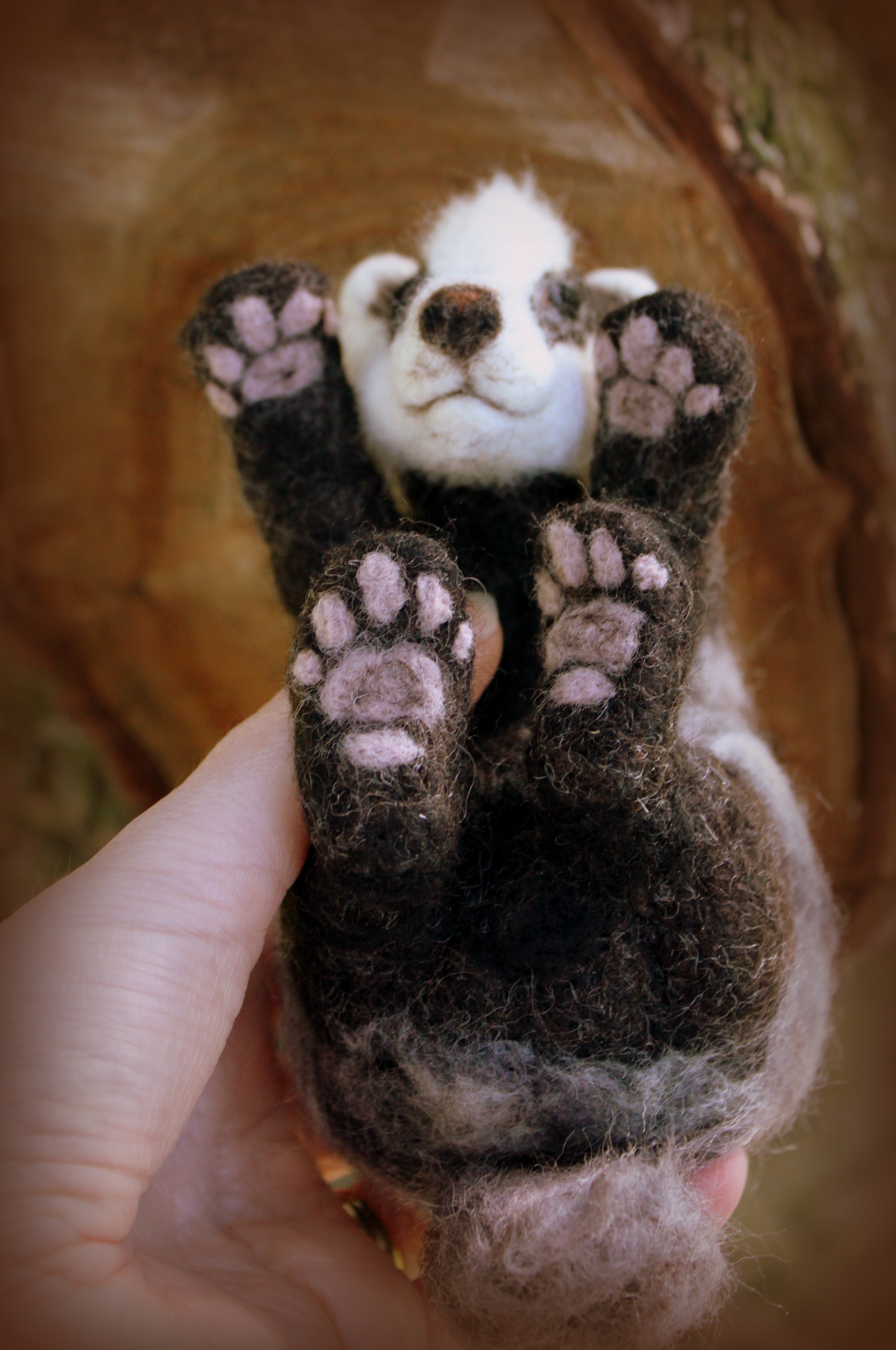
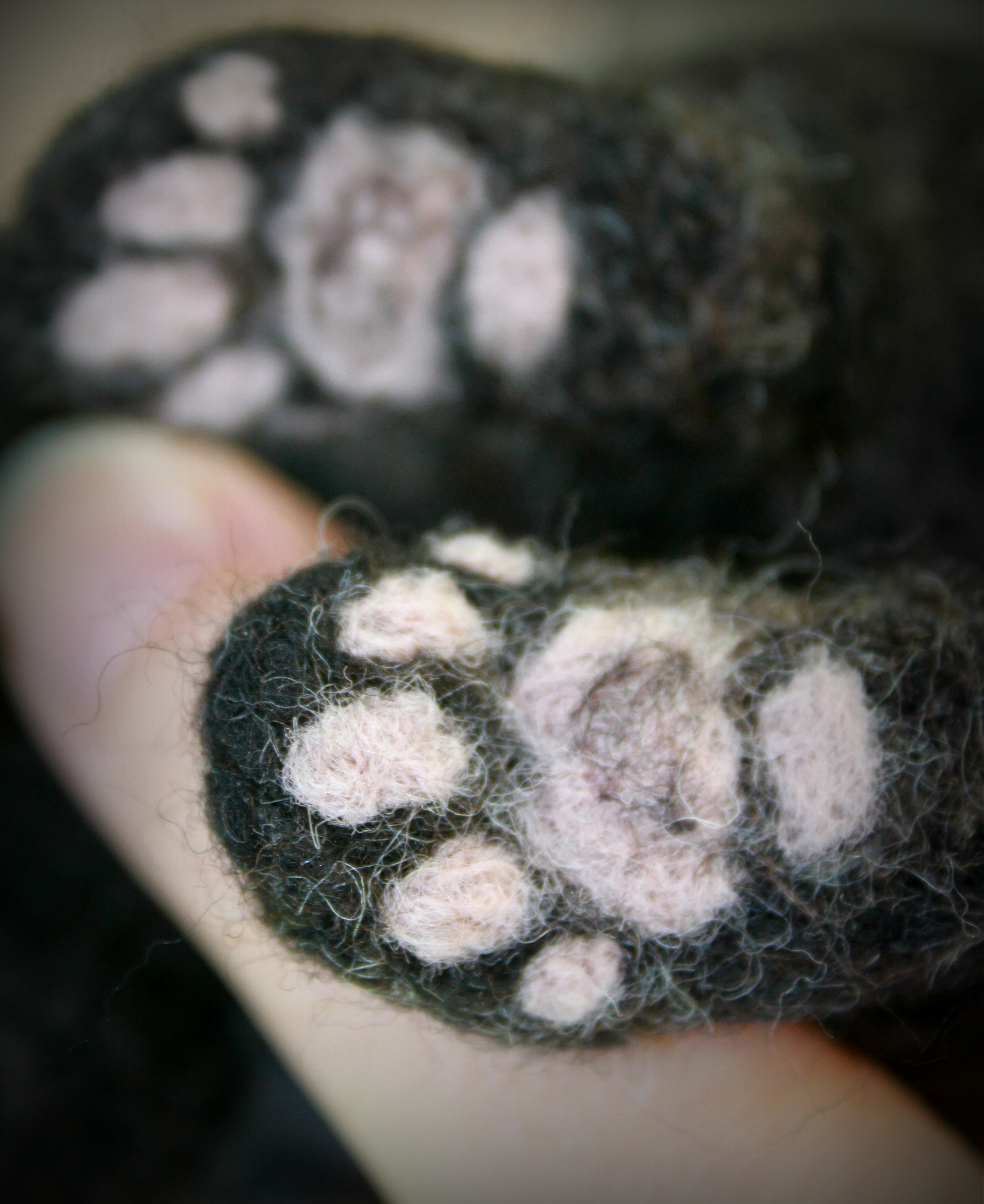
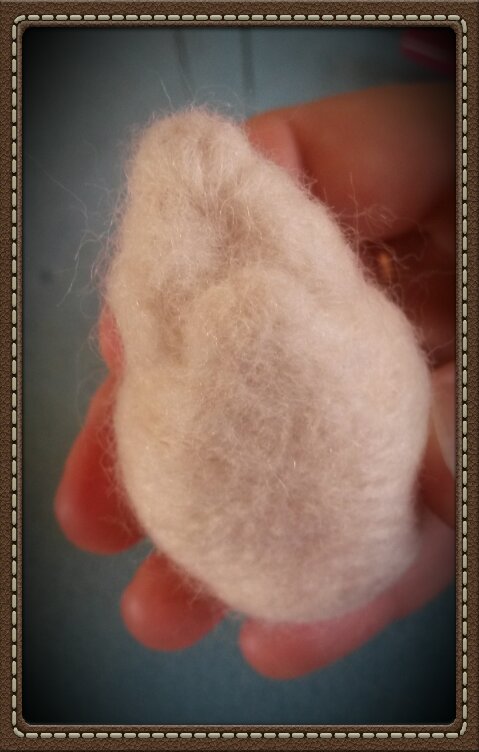
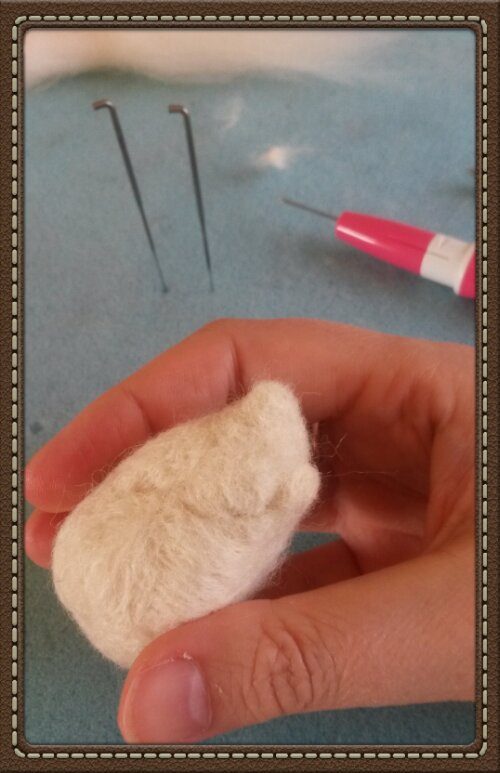
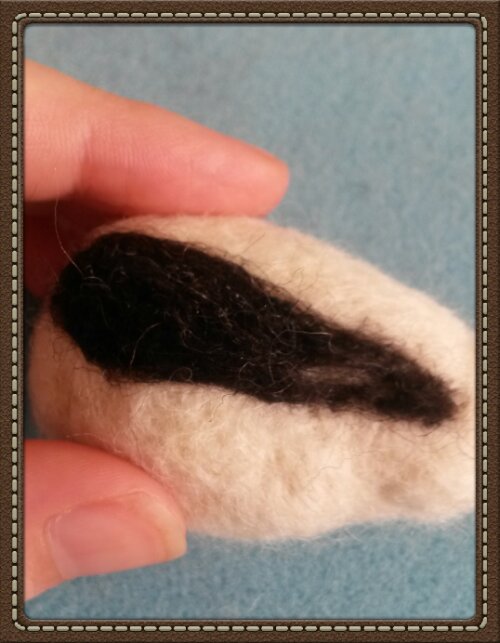
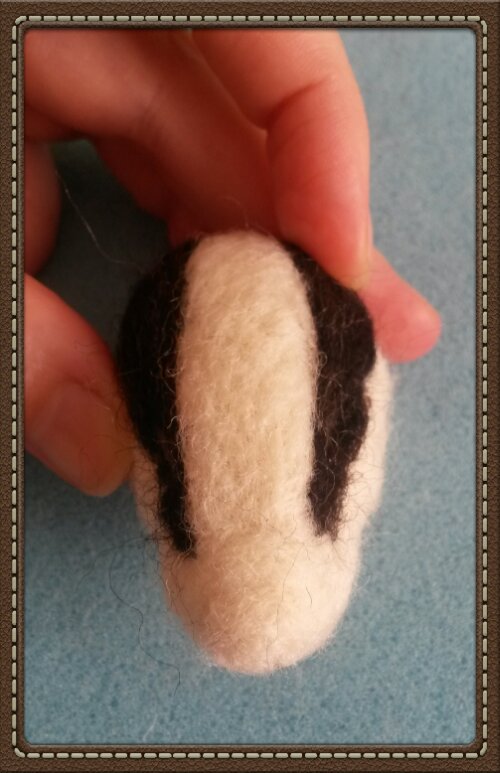
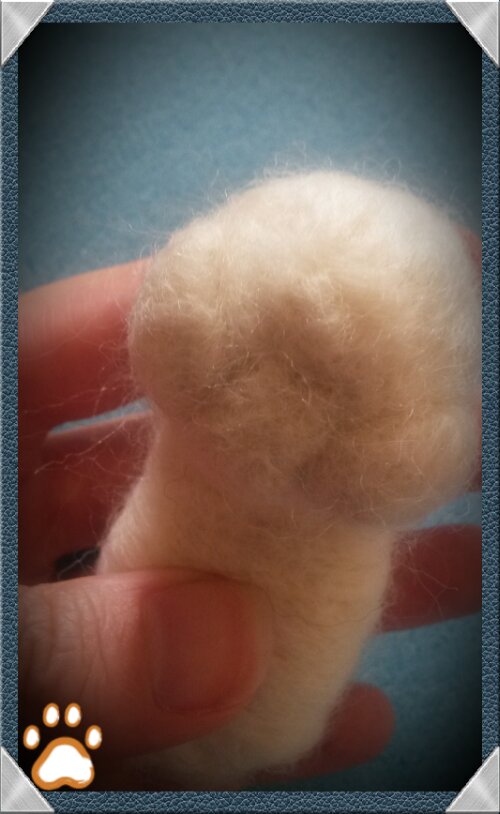
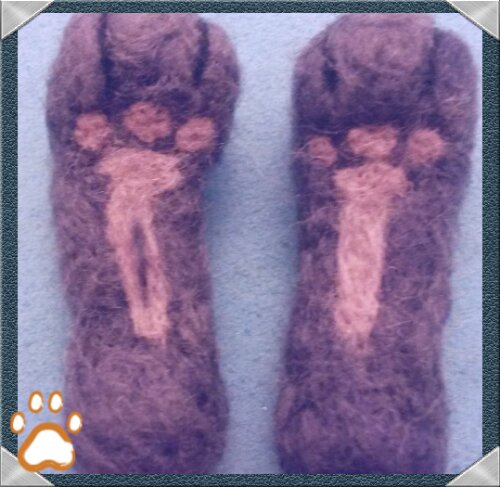
Sometimes though you will want to do so much more! Have you ever looked in detail at the underneath of bunny paws and considered how absolutely small, perfectly proportioned and adorable they are? When making my bunnies and badgers I just couldn’t resist felting the little details that make them look so much more like real paws and make your friends want to say ‘squee’ 🙂 especially as these sculptures are laying on their backs with feet in the air ready to be cuddled or tickled.

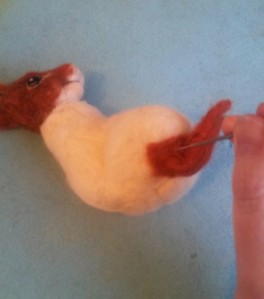
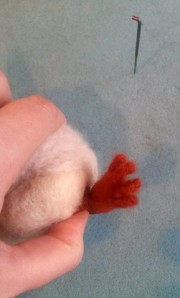
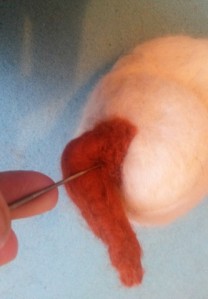
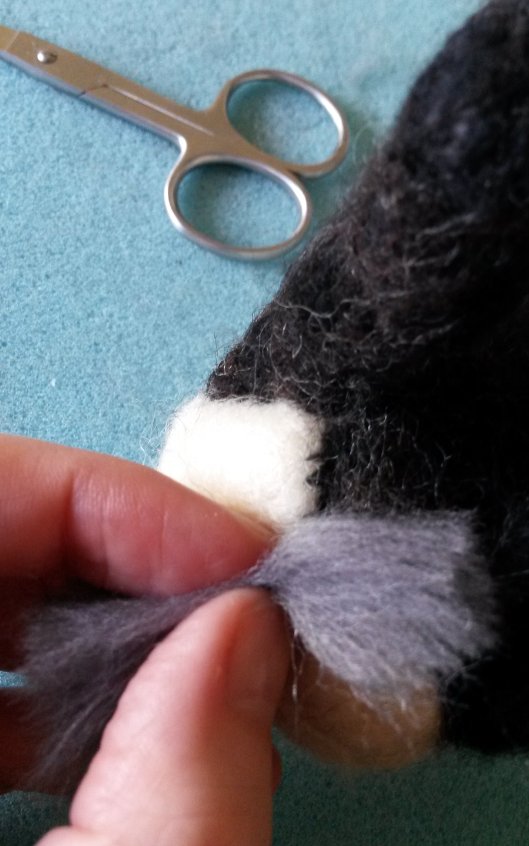
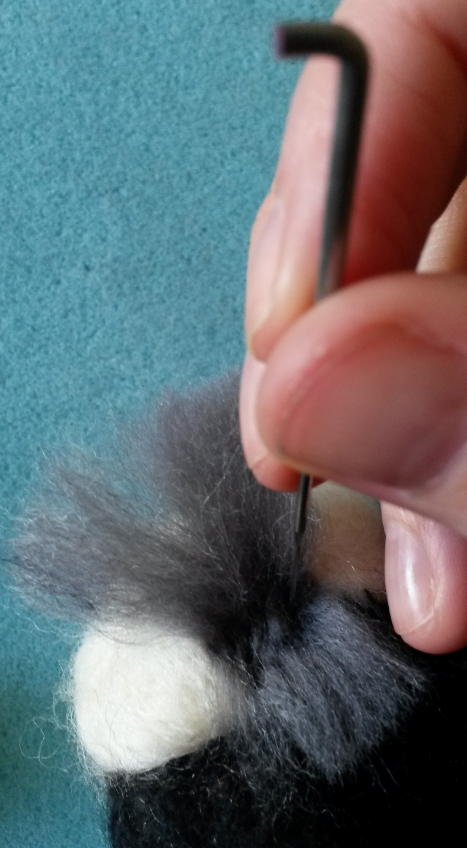
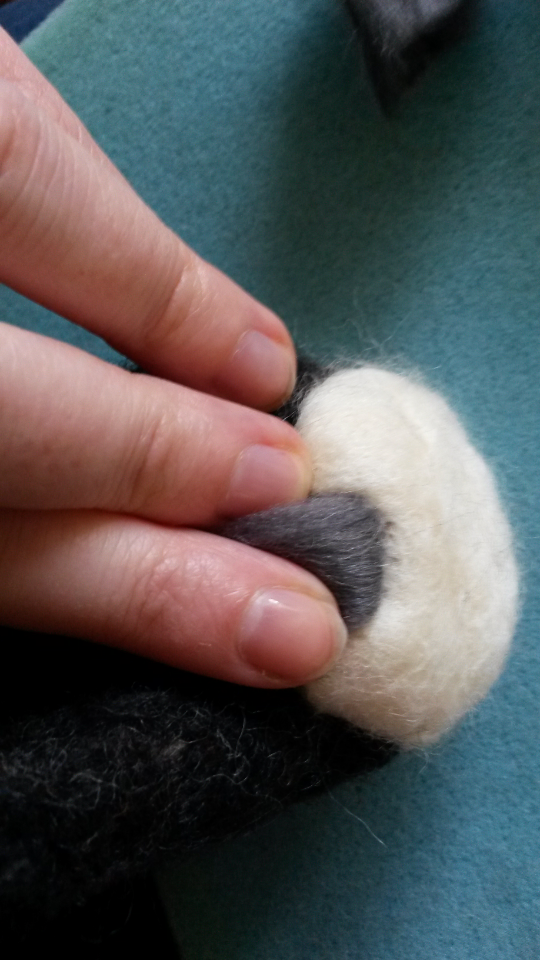
To get ideas for how these should look, google images of paws or look at photos of your own pets. All I did with my bunny here was to just felt little blobs of lighter coloured wool onto the underside of the feet and then add some darker fibres on top as shading/ furry bits to make them look more natural. So simple but effective!

53-Needle felted feet (3.3) 52-Needle felted feet (2.2)

Why not have a go? As you can see in the pictures below, leaving their feet as just rounded shapes would not have had the same affect!
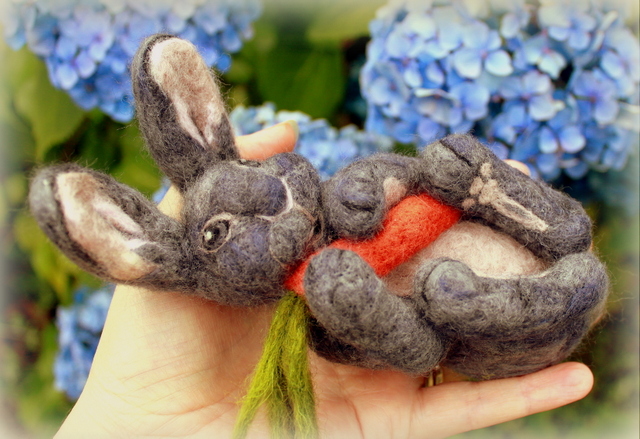
04-Needle felted feet (48) 03-Needle felted feet (47)

05-Needle felted feet (40) 01-Needle felted feet (39)

12-Needle felted feet (44) 10-Needle felted feet (42) 02-Needle felted feet (46)

13-Needle felted feet (45) 11-Needle felted feet (43)  54-Needle felted feet (4.1)

Tiny toes that bend

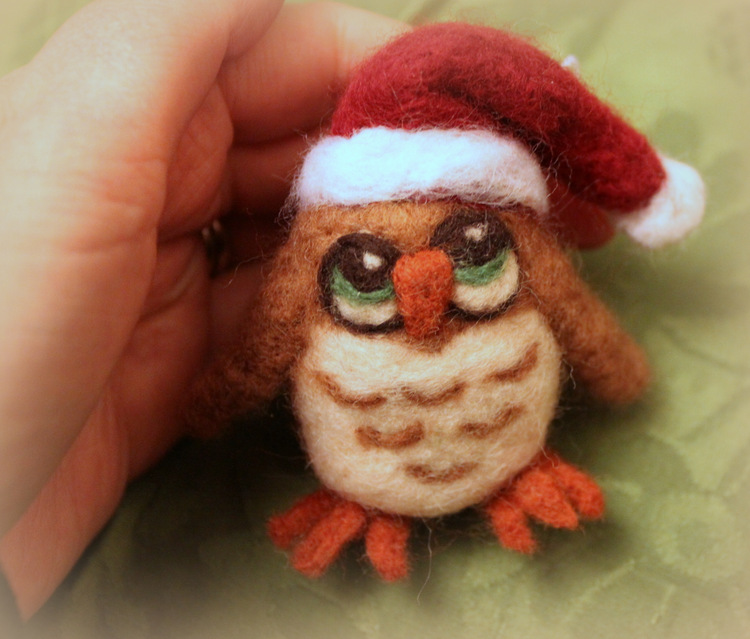
For some animals you may want to take it a step further and make some tiny toes. If you have enough patience you can carefully sculpt the toes from making long sausage shapes that you felt firmly together. You can see I did this with my Christmas owl.

owl2

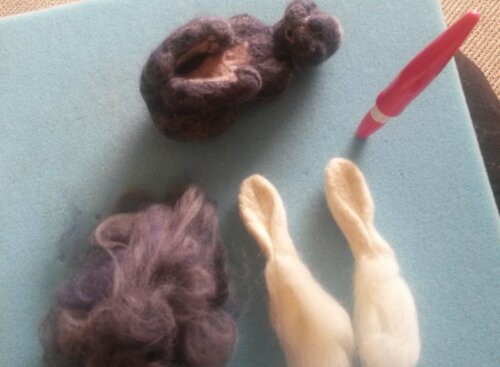
I have found however that using wire makes this much easier, the toes don’t flatten or fray as much, they are stronger, take the weight of the animal’s body better and it also means you can bend the toes to the position you want them to stay in.

Those of you who already make your animals from wrapping wool over a wire armature will likely already know how this is achieved but please do read on in case there is anything you find useful. Those who prefer not to use a wire armature for the main body can still use wire for the feet , why not mix it up a bit?

There are several ways to wrap wool over wire to make tiny toes; one way is to wrap the wool over bare wire (See my video tutorial afterwards to demonstrate this). This works really well especially for animals where you really want the toes as thin as possible and make them taper at the ends or for projects which are on a very tiny scale. (Some people use hot wax to fix the first layer of wool)

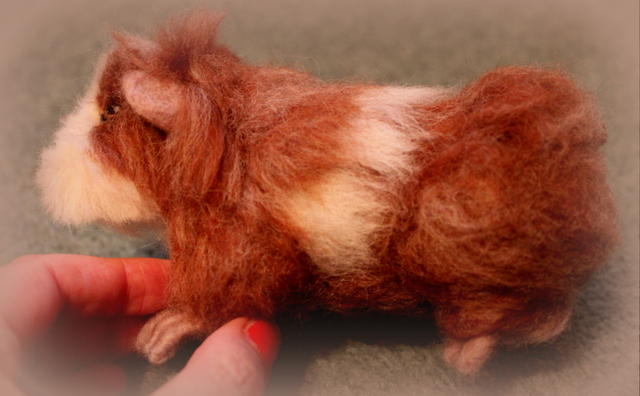
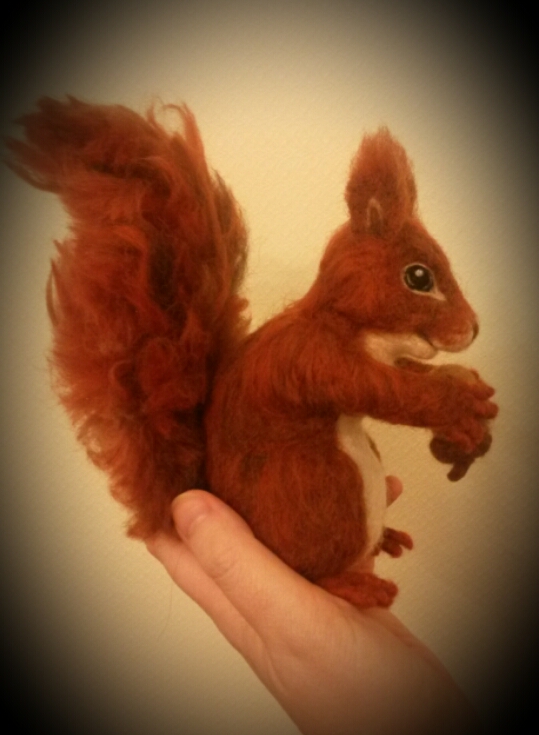
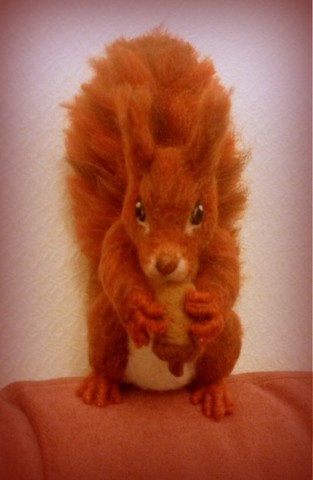
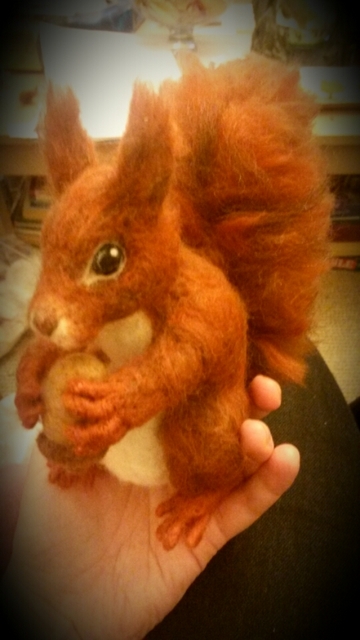
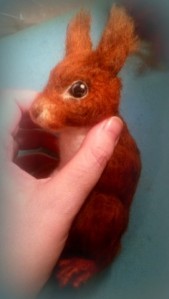
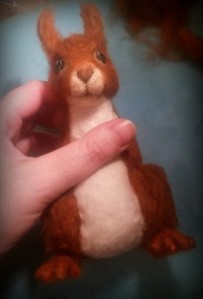
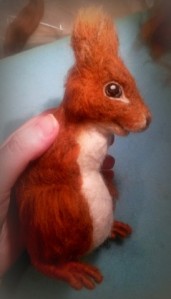
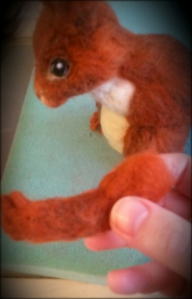
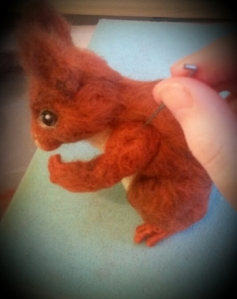
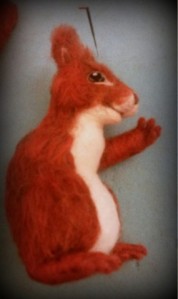
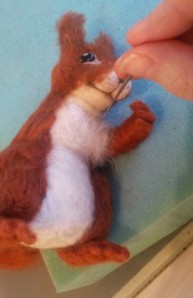
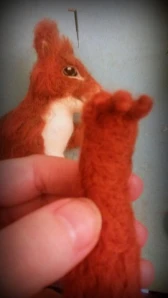
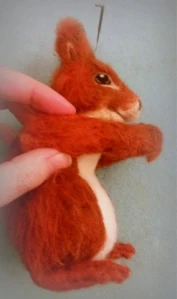
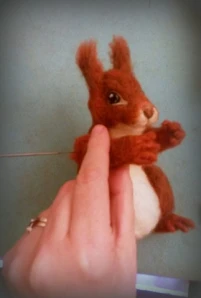
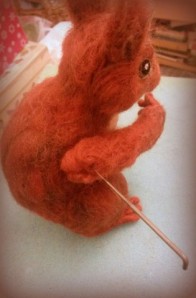
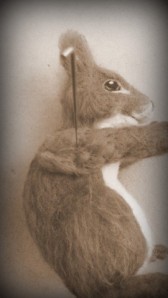
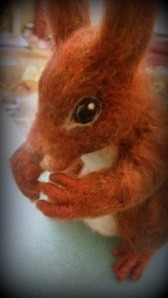
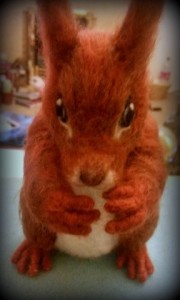
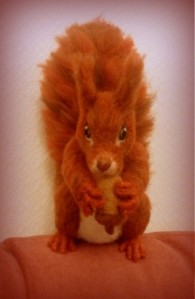
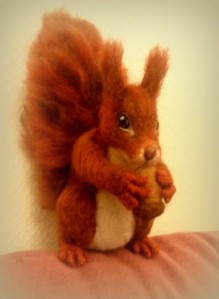
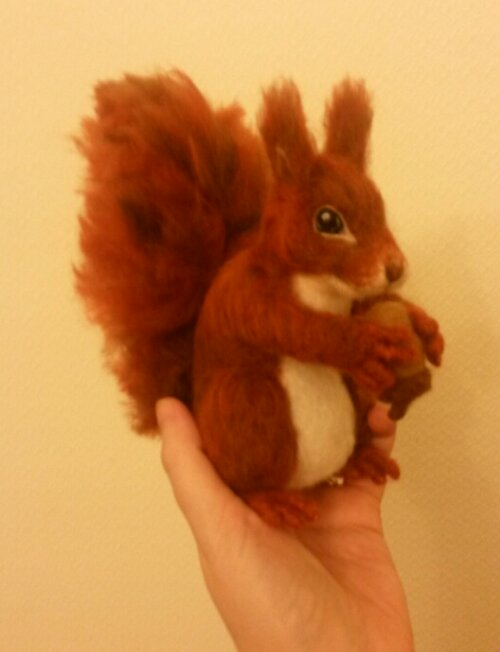
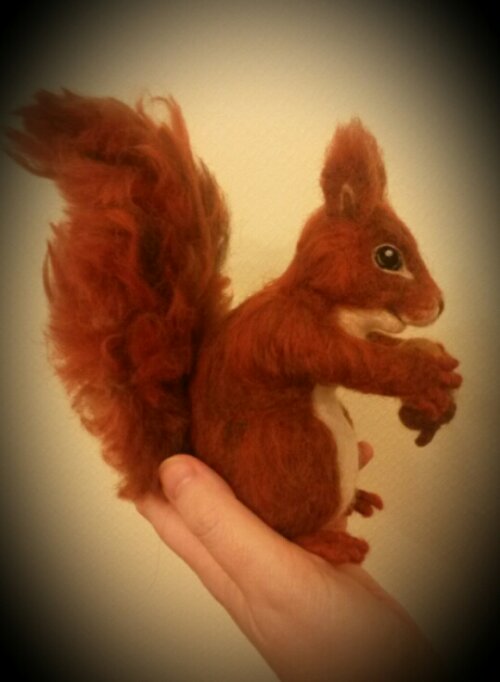
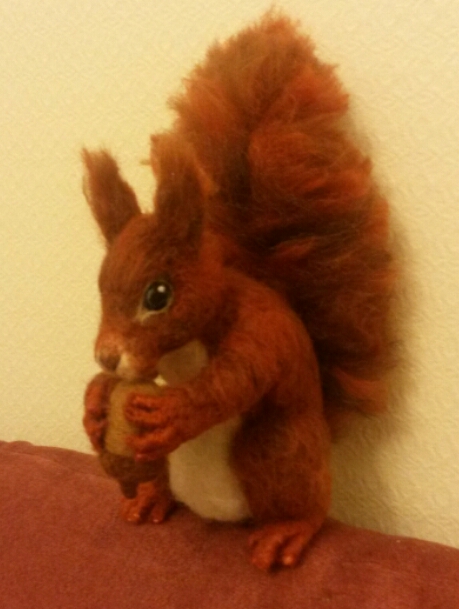
Another simple way (and far less messy if using wax!) which I will demonstrate in this tutorial is to felt wool over a pipe cleaner to ensure it says well (which is basically a very thin piece of wire already wrapped in a layer of material such as cotton or chenille). These can be used for feet where toes can be a bit thicker and for medium or larger projects.  I used this method for my guinea pig and Chestnut, my red squirrel. You can see that I  also added a bit of paw detail on to the guinea pig afterwards.
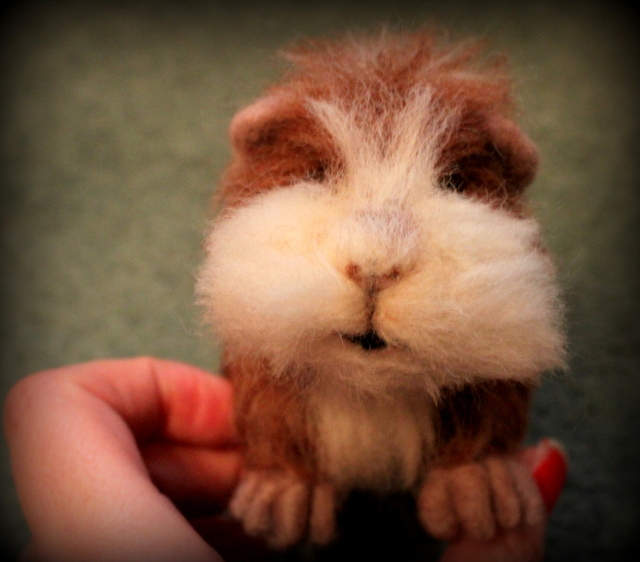
14-Needle felted feet (51) 15-Needle felted feet (49)

51-Needle felted feet (1.1) 16-Needle felted feet (50)

2014-02-10 22.25.29 46-Needle felted squirrel (62) 50-Needle felted feet (5)

Step by step guide for felting feet with tiny wired toes

I will demonstrate here how I made Chestnut’s feet. I decided that each foot would have four toes. My guinea pig however had three toes at the back and four at the front like a real guinea pig. You can decide what you think looks best!

What you will need:

  • Pipe cleaners (I bought 30cm length cotton ones)
  • Scissors to cut the pipe cleaners to size
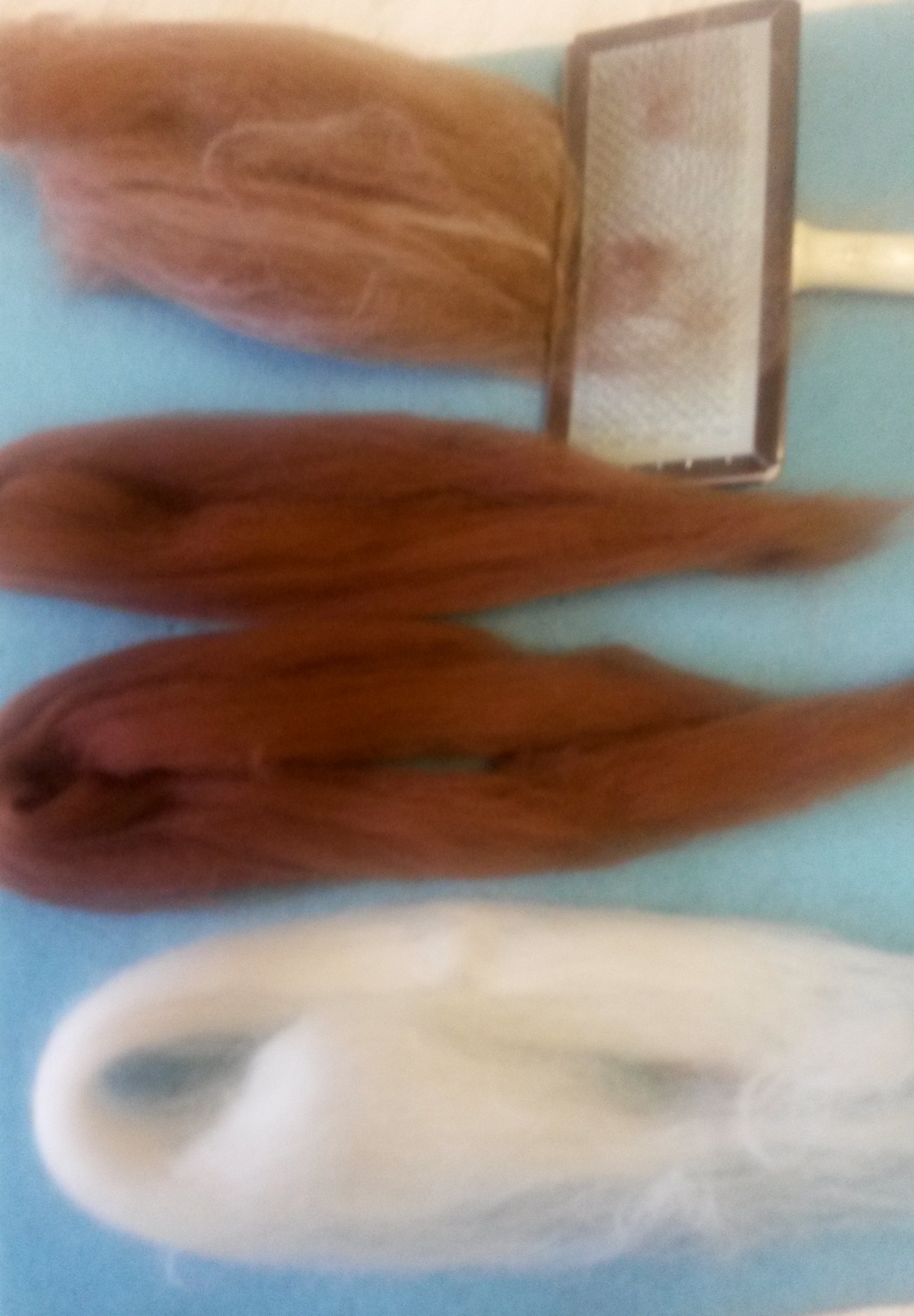
  • Wool (I used merino wool which felts well and is soft to touch)
  • Barbed needles (thinner ones are best for tiniest toes)
  • Felting pad/brush (to prevent you from stabbing your knees)
  • Lots of love and patience and time – this is worth the effort believe me! 🙂

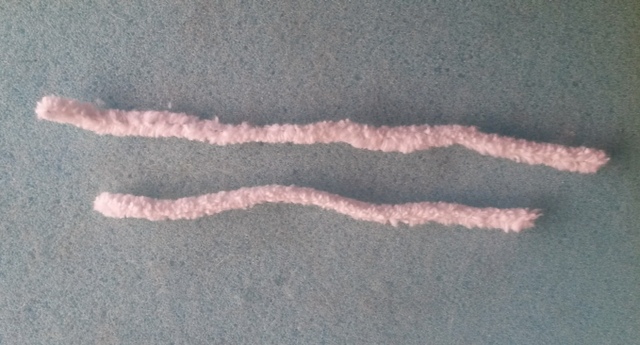
1) Cut two lengths of pipe cleaner for each of your feet (I measured one twice the length of my index finger and the other slighter shorter) It is easier to make two toes from one piece. Prepare these for both feet at the same time.

17-Needle felted feet (12) 18-Needle felted feet (13)

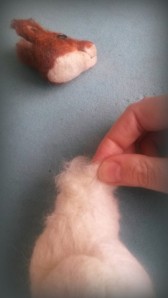
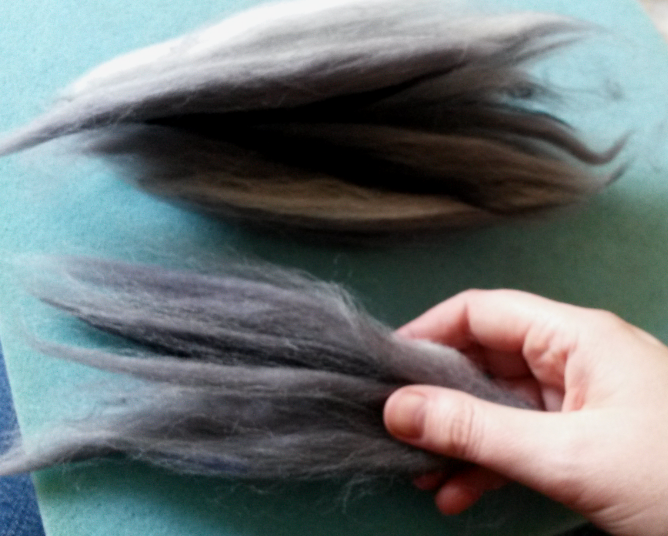
2) Take a thin piece of wool measuring at least one and half times the length of the pipe cleaner and roughly a finger’s width.
19-Needle felted feet (14)

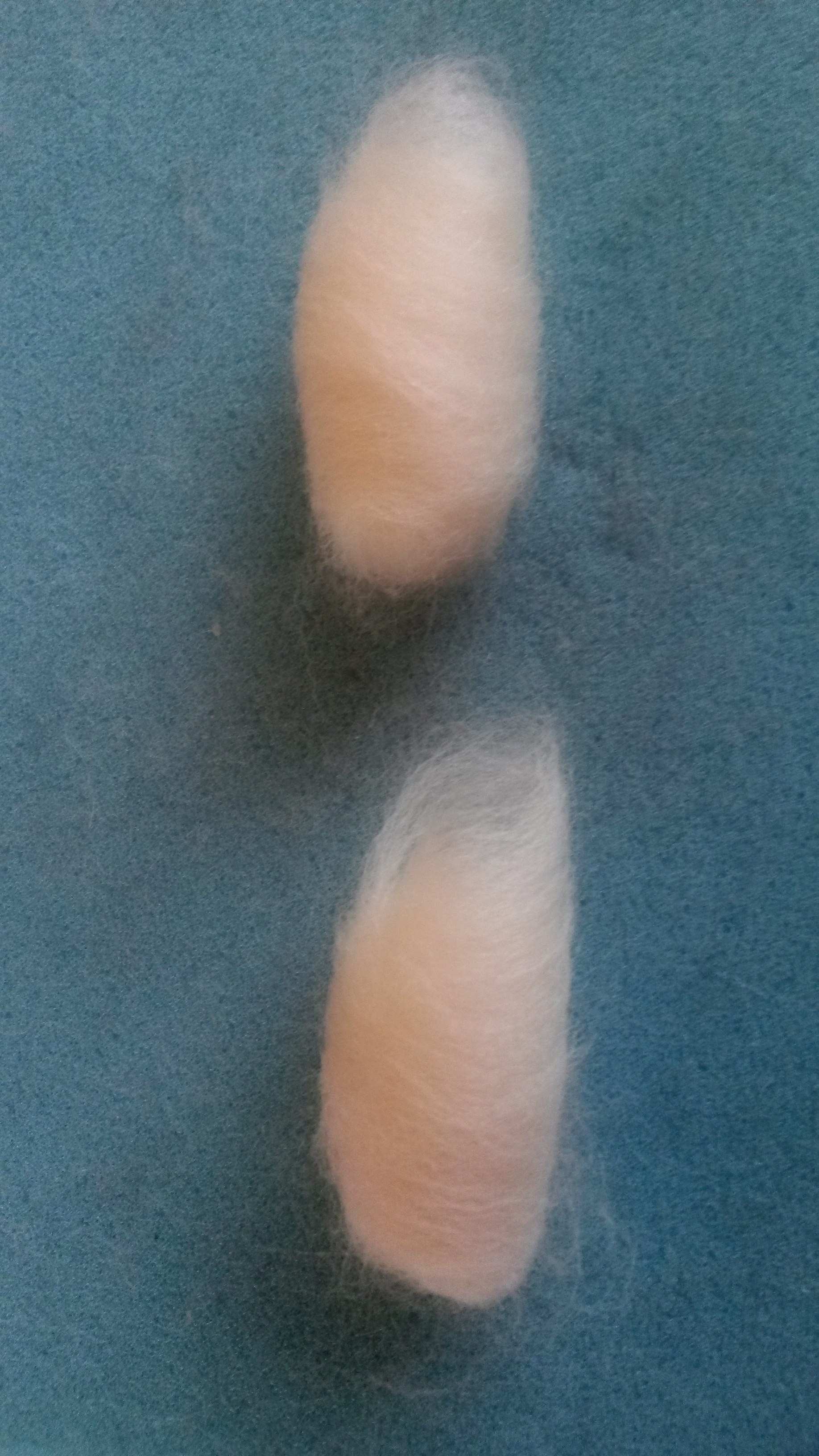
3) Tightly wrap the wool over each length of pipe cleaner; keep the wool flat and wind around, carefully overlapping the previously wrapped fibres all the way along. You can start at the end but I prefer to go from the middle and work to each end.
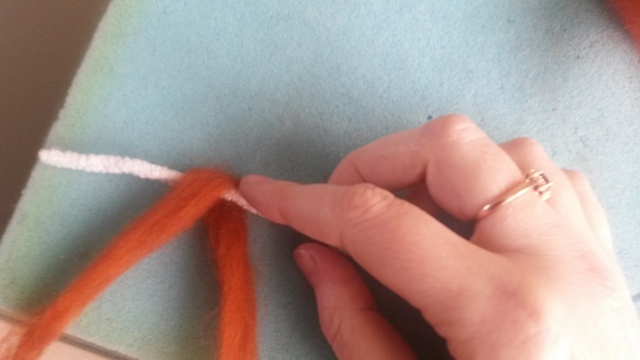
20-Needle felted feet (15)

The tighter and smoother you wrap the less felting will be needed later on to fix it in place.

22-Needle felted feet (17)

4) On reaching the ends tightly fold the fibres over the end, hold a finger over the end to keep in place whilst overlapping the work you have done very tightly for a few wraps back the other way towards the middle until you reach the end of your wool. Pull off any excess wool if you find you have too much (you don’t want to make the toes too thick).
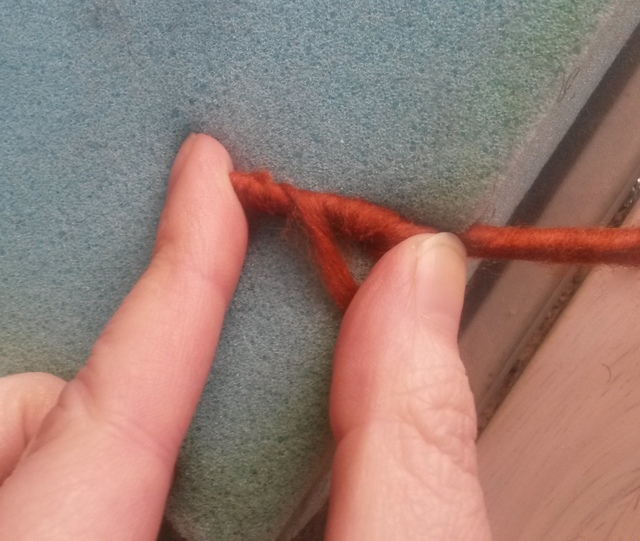
23-Needle felted feet (18)

5) Using your barbed needle, stab the fibres in place along the length of the structure and especially at the ends to secure them and prevent them from fraying, taking care not to break your needle by hitting the wire as you go.

27-Needle felted feet (22) 24-Needle felted feet (19) 25-Needle felted feet (20)

26-Needle felted feet (21)

6) Bend the pieces in half and then overlay, squeeze and slightly twist the bases of the two toe pairs together, the two longer pieces will become the two centre toes.

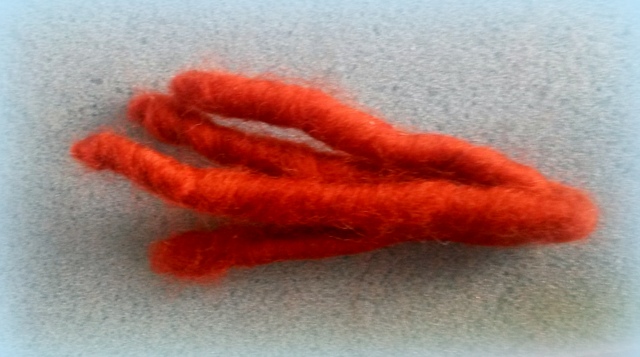
28-Needle felted feet (23) 29-Needle felted feet (24)

7) Wrap some thicker wool over the twisted section to form the rest of the foot. Spread out the toes into the position you wish them to be in.

30-Needle felted feet (25) 31-Needle felted feet (26)

8) Add more wool and felt onto the foot on both sides to shape the foot, and ensure you fill in between the toes and make the ‘knuckle area’ thicker. See how your tiny toes are becoming reality ? 🙂

32-Needle felted feet (27) 33-Needle felted feet (28)

9) Build up layers of wool. Your cute little feet are beginning to really take shape!

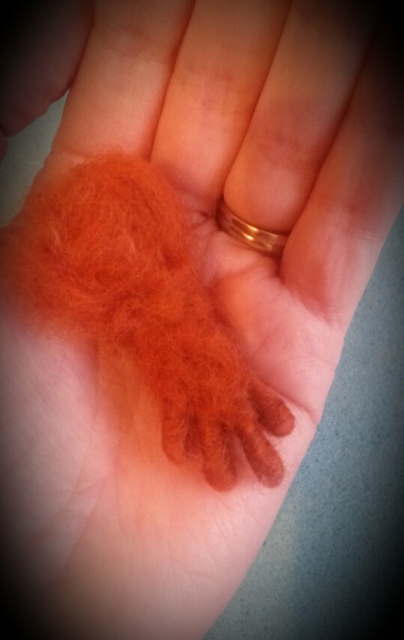
For the hind feet you will see I kept the toes and foot fairly flat and long and built up a heel. One of the toes ended up a little longer but I quite like this; gives a more natural look.
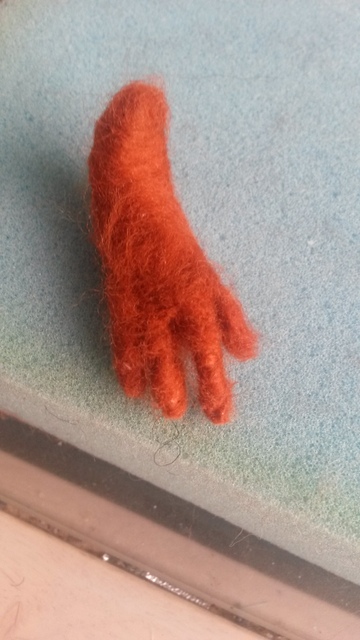
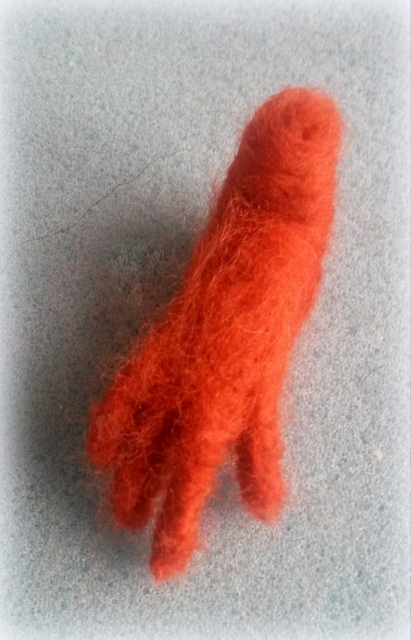
35-Needle felted feet (30) 34-Needle felted feet (29)

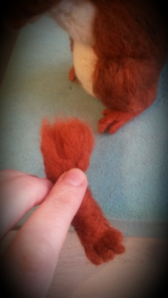
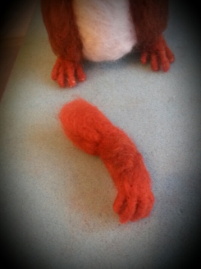
For the front paws (which will be holding a felted acorn) I kept them daintier and shorter and curled the ‘fingers’ into a gripping position, and added an ‘arm’.

41-Needle felted feet (37) 47-Needle felted feet (4)

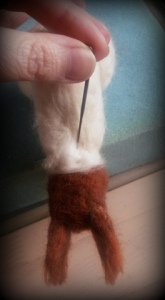
10) Keep going and ensure you have left some loosely felted wool where the foot/leg will join onto the body. See here for a tutorial on how to add head and limbs to animals.

39-Needle felted feet (36) 38-Needle felted feet (35) 37-Needle felted feet (34)

46-Needle felted feet (3)    43-Needle felted feet (57)

and …. SQUEEE!

Did you find this tutorial helpful? What would you like to learn about next? Please leave comments. Why not post a photo of your own creations?

For more tutorials like this please visit my Tutorials, tips and ideas page.

Don’t ever miss out on my latest tutorials! Insert your email address and click the ‘Follow’ button on the right hand panel to receive notifications of when the next post is up..:-)

Don’t have time to make one but would love a one of a kind needle felted animal by Fit to be loved for yourself or for that special someone? Visit my Etsy shop today to see my latest creations. Or like my facebook page to see what I am making next.
How to add head and limbs onto needle felted animals

“How do I felt body parts onto my needle felted animal? How can I make them stay secure and not easily pull off?”

Today I want to show you some more basics of needle felting animals. In my other tutorials you will see how to make various animal parts e.g a badger head, bunny ears as well as the various stages of felting a full guinea pig, bunny etc. However one of my followers commented that it would be good to do a tutorial showing how to felt the head and limbs onto your animal. It is not so easy to demonstrate with photos but I have done my best by using the shots I took along the way when sculpting Chestnut; the little red squirrel I made.

There are many ways of felting one piece to another so you may have already found the best way for you. The method I will show you is just one way and was the easiest for my squirrel at the time. 🙂

Please note that the following tutorial will assume you know a little bit about needle felting already. See basics here.

Adding the head

01-Needle felted squirrel (5)

At this point I have felted the head more or less to completion. The body has its shape but no fur yet…

I have sometimes only got as far as the shape of the head when joining it to the body but I quite often find that it’s the head of an animal that gives its unique soulful character (especially once it has eyes).02-Needle felted squirrel (8)

I often don’t decide on exactly how the body will look until I have the head sorted. Being delighted by the cute nature of the face (as is what happened with Chestnut) often inspires me to continue on with the rest of the body. 

1) To join two felted objects together leave enough loose fibre on at least one of the objects where the join will be so that it can be felted into the other.

14-Needle felted squirrel (27)

It is a lot harder and perhaps impossible to join them if the wool is felted too firmly and the fibres cannot mix and bind with the fibres on the other object when you stab with your needle. 

As you can see, the neck at the top of Chestnut’s torso has been left loose and soft. The base of the head is soft to medium felted rather than firm to allow plenty of further stabbing..

2) Fluff the fibres up a bit before putting the head into the position you would like it to be. 

15-Needle felted squirrel (28)

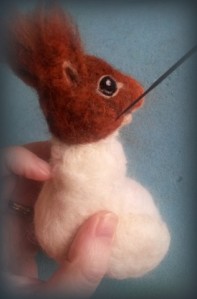
3) Stab at the wool from a 45 degree angle under the chin of the animal. In effect what you are doing is poking the loose wool from the neck into the head. Insert the needle as deep as it can go and on all sides of the neck. This helps to anchor the head to the body. Remember (particularly at this stage when the head will just fall off the body if you try any other way) to lay your animal on a felting pad/brush and stab away from your fingers!

17-Needle felted squirrel (30)19-Needle felted squirrel (32)

To join body parts I use a medium width barbed needle (I find these are stronger than the finer ones for this purpose but do try out various ones to see what you are comfortable with and what works best for the wool and size of animal you are felting). If possible use one with many barbs along the length to help bind the fibres and as the needle will be inserted quite deep.

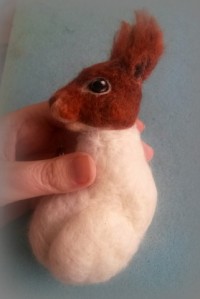
4) Once it feels like the wool fibres have attached so much so that the head no longer topples away, you can try felting at other angles at various depths. Here I laid Chestnut’s head over the edge of the felting pad as it made it easier to get the angle I wanted and also prevented me from squishing her carefully felted nose 🙂

21-Needle felted squirrel (34)23-Needle felted squirrel (36)20-Needle felted squirrel (33)

22-Needle felted squirrel (35)

5) Carefully stab a few times from the top of the head to ensure it is firmly secure. NB this is easier if the head has no fur yet but if you have (like I have) you just have to take care not to leave stab marks in the face (as you are using a slightly thicker needle).

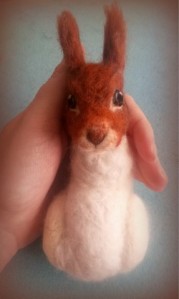
…and there we go, head on …looking more squirrel-like although much like a shawn sheep at the moment with lack of fur 🙂

25-Needle felted squirrel (38) 24-Needle felted squirrel (37)27-Needle felted squirrel (40)

Adding limbs

This is achieved in much the same way as joining the head in that you need to stab deeply in all directions to ensure all the fibres bind to each other.

For Chestnut I started with the hind legs so that it would be easier to see how her forelegs would be positioned once she was sat upright. Note the thigh part of the leg for my squirrel has already been sculpted as part of her body shape which ends up in a sitting pose. So when I refer to adding the hind leg, it is in fact the section below her thigh bone. 

1) Needle felt each leg onto the body by stabbing the wool at the fluffed up end of the leg into the body.

28-Needle felted squirrel (41)       30-Needle felted squirrel (44)

For Chestnut I had formed her feet using wool wrapped and felted over wire (see my tutorial on tiny feet and toes here) so I had to take extra care not to break my needle by hitting the wire when stabbing.

31-Needle felted squirrel (45)        29-Needle felted squirrel (42)

2) Continue at all angles for both legs until firmly and securely in position.

12-Needle felted squirrel (21) 07-Needle felted squirrel (16)

08-Needle felted squirrel (17)  09-Needle felted squirrel (18)

Once in place I added more wool round the joins as fur and then decided to felt some of Chestnut’s back-fur too. Aw she is looking very happy and mischievous already!

33-Needle felted squirrel (48)34-Needle felted squirrel (49)32-Needle felted squirrel (46)

3) Then do the same for the forelegs.

48-Needle felted squirrel (.1) 06-Needle felted squirrel (15)   05-Needle felted squirrel (14)

04-Needle felted squirrel (13)  03-Needle felted squirrel (12)

As the shoulder part needs to be attached along the side of the torso it is not sufficient to merely stab from the outer side at the shoulder blade to keep the limb in place.

To felt at an angle under the ‘armpit’ and also to ensure the leg cannot pull away at the join, stuff some extra(fluffed up) wool into the join and stab it securely into place (not too deep to push the lighter coloured wool through to the other side of the shoulder).

36-Needle felted squirrel (51) 35-Needle felted squirrel (50)

Tip: To get the correct positioning and symmetry when adding the second foreleg(as quite often you will want to play around with this until you get it right) you may find it easier to stab the second leg into place only a tiny bit at first; enough to hold the leg in place but not so much that you can’t alter the position if you need to. You can then step away to view your animal from a distance, then adjust until happy with it.

49-Needle felted squirrel (.2) 37-Needle felted squirrel (52)

38-Needle felted squirrel (53) 40-Needle felted squirrel (55)

….then secure into place.

42-Needle felted squirrel (57)  39-Needle felted squirrel (54) 41-Needle felted squirrel (56)

Once all limbs are joined onto your animal you can then felt over the joins with fur. You wouldn’t even know your animal started out as separate appendages.

45-Needle felted squirrel (61)44-Needle felted squirrel (59)43-Needle felted squirrel (58)

Here is Chestnut as she looks now! 🙂

46-Needle felted squirrel (62) 47-Needle felted squirrel (63)

Needle felted squirrel

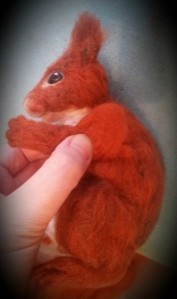
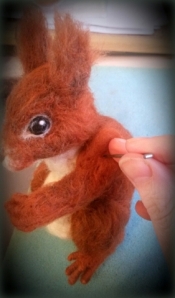
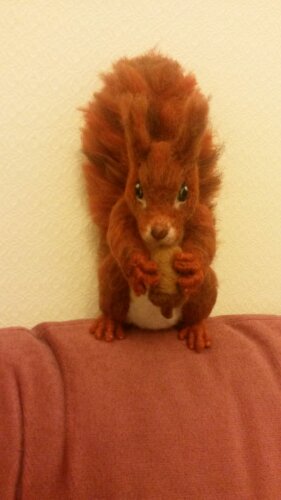
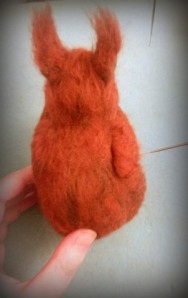
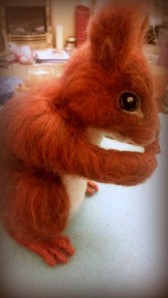
I finished my little red squirrel last night. Her name is chestnut (because of her colouring). She is needle felted with a blend of soft merino and corriedale wools with wire inside her tiny toes and the centre of her beautiful fluffy tail so it can bend. She even has a felted acorn which she looks to be enjoying! She is quite small as you can see from the pic of me holding her but lots of detail and of course fit to be loved and full of character.. I so want to get some pictures of her in trees in the park but it is cold windy and raining out so an indoor setting will have to do for now. I hope you like her… I will be adding a tutorial this weekend of how to attach head and limbs with chestnut as my demo. 🙂

image

image

image

image

image

How to needle felt animal eyes

“So, I just about know how to needle felt a cute fluffy animal but how do I even start to needle felt its eyes? How can I make the eyes look 3D, shiny and realistic and not too cartoon-like?’, I could use glass or plastic eyes but would love to use wool so that my sculpture is totally needle felted- so what do I do?”

This photo tutorial will hopefully show you the basics of needle felting animal eyes and give you some ideas along the way too.

Adding the eyes to any needle felted piece is actually one of my favourite parts. It brings the animal to life and gives it its soulful character. Getting the eyes just right shouldn’t be a stress! it can take some practice but it can be so rewarding adding that final detail to your newly created animal…

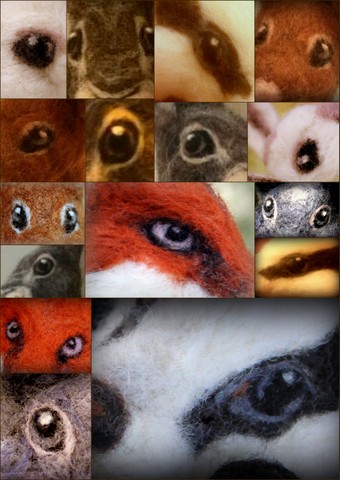
Here are some of the eyes I have needle felted so far to give you some ideas.

1-eye collage

Can you work out what animals they are?

So here is how you can get started…

Step 1: Look at photos of eyes and get to know basic eye anatomy

Of course eyes are different for every species so the first thing to do is to take a look at photos of real animals to see how big the eyes are in proportion to the animal’s head, decide on colour, the shape, note where the light reflects etc. You don’t want to make the wrong sort of eyes for your animal (eg a cat’s eye on a mouse for example). I usually just do a web search and bookmark the pictures or pin them on pinterest to refer to whilst I needle felt.

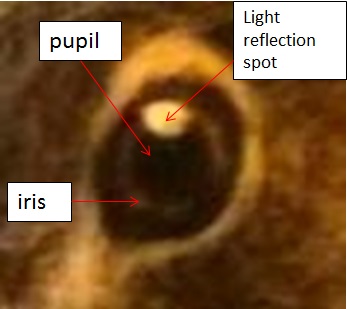
Remember doing biology? well you don’t need to know full anatomy of the eye but knowing your basic parts does help. Here is an eye of a needle felted hare I made;

eye anatomy

You will find that most animals will have a pupil which can change in size depending on mood/ light exposure. For some it will be round or it can be different in shape e.g. a slit for cats and reptiles, square for a goat, even w-shaped in a cuttlefish!! Some have a distinctly coloured iris, some have eye lids some don’t- birds’ eyes face forward rather than sit on the side of the head… aren’t animals remarkable!

Step 2: Go for it

For demonstration purposes I will show you the stages that took place when making eyes for a mouse and then a badger. Eyes can be added early on or at the end, it’s completely up to you. I sometimes like to do mine near the end and when finished I can’t help but smile! 🙂

Some ‘Fit to be loved’ eye felting tips

  • use fine high gauge barbed needles for detail such as 40G or 42G
  • use warm hands to roll the tiny eye ball to keep rounded/oval rather than stabbing too much as this will just flatten it
  • it is easier to layer eyes parts on top of each other rather than try to make the exact shape (see what I mean below)
  • do each stage for each eye at the same time to get the eyes the same
  • measure using string/thread/fingers to check eyes are of equal size and symmetrically positioned
  • to attach eye to the head stab mainly around the edge of the eye in various directions rather than across the middle to keep the eye plump and prevent it from going too flat.

See below for instructions on the mouse and badger eyes. Note that I have also now created detailed videos on dog eyes and cat eyes if you would like to see those 🙂

Mouse eyes (-basic level)

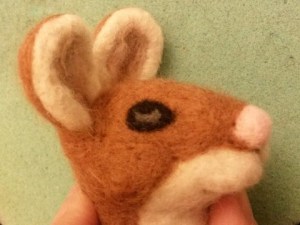
  • roll in warm hands 2 equal sized rugby ball shaped balls of black wool to form the basic eye shape. Lightly needle felt in different directions then place on the mouse head viewing from the top to check the positioning is symmetrical. The eyes on this mouse are simple to view as they contrast well in colour with the rest of its face fur.
19-mouse eye2
  • firmly felt the wool into place by stabbing around the edge of the shape to keep the eye plump and not completely flat
18-mouse eye1
  • use a smaller amount of wool for each of the eye irises (using a grey/green colour) and again stab them into place, being careful not to flatten the eye too much…
17-mouse eye4
  • add a tiny ball of the black to the top of the iris to form the pupil. The position of the pupil will determine the way the mouse looks at you; for this little mouse the pupil at the top gives the impression that he is looking up. Ensure the pupils match in size and position on each eye (you don’t want him to look cross-eyed unless that is the expression you are after..)
02-mouse eye6
  • adding the pupil in this way i.e. layering one circular shape over another is far easier and less tedious than attempting to shape the iris in a half moon shape and also gives the eye a fuller shape..
03-mouse eye7
  • take a thin strip of cream-coloured wool to form the edge of the mouse’s eyelids (top and bottom) which nicely frame the eyes. View the eyes from the top to ensure they are in the correct position and of correct thickness
04-mouse eye9
05-mouse eye14
06-mouse eye11
07-mouse eye10
  • this is also a good time to manipulate the wool on the eyes as well as around the eyes with your fingers to make the shape of the eyes fit the face as best it can. For example you could pull in the bottom corners of the eyes and narrow the bridge of the nose slightly if you choose to do so or if one eye sticks out more than the other you can carefully push it in slightly.
08-mouse eye13
09-mouse eye12
  • as a finishing touch and to bring the eyes to life and make them look 3D and shiny, add a tiny dot of white to give the illusion that light is reflecting across the eye surface. The exact position of this is not so crucial as getting them in the same mirrored position for each eye…
10-mouse eye15
11-mouse eye18
13-mouse eye17
14-mouse eye16

Here is the finished mouse saying ‘I love you’ with it’s cute yellow felted flower…

needle felt eyes20

Badger eyes (- intermediate level)

The badger’s eyes are slightly harder to create. The reason being is that the badger’s dark eyes are hard to see on a fairly dark face so needing more careful measuring to ensure both eyes look the same. The eyes are mainly dark so need more help in making the surface look like it is shiny and reflecting the light. I also add colour to the bottom corner of each eye to form what is known as the ‘lacrimal caruncle’ that you sometimes see in mammals such as a badger (to make it look even more life like)

  • roll 2 small balls of black wool in warm hands and needle felt lightly in all directions
03-badger eye (9)
  • add the balls to the badger head, felting slightly to keep in place but don’t felt firmly until you have checked they are positioned correctly
04-badger eye (10)
  • whilst they are roughly in place view the eyes from above to check the position. As the background fur is very dark too, you may find this hard to do so you may wish to feel the eyes too to check this..as you can see the left eye was slightly higher at this stage so I moved the eye down slightly to match..
05-badger eye (12)
  • once happy with the positioning, felt around the edge of each shape, not across its middle, to ensure the eye does not become too flat.
06-badger eye (13)
  • take a thin length of grey wool for the top and bottom eyelid edges for each eye, these will nicely frame the eyes.
07-badger eye (14)
  • needle felt these into place and then view both eyes from the top to ensure they are in the correct position and of correct thickness
08-badger eye (15)
14-badger eye (6)
  • add a tiny amount of brown wool into the inner eye corners (the ‘lacrimal caruncle’) – this was the same colour as the brown detail on the badger nose
15-badger eye (11)
17-badger eye (4)
  • the eyes of the badger are very dark so as well as having a tiny white spot to give the illusion of a shiny eye as with the mouse, I wanted to add some grey to the sides of each black eye for extra 3D light reflecting effect.
16-badger eye (2)
  • it is very important to ensure that what you do with one eye is mirrored with the other so checking from all angles is crucial.
11-badger eye (18)
  • and add the white dot…
12-badger eye (1)
13-badger eye (19)

Yes these eyes can take a while to get just right but oh how cute do these badgers look when finished!!

20131103_163050
2013-11-03 16.47.43

Did you find this tutorial helpful? What would you like to learn about next? Please leave comments. Why not post a photo of your own creations?

For more tutorials like this please visit my Tutorials, tips and ideas page.

Don’t ever miss out on my latest tutorials! Insert your email address and click the ‘Follow’ button on the right hand panel to receive notifications of when the next post is up..:-)

Don’t have time to make one but would love a one of a kind needle felted animal by Fit to be loved for yourself or for that special someone? Visit my Etsy shop today to see my latest creations. Or like my facebook page to see what I am making next.
Christmas hare

So today I went to my sister’s house for our second Christmas dinner. (Well for my family it was but for me it was actually my first as Christmas day I was unfortunately very sick and had to stay in bed most of the day to recover and managed to eat only 2 savoury crackers).

Feeling much better now after great company, delicious food and watching the old Back to the Future films and the Snowman and the snow dog.

I made this little hare for my sister for Christmas so couldn’t wait for her to open up her ribbon wrapped box after dinner to find out what was inside.

My sister really loves hares. She has several ornaments already and a big picture of one on the wall of her lounge.

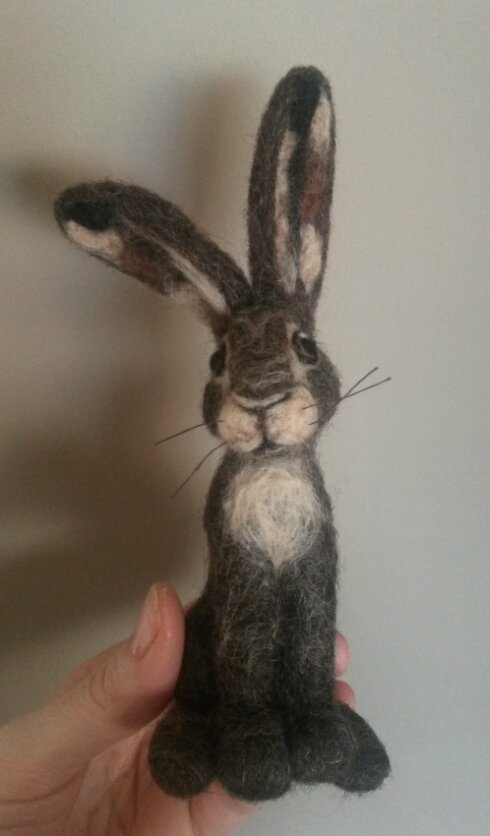
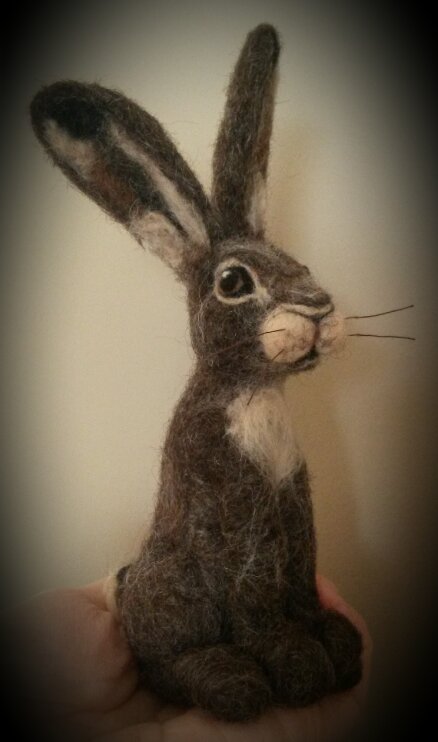
As usual I googled photos of real hares as well as bronze and clay sculptures for inspiration and created this chocolate brown hare with champagne cream detail. To give him lots of character and bring him to life I have ensured he has big alluring eyes and one ear that lops down ever so slightly compared to the other as his head tilts to the side.

She loves him 🙂 Hope you like him too..

image

image

image

image

image

image

Happy Christmas everyone!

Happy Christmas everyone!

I  just wanted to say a very Merry Christmas to all my followers!

May this coming year be full of wonderful surprises for you and hopes truly becoming reality!

I have had a little go at making a Christmas poster from a photo of my original badger for you all.

Enjoy the festivities, have fun and watch out for a new year of more lovable creations from Fit to be loved! 🙂

God bless you all

Amanda xx


Ps If you haven’t already added your email address to receive updates of new exciting posts please just click on the ‘follow’ button on the right hand side of my ‘find out more’ page.

Winter woodland tree decorations!

Winter woodland tree decorations!

Christmas is just around the corner …wow  where did that year go?… it really flew by!!

So I am getting busy and making these little cuties to hang on the tree! I love everything about the woodland theme this year – so wanted to mix woodland with a splash of Christmas fun and sparkle.

So here they are ..handmade winter woodland themed tree decorations,   brought to you by ‘Fit to be loved’ this Christmas. Please note I will be making limited numbers as I have only one pair of hands so order them while you can..

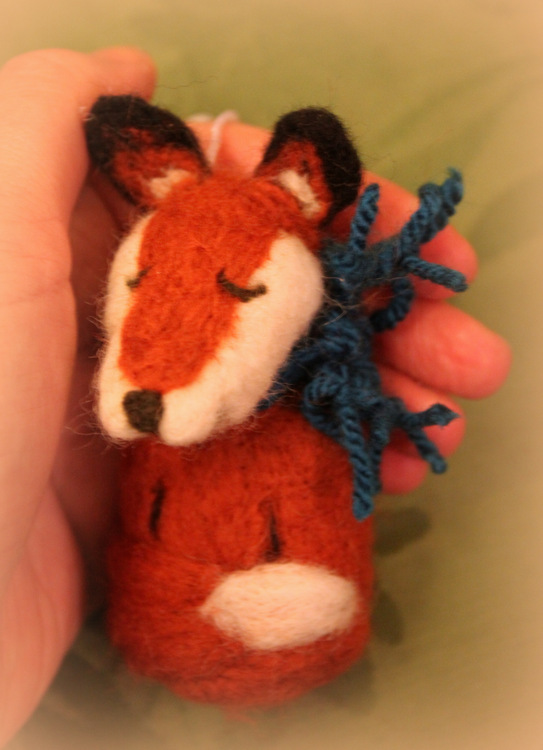
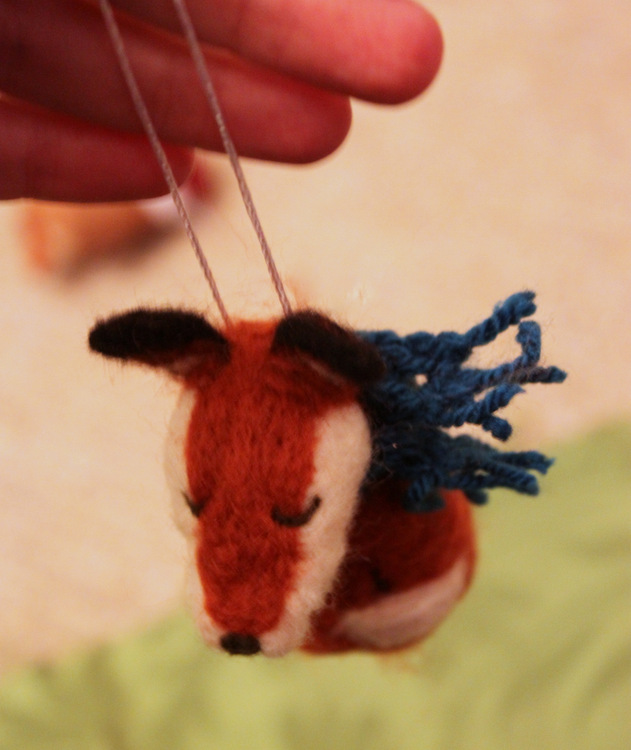
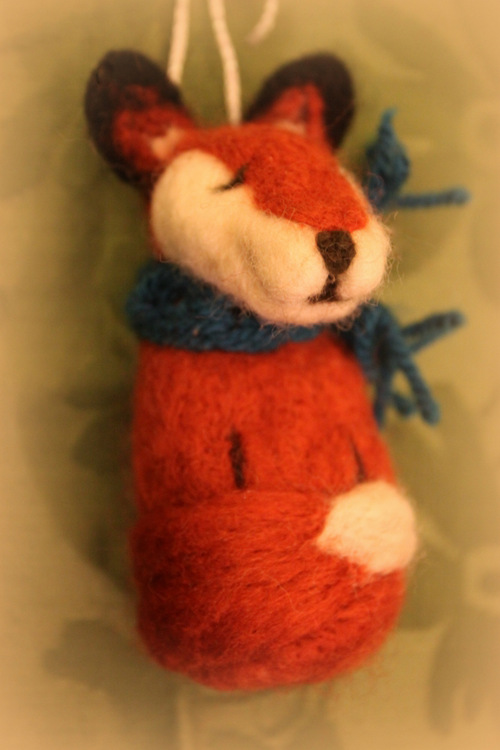
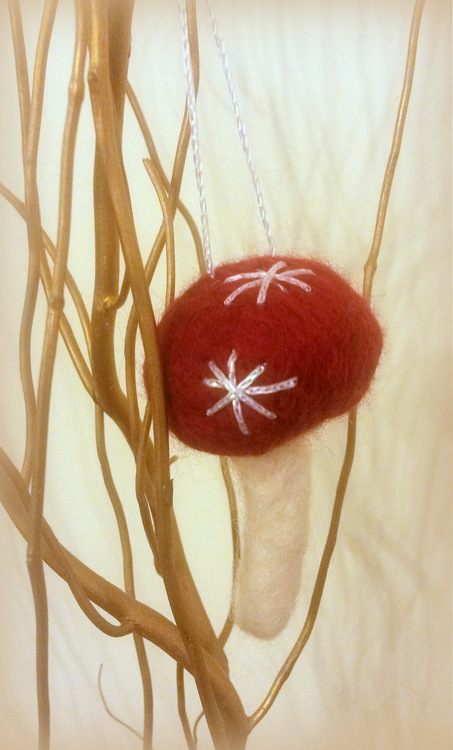
They come as a set of 3 –  sparkle toadstool; sleepy winter fox (with crocheted scarf); and Christmas owl…

They are £9 each or buy the set for £25. They are now up on my Etsy shop so don’t miss out…

woodland

winter fox

winter fox2

11-IMG_3902

fox1

owl2

owl1

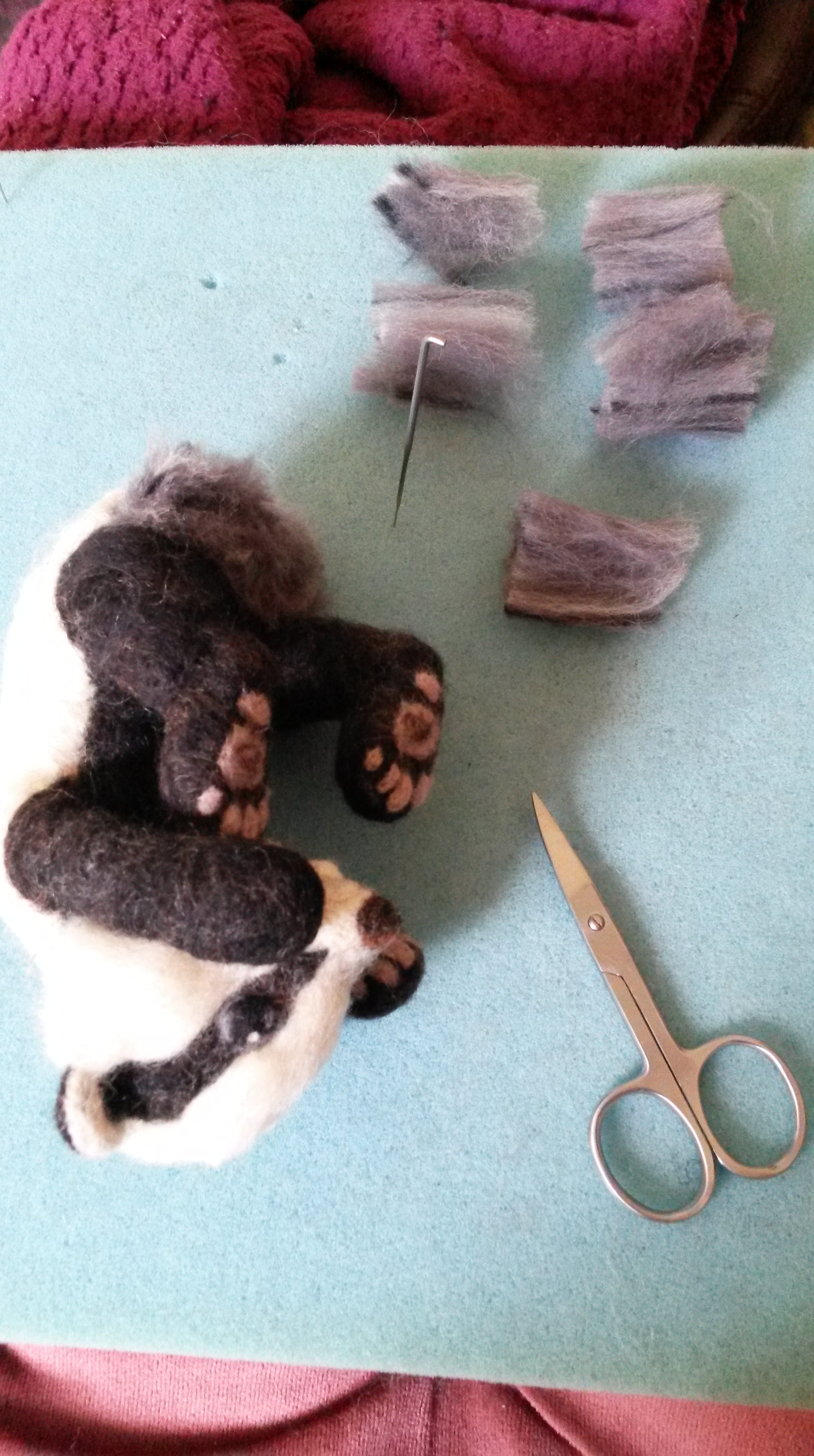
christmas owl

toadstool3

toadstool


toadstool4

toadstool2

For updates on latest Fit to be loved felt products and new tutorials sign up to receive email alerts here (just click ‘follow’ on the right hand panel)…

Beside quiet waters (landscape felting ideas)

Felting is relaxing and fun especially when shared!!

Last week I travelled back to where I grew up; Grantham in South Lincolnshire, to spend a week with my family and catch up with old friends.

I had a relaxing time away from my office job, walked the quaint streets of Stamford and visited the home of the Bakewell pudding in the Peak District. And… you may have guessed  –  (as I am quite addicted to my felting)-  that I also took some of my wools with me to get on with my latest creation.
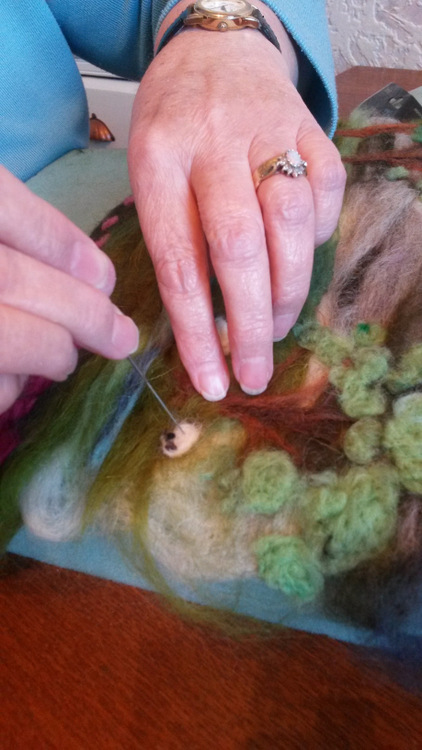
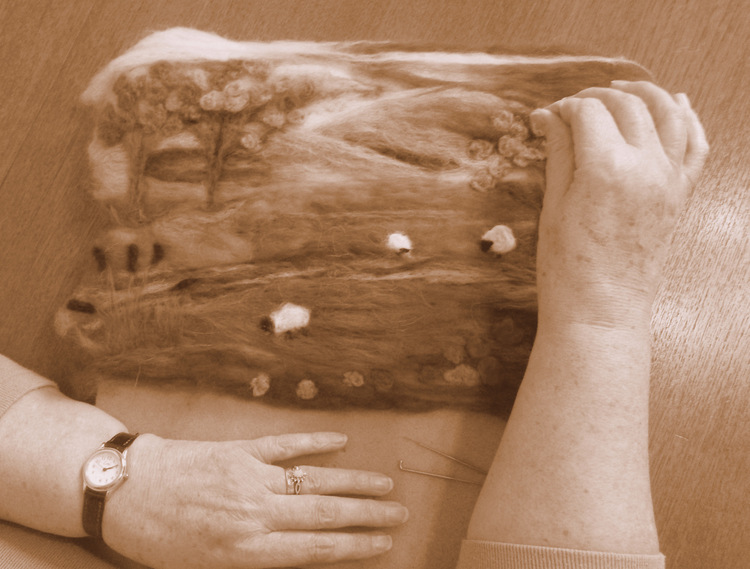
I also had the opportunity to spend one of my days showing my mum some basic needle felting techniques. Felting is not just for times alone just you, the wool and needles and your imagination but is so much fun to do with others – especially for friendship craft days, and in my case family time! for me and my mum, together sharing quality time. 🙂

Haha, my dad peered in from time to time and watched and enjoyed the artistic flair (claiming I got it all from him). They are both artistic!    I think we all can be in so many different ways!

My week was sooooo relaxing and quiet away from the hustle and bustle of the city and work. Home cooked food and love and hugs and then some felting (of course)- all I could wish for in a holiday.

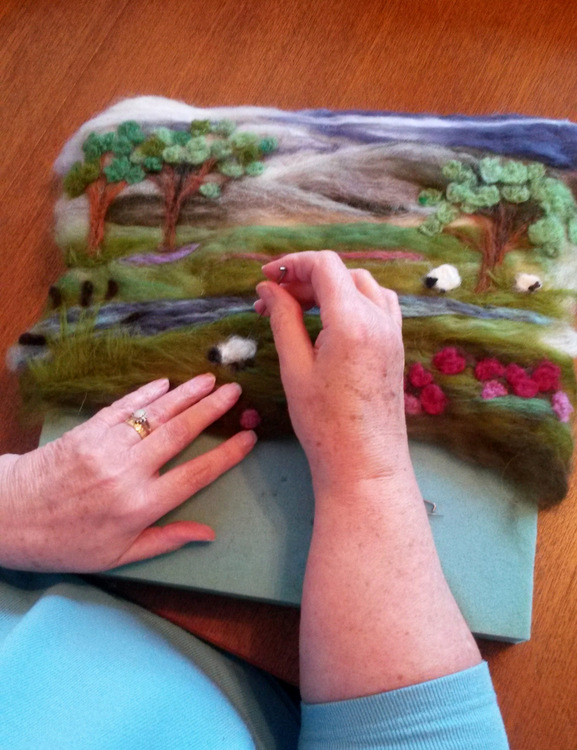
So I wanted to show you some pictures of my mum’s very first landscape piece. My mum is a painter and loves going to her art class each week and produces some beautiful water colour paintings. She loves using colour and really appreciates nature just like me which is illustrated in her work!

So here we go, she needed no help from me after I showed her a few basic hints. I think it is really great. My mum used soft luxurious merino wool from World of wool.
I have named it ‘Beside quiet waters’ as it reminds me of David’s Psalm 23 in the bible and really sums up my week with them. Thanks mum for our time together!

01-Beside quiet waters (2) 03-Beside quiet waters (4)  05-Beside quiet waters (6) 08-Beside quiet waters (9)04-Beside quiet waters (5)02-Beside quiet waters (3)

Mum then painted the sky onto her canvas and stuck the felted piece onto it…. beautiful!!

10-Beside quiet waters (11)

Of course on leaving to come back to London I left some wools and some needles with mum.. can’t wait to see what she makes next…

Gift wrap ideas

Today I want to inspire you with some gift wrapping ideas. I am sure you will agree that packaging is just as important as the product inside.  Presenting your hours of work beautifully in something it deserves…not in a plain boring or tacky wrap or one that shows no effort was made…

But how could my Fit to be loved creations be gift wrapped in Fit to be loved packaging and at an affordable price?

It is really all down to your imagination and what you can get your hands on.

You could buy boxes and luxurious materials but the expense could really soon add up.

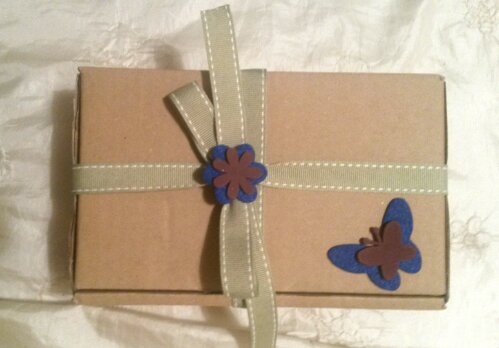
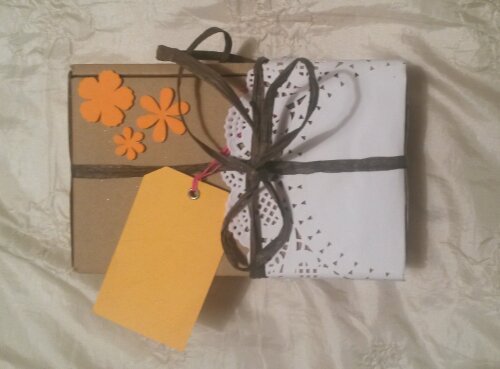
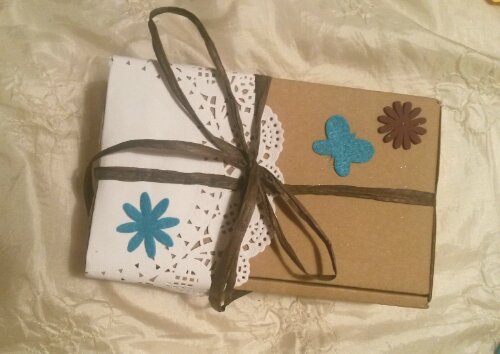
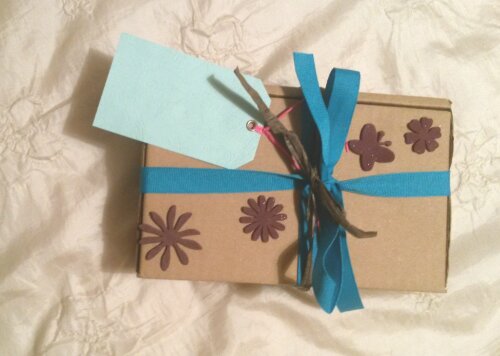
What I want to show you today is how I have been reusing basic brown cardboard boxes (in fact the outer packaging from the crickets I buy on line for my geckos) and upcycling them by adding ribbons, doilies, felt/ polystyrene shapes, string/ twine etc

Here is my most recent box….

image

So simple yet looks lovely!

You can get everything you need for way under a pound for each box if you look in charity shops, car boot sales and cheap stores like pound land, Tiger, Wilkinsons, the Works, sales at greeting card shops…. and the experience of grabbing a bargain is far too much fun to miss out on too!!!

Be creative not just in what you make but in how you package it. Wow your customers or bring a tear to a loved one’s eyes when giving them a gift from the heart…

So here are some more ideas to get you started…

image

image

image

image

image

Remember not to overload but keep simple, colourful and imaginative. That personal touch goes a long way…:-)

Let me know what you think….

If you are buying a bespoke felted animal or accessory from my Etsy shop…let me know what colours you like and I will ensure the gift wrap matches up.:-)

How to needle felt long animal fur

How to needle felt long animal fur

Ever wondered how to get those luscious layers of long fluffy fur on your needle felted animal? more importantly how can you get them to look natural and stay put!?

Whilst making a badger I took some photos of him along the way to show you. It is fairly simple to do but does take quite a long time although once done it does give you a real sense of satisfaction and the fur really does feel soft and fur-like. Of course the end result texture does depend on the type of animal you are felting and the type of wool you wish to use.

If you are new to this amazing art form then before you get started – check out my tutorial ‘what is needle felting’ for basic needle felting techniques.

What wools to choose? 

For my needle felted badger I had already made his body shape by sculpting with natural carded wool. I recommend wool batts which come in long thick sheets, making it easy to pull sections off and the wool is really fast to felt with.

Then for the top coat (which I will be demonstrating in this tutorial) I mixed grey and black merino wool tops with a few strands of some natural undyed wool tops for a rich cream colour. I particularly love the merino sheep wool as it comes in a variety of animal colour options and is lovely and soft to touch. Natural wool tops in breeds such as Jacob or corriedale are quick to felt and are a little more fibrous to the look and feel. When using wool tops the fibres all lay in one direction so they are perfect for cutting lengths and adding these to resemble long fur on your needle felted animal.  If you would like to you could use other luxurious fibres such as baby alpaca.

What tools will you need to attach the fur?

Very simple you just need:

How to needle felt long animal fur (30)

NB I didn’t want to completely flatten my fur down but allow it to stand out with some volume so only used one needle at a time rather than a multi-needle tool and changed my needle depending on detail and thickness of wool being needled. .

As you can see I have completed my badger except for his back fur and tail at this point. For how to make a badger head please see my tutorial here.

How to needle felt long animal fur (2)

How to needle felt long animal fur (30)

I love the fur on a badger’s back, it is greyish in colour but with flecks of black, brown and cream.

How to needle felt long animal fur (3)

Now you could use carding brushes or dog brushes to blend the colours of wool but I wanted to keep the fibres all going in one direction as much as possible at this point and with block strands of full colour in black / cream / grey so not fully blended.

To achieve this lay lengths of each colour on top of each other and then using your thumb and first finger of each hand at each end of the wool lengths, pull your hands apart pulling the wool away from each other. Lay each layer again on top of each other (fibres all in same direction) and keep going until all the wool is blended as much as you want it to be.

How to needle felt long animal fur (28)

How to needle felt long animal fur (6)

How to needle felt long animal fur (4)

How to needle felt long animal fur (5)

How to needle felt long animal fur (8)

How to needle felt long animal fur (7)

Then take narrow strands of the mixed wool the width of one or two fingers

How to needle felt long animal fur (1)

… and cut these into small pieces, roughly the same length. The length will vary as we felt as some areas will have longer fur than others…

How to needle felt long animal fur (10)

They don’t need to be perfect as no badger will have its own hairdresser with a perfect hair cut. 🙂

How to needle felt long animal fur (11)

I will now demonstrate what you will do with each piece..

Take a piece and slightly pull in the centre in a bow-like shape

How to needle felt long animal fur (2)

To layer the fur we need to felt from the back end of the animal layer over layer until reaching the head… so place the first piece at the very bottom of the badger’s rump.

How to needle felt long animal fur (12)

Felt using your barbed needle along the centre parting of the wool piece in various directions, the depth should go down to the first few barbs but the aim is to felt shallow but in many directions for the wool to stay put.

How to needle felt long animal fur (13)

How to needle felt long animal fur (14)

You can also felted slightly below the centre line onto the bottom half of the piece to ensure it is in place.

How to needle felt long animal fur (15)

Now carefully pull down the top section

How to needle felt long animal fur (17)

How to needle felt long animal fur (19)

How to needle felt long animal fur (16)

… and ensure there are no stray edges by encouraging the wool in from both sides..

How to needle felt long animal fur (20)

Now felt along the top folded edge until it is firmly in place.

How to needle felt long animal fur (9)

Felting along the centre and then on the top edge in this way helps the wool to stay in place. Give a tiny tug to check it doesn’t easily pull out. NB a really good tug will likely pull fur out hence why these cute little animals are not meant to be toys to be pulled around…they should take cuddles and some handling though so ensure you felt well.

Again ensure you felt in many directions and then continue on to the next piece…layering the wool to create a fur look..

How to needle felt long animal fur (5)

How to needle felt long animal fur (10)

When moving up to the next layer, position the wool just above the last layer – you don’t want gaps in between of core wool showing so don’t leave too big a gap…

How to needle felt long animal fur (7)

How to needle felt long animal fur (3)

Don’t worry about the fur being too long or tufts sticking out, as you can give the end of the fur a trim as you go (time to use your hairdressing skills :-))

How to needle felt long animal fur (12)

By the way this doesn’t need too much skill and I am definitely no hairdresser, just trim in various directions for a more natural fluffy look.

How to needle felt long animal fur (13)

Any bits you trim off can be used for other felting projects or even for any areas you wish to fill in later at the edges so don’t waste them just put aside in a neat pile for later..

How to needle felt long animal fur (14)

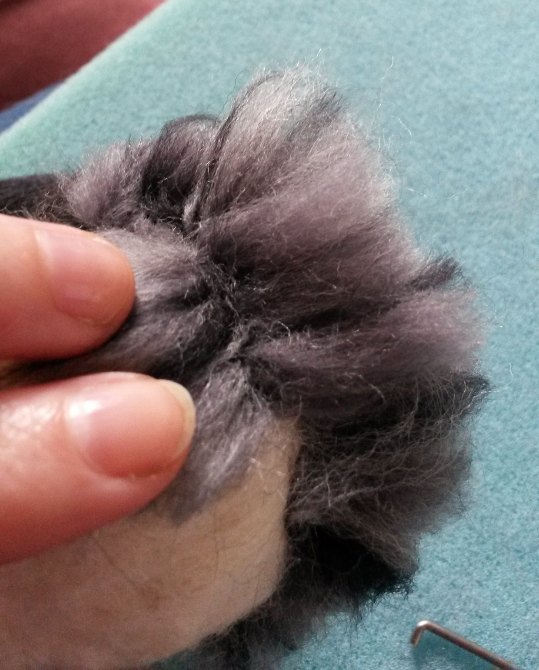
Optional; For the back end of the badger I wanted this to be extra fluffy with the fur standing up slightly on end so to achieve this, run fingers through the strands of wool to fluff up and stab the wool all over between the strands, not to felt down but to fluff up…(

How to needle felt long animal fur (15)

As you can see we have a way to go but we are on our way !!

How to needle felt long animal fur (18)

Aw look at him waiting so patiently to be finished 🙂

How to needle felt long animal fur (17)

You may find it easier to turn his body as you go – work with whatever position you find comfortable and whatever means less squishing of his cute little nose into the felting mat..

How to needle felt long animal fur (19)

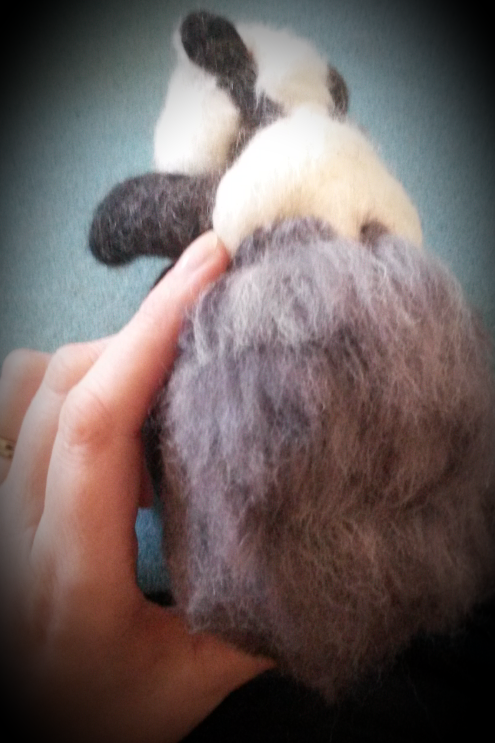
As you reach the main length of his body you may now decide to cut the lengths of wool a bit longer

How to needle felt long animal fur (20)

For a more realistic look vary the colours so that you sometimes get more black or cream in the strand you felt…mix it up a bit..

How to needle felt long animal fur (21)

How to needle felt long animal fur (28)

Keep going…

How to needle felt long animal fur (27)

How to needle felt long animal fur (26)

How to needle felt long animal fur (25)

How to needle felt long animal fur (24)

Almost there… take a breather – have a hot chocolate !!

How to needle felt long animal fur (23)

How to needle felt long animal fur (23)

How to needle felt long animal fur (22)

Specifically for the badger- when reaching the neck line, overlay some strands of black wool at the base of the ears …

How to needle felt long animal fur (24)

Then finish off with some more of the cream at the base of his head..

How to needle felt long animal fur (25)How to needle felt long animal fur (26)

You can use a normal sewing needle now if you wish to carefully fluff up the fur where it may have flattened slightly..

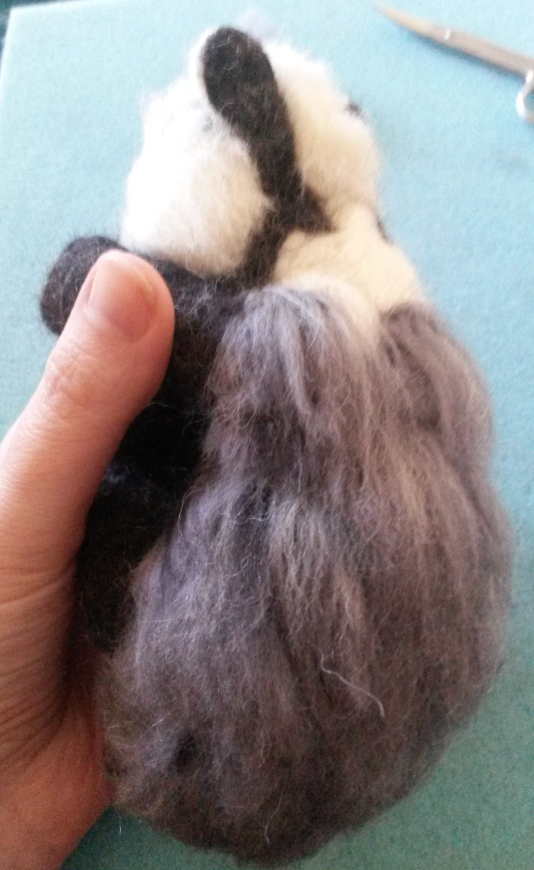
And there you have a gorgeous badger! fully furred waiting to be cuddled and fit to be loved!!

How to needle felt long animal fur (1)

I added his tail after this which also had several layers of wool as fur…

Here he is all completed !! so playful !!

Needle felted badger latest

Long Animal Fur video!

Find it easier to learn by watching how it is done?  

3 My ‘Long animal fur’ video tutorial is NOW AVAILABLE on my YouTube channel in 4 parts.

<<<Click the donkey picture to start watching part 1

 You’ll learn even more techniques for adding long fur (as demonstrated on this adorable miniature donkey).

Did you find this tutorial helpful? What would you like to learn about next? Please leave comments. Why not post a photo of your own creations?

Don’t ever miss out on my latest tutorials! Insert your email address and click the ‘Follow’ button on the right hand panel to receive notifications of when the next post is up..:-)

Needle felted guinea pig!

My good friend Emma recently turned 40 and she absolutely loves guinea pigs so it was very easy to decide what I should make her as a surprise present for her party..

So here he is … a cute bundle of guinea pig fluff!Needle felted guinea pig (38)

As usual I took a few pictures along the way to show you how I made him. With some time, some love, some wool and a barbed needle you too can make a felted guinea pig just like him!

If you haven’t tried needle felting before and would like to know what it is all about and see some basics first, feel free to jump to my ‘what is needle felting’ page first before trying the guinea pig..

Or if you don’t have the time but would love me to make one for you or as a present for a loved one, let me know what colour, fur length etc by sending me a bespoke order at my Etsy shop.

So, to get started you will need:

  • Foam pad or felting brush base (so not to stab your knees and to provide a firm base to work on)
  • Felting needles of various sizes; wider for initial shaping and finer for detail later on
  • A needle holder; this is optional but for making basic shapes it saves time to use 2 or 3 needles at the same time. I use the 3 needle holder pen by Clover.
  • Wool to felt with; I used natural corriedale wool to make the guinea pig’s core as I find it felts well and ends up nice and firm. I then used merino wool as the top coat as it’s soft and comes in some lovely animal fur colours. I buy my wools at a very good price from World of Wool.
  • Small scissors
  • Carding/dog brushes to blend wool (optional)

I hope the pictures will explain what I did at each phase so I haven’t gone into too much description for each picture. Feel free to ask me any questions if you are unsure of how to do anything.

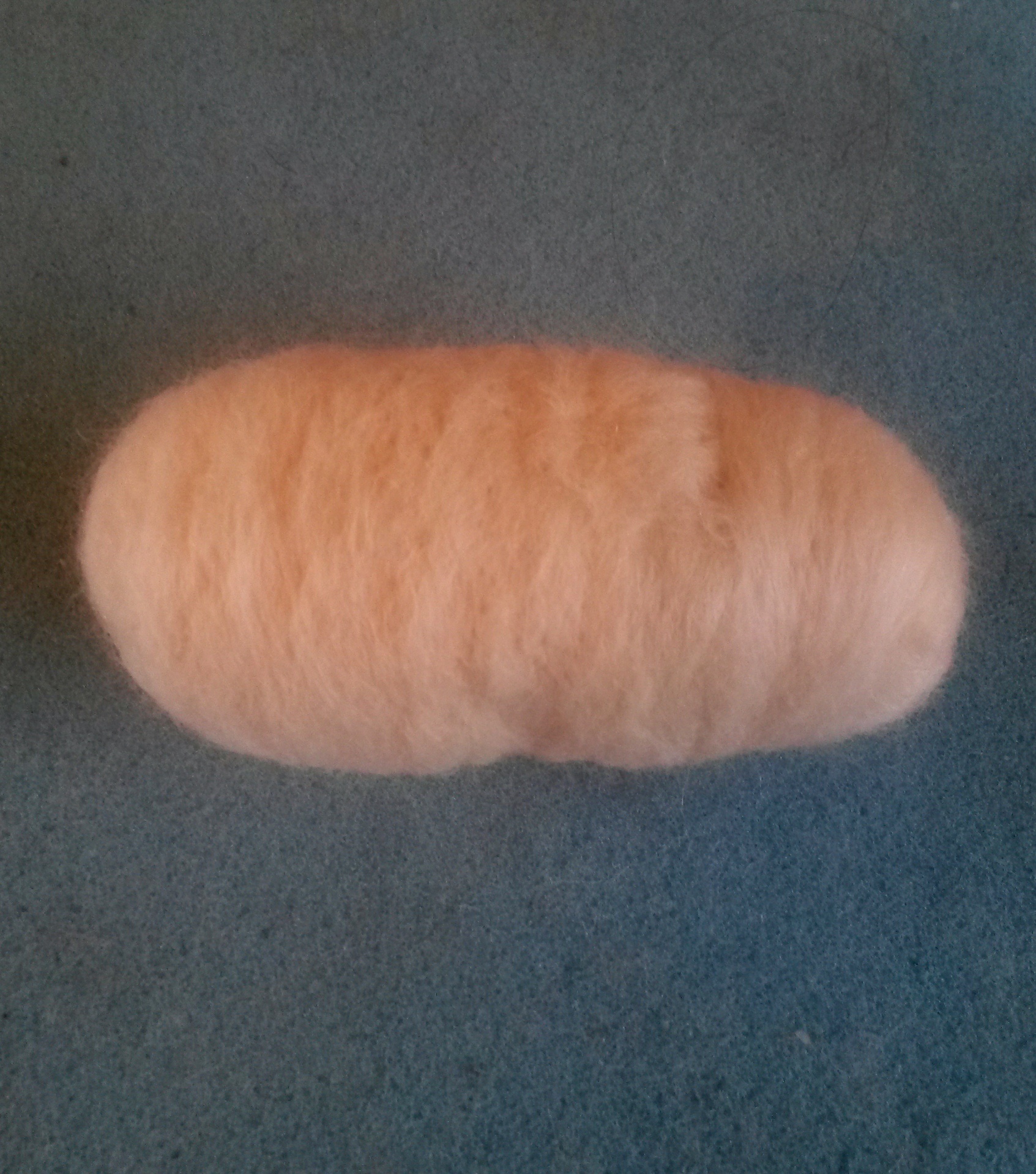
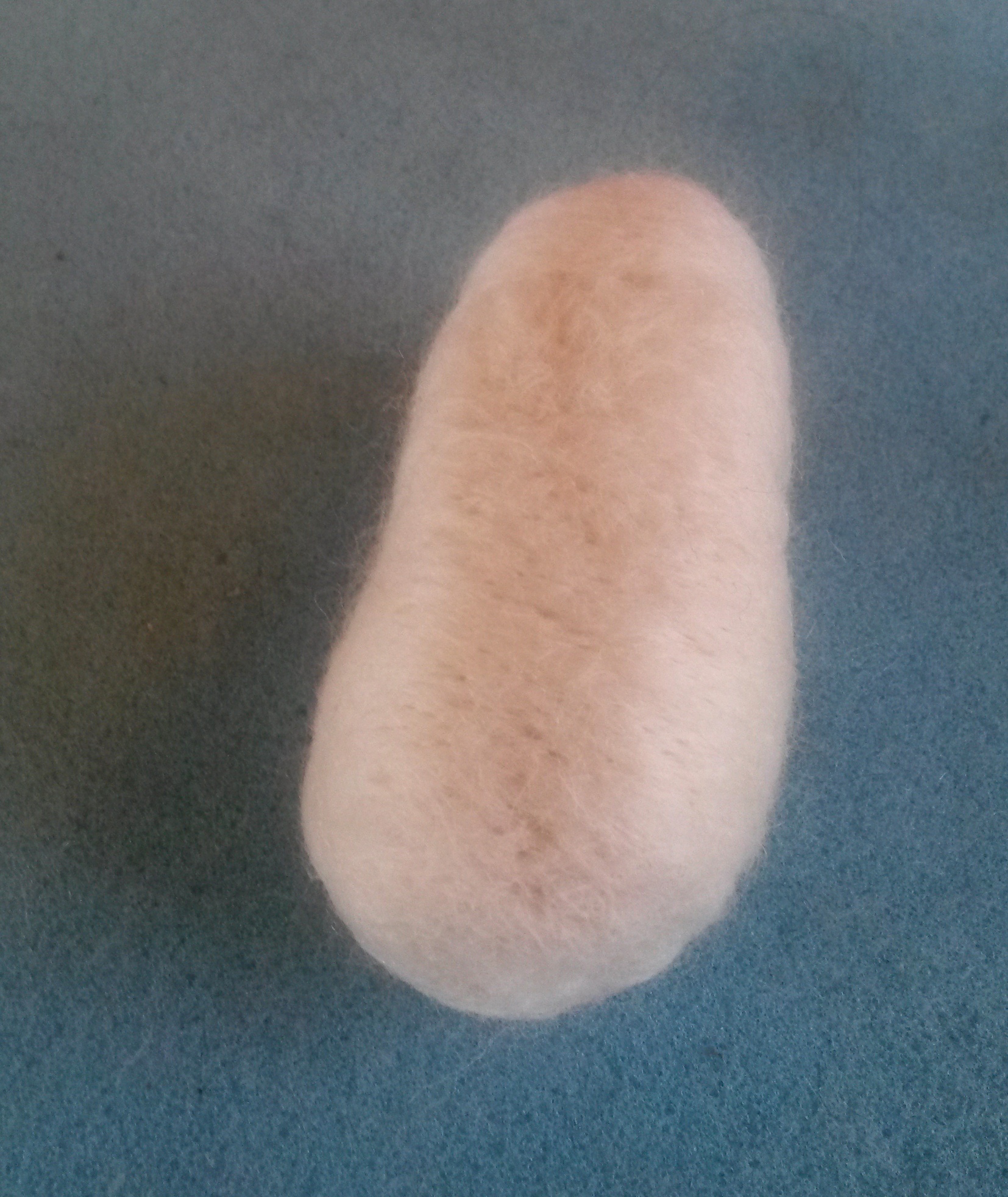
Start with a basic egg shape by rolling tightly a nice length of the corriedale wool and then felting it into shape with medium firmness. This will become the torso.

Needle felted guinea pig (7).

Felt more at one end and use hands to carefully sculpt one end slightly narrower (to become the head end)Needle felted guinea pig (8)

Roll two equal sized pieces of woolNeedle felted guinea pig (16)Needle felted guinea pig (9)

Fold and felt them into doughnut shapesNeedle felted guinea pig (10)

Then felt them well onto the sides of the torso at the bottom end to become hind legs

Needle felted guinea pig (11)

Make sure they look even both sidesNeedle felted guinea pig (12)

Add and felt over some small tufts of wool to make the edges softer where the limbs join where neededNeedle felted guinea pig (13)

… especially around the rumpNeedle felted guinea pig (14)

Then turn over and do the same underneath for an even well blended finish.

Needle felted guinea pig (15)

Take two more pieces of wool but this timeNeedle felted guinea pig (16)

…fold to form two triangles

Needle felted guinea pig (17)

Felt onto the sides of the chest end and mould to form fore legsNeedle felted guinea pig (18)

Again check the legs are equal or you can position one slightly in front of the other to provide a more natural pose.Needle felted guinea pig (19)

Put the body to one side and roll another piece of wool and form a smaller egg shape. Felt medium firm again and then sculpt to make into a head shape. Score a nose and mouth using two needles at one time

Needle felted guinea pig (20)

The shape is fairly similar to a rabbit head shape…add any wool where needed to accentuate the jaw line and cheeksNeedle felted guinea pig (21)

Now attach the head firmly to the body. I felted a good piece of loosely felted wool to the bottom of the head first so when attaching there were lots of fibres to help attach it and this helped to form a neck.

Needle felted guinea pig (24)

Needle felted guinea pig (25)

Needle felted guinea pig (26)

You now have a guinea pig base!!

Now comes the fun (but tedious at times) of adding some wool colour in layers to give him his character.. I mixed some wool together to get the colours I liked, one part corriedale wool and two parts light chocolate brown merino wool. I used two dog brushes to blend the wool (so much cheaper than carding brushes and they work just the same!).

Needle felted guinea pig (27)

Start from the tail end (although guinea pigs don’t have tails)and work towards the head. Felt some wool in the same direction but some in other directions and with different lengths too to get a more natural look!

Needle felted guinea pig (28)

Needle felted guinea pig (29)

When you reach his head add two small doughnut shapes of coral coloured wool for his ears and felt them in well to fix to his head. I decided to give him a cream coloured face with cream tuft on top of his head but you choose whatever colour you fancy. For the head start at the very top with the fur layers and work down towards the chin.

Add more detail to the nose with the brown and a tiny bit of black for his mouth opening. To make him look like he has rummaged around in the hay felt a tiny fleck of brown under the cream fur on his muzzle . For any layers that are too long or for shaping the fur on the face, used nail scissors to carefully trim the wool.

Needle felted guinea pig (30)

(I went back and added a strip of the cream across his middle taking care to pull back the layers of brown already felted..)

Needle felted guinea pig (7)

Here you can see his eyes; brown overlaid with black and a few tiny white dots to give the illusion of light reflection.

Needle felted guinea pig (31)

You could leave him with no feet but I decided to give him some. Remember guinea pigs have 4 toes on each foot at the front and 3 at the back!

To achieve this use short lengths of pipe cleaners for his toes and wrap the coral coloured wool over each toe binding the pieces together at one end. Then wrap several layers of the wool over the end to form the ball of the foot. Wind more wool over the length of each foot and felt tightly to ensure all fibres are secure.. then felt them to the legs!!

Needle felted guinea pig (5)

Needle felted guinea pig (1)

Go over the entire surface of your guinea pig with a normal sewing needle if needed to liven up any flattened areas of fur!

Squeeeeeeeeeee!!

I hope you enjoyed the tutorial!! it was fun to make him and my friend Emma almost cried when she saw him at her party! 🙂

Watch out for more tutorials and creations and follow my blog to receive emails of when new posts are up so you don’t miss out.

Check out my other tutorials; how to make a bunny and how to make a badger head and view other Fit to be loved felted creations at my Etsy shop.

and please do get in touch if you have any ideas of what you would like me to make next!

Needle felted badger!

Needle felted badger!

Finally this weekend I finished needle felting my little badger!

Thank you to those of you who voted on facebook or twitter for the next felted British animal of your choice! there were some great suggestions! The badger however was the obvious favourite and it is understandable why!

Badgers are just so adorable and at the moment they need all the help they can get….so here he is !!! he is a very happy and playful young badger and ‘fit to be loved!’

Needle felted badger (17)Needle felted badger (8)

Needle felted badger (9)Needle felted badger (12)

Needle felted badger (11) Needle felted badger (10)    Needle felted badger (16)   Needle felted badger (15) Needle felted badger (5) Needle felted badger (4) Needle felted badger (13)Needle felted badger (6) Needle felted badger (3) Needle felted badger (2) Needle felted badger (1)   Needle felted badger (18) Needle felted badger (23)Needle felted badger (20) Needle felted badger (22) Needle felted badger (21)  Needle felted badger (19)

This little needle felted badger, just like all my other pieces is made of 100 % wool (a mix of merino and corriedale) and took many hours of labour but tonnes of love to give him his cute playful character.

He will soon be for sale in my Etsy shop and 20% of his sale price will be donated to the Badger Trust who are ‘working hard to help badgers, by tackling the threats they  face, promoting their interests, and by providing vital help for around 60 local badger protection groups across England and Wales’.

For those who would like have a go at making your own needle felted badger -see my previous post which shows you step by step how to start off with a badger head.

Never miss out on a blog update! – add your email address here!

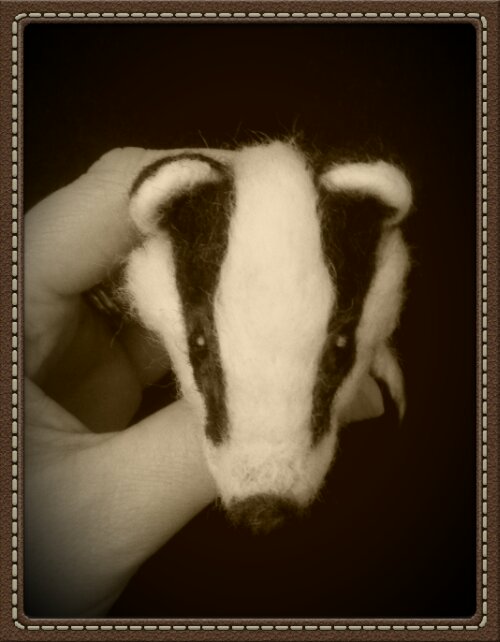
How to needle felt a badger head; photo tutorial

How to needle felt a badger head; photo tutorial

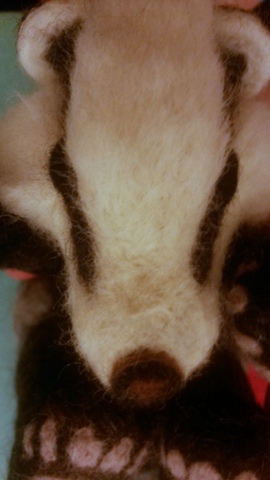
Our beautiful badgers of Britain are getting a lot of coverage in the media at the moment. I could go on about how so unfair the cull is (which is my personal view). However this blog is not at this time to tell you my thoughts on this as a lover of nature and a conservationist but to celebrate this amazing creature and show you how you can start to create your own little badger from a few pieces of wool (some undyed and dark brown corriedale and some merino in grey, brown and black). All you need is some wool, a foam pad, a few barbed felting needles, some love and some time!

My decision to make a badger for my next needle felting project came as a result of me asking friends on Facebook and Twitter to vote for their choice of British animal for me to make. There were lots of fun ideas (including woodlice and caddis fly larvae) but the badger came top!

I started on 1st September and it just so happened that this week has been the start of the cull in certain parts of the country.

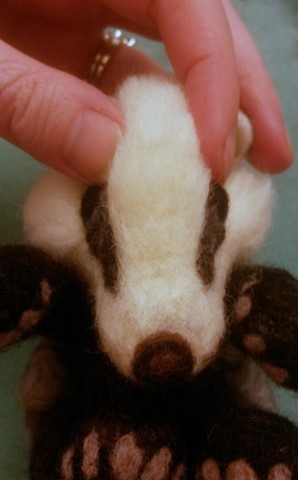
No matter what you think of the cull I am sure if you have arrived at this page you are fascinated by the uniqueness of the badger with its playful, inquisitive nature and amazing stripey face which of course makes this needle felting project extremely enjoyable especially when you have felted in the badger’s big alluring eyes which give him so much character and bring him to life!

I have taken pictures along the way so you can see how I went from ball of wool to badger head.

Why just a head tutorial? My completed badger will be revealed soon. I find the head is a good place to start and can be fixed to the body shape or positions of your choice -your badger could lay on its back or stand or sit. Will it hold something? You could just keep to a head as a brooch or wall plaque. It’s up to you!

The following assumes you know some felting basics. You may also prefer to do certain facial features in a different order so this is just a guide. I use 2 to 3 needles at the same time to quickly felt larger surfaces and use only one slimmer needle for details and attaching parts.

Start with core wool to make an oval shape. I use undyed corriedale wool.

image

Add a second triangle shaped piece to the top of the oval length ways. This will form the forehead and nose area. Keep edges of the triangle rounded.

image

Needle in the shape and add small tufts to help blend harsh edges. Aim for a skull shape. Needle more in the nose section to form a good slope.

image

Add two slim oval shapes for cheeks and blend edges well.

image

While felted medium soft, use hands to mould head into shape, narrowing the nose area to a nice rounded point. Bend nose up slightly at the end. Then needle away to keep the shape in place.

image

Add a small oval to form a nose, and one to become a chin then using one needle start adding some badger detail. Make a slight indent where each eye will go.

image

Shape the badger’s nose and mouth, adding more wool to define roundness of top lip where needed.

image

image

Add a smile!

image

Badgers vary in colour but I chose a mixture of black and brown (seen on left of photo)for my badger’s dark facial colours (result of my mix is on the right).

image

Add the dark colour (shallow needle in various directions) to make the badger’s stripes.

image

image

Keep comparing each side to check they are more or less equal. Leave slits where eyes will go.

image

Add some dark brown with black nostril detail.

image

image

Add some colourful mouth features.

image

Form some round ears and add colour.

image

image

Then fix his ears in place…. aww now he is really looking like a little badger! Take a breather and just admire!

image

You could now add his eyes and he would be a juvenile badger with short badger fur and cute face….

image

But to make a fuller more adult face… You will need to layer some wool as fur… It is time consuming but well worth it as you’ll see…

image

image

image

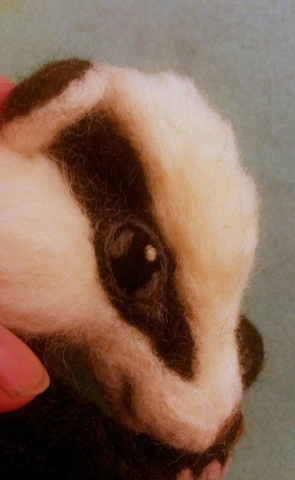
So then to add to his character, give him some nice big badger eyes. Well hello cutie!!! I used a blob of black wool rolled into a ball for each eye. Then added tiny strands of grey around the eye to define it. A blob of white at top of eye to give reflection illusion like a real eye and grey blobs elongated at right and left of each eye ball to make the eye appear more rounded and reflecting light.

image

image

Tiny bit of brown at the inner eye corner and on the nose as a final bit of detail. I also added tiny wool strands in brown around his nose and mouth to give that natural ‘just rummaged through the undergrowth’ look!

imageimage

Have a go! I certainly had fun making this little badger. See the finished badger here and sign up to receive emails of when new posts are up so you don’t miss out on any upcoming tips and tutorials.

Check out my other tutorials and view other Fit to be loved felted creations at my Etsy shop.

As quiet as a mouse!

So I really have kept ‘as quiet as a mouse’ about this one!!

I made this little mouse as a surprise birthday present for my mum (who I love beyond words).

IMG_3584

Yesterday my mum, dad and sister came to visit Ade and I for the day all the way from Lincolnshire and we celebrated my mum’s 65th birthday! She wasn’t too pleased though at receiving cards with ’65’ on them. …Mum you are beautiful and do not look your age at all, you have a young heart and I love you!

Mum just loves seeing the odd picture texted to her of my needle felt creations as I usually can’t wait until the final finished product to show her how I am getting on. She often sees my latest creations not looking like very much and often without ears and legs or fur… but loves them all the same.:-)

When making her mouse it has been so hard not to tell her or show her a photo. She didn’t expect it and of course was so excited to be given a box on her birthday and find this cute (in her words) little mouse inside!

Her little mouse is saying ‘I love you’, with a flower in his right hand and left hand on his heart. He is lovingly hand-made from 100% wool.

IMG_3595

Mum really does love him and to see the teary but smiley look on her face has made the wait and the time to make him all worthwhile..

It was her and my dad who gave me my name Amanda which means ‘fit to be loved’. The journey of accepting and growing into the meaning of my name was the inspiration behind the name of my needle felting business ‘fit to be loved’ and my hope is that all my felted creations like this little mouse are as the name suggests ‘fit to be loved’. Read more about me and the name here.

IMG_3598

His core is made of natural undyed Corriedale wool from New Zealand. His fur and detail on his cute mousey paws, ears and face are of soft merino wool (non-mulesed) from South Africa (Cape) – chocolate brown, mink, raven and coral. I used coarser wools in purple and grass green for his flower to contrast with the soft contours of his body. You can see his size from the close up of me holding him in my hand. His eyes are made of wool too, so no glass or plastic but all 100% wool!

IMG_3604

IMG_3602
Do you have a birthday for a loved one coming up? need a gift idea to say ‘I love you’ ? You can buy one just like him or another bespoke animal of your choice from my etsy shop.

To follow my blog and receive email updates about latest fit to be loved creations and tutorials, simply enter your email address on the top right panel of my ‘find out more’ page.

Needle felting a bunny; Photo tutorial

Needle felting a bunny; Photo tutorial

Today I just want to share some photos with you to give you a taster of the various stages that went in to needle felting my latest bunny. I haven’t photographed everything but stopped at various times along the journey to take a shot. Please also see here for more detail of how I made his ears. It doesn’t matter too much about what order you add each limb or ears or facial features. It is fun to experiment with different ways of doing things. You will soon find out what works best for you.

I have found though that whenever you add the eyes your creation immediately gains personality and you also get a tiny break from all the time consuming needle action. I love doing the eyes and ears best.

imageBasic ball to start for bunny head. Core corriedale wool.

imageAdding cheeks and face shape

imageAdded torso.

imageAdditional layer in mink coloured merino wool to form base fur.

imageShoulders and thighs firmly felted

imageBlue and grey merino wool mixed then shallow felted to become bunny fur.

image

imageLeaving his tummy in mink.

image

Preparing feet

imageCute bunny paw detail

imageFeet firmly attached

imageMore Wool added to give shape and smooth contours

image

Nose and mouth coming to life

imageComparing with my original bunny to check size and proportions, angle of feet etc

image

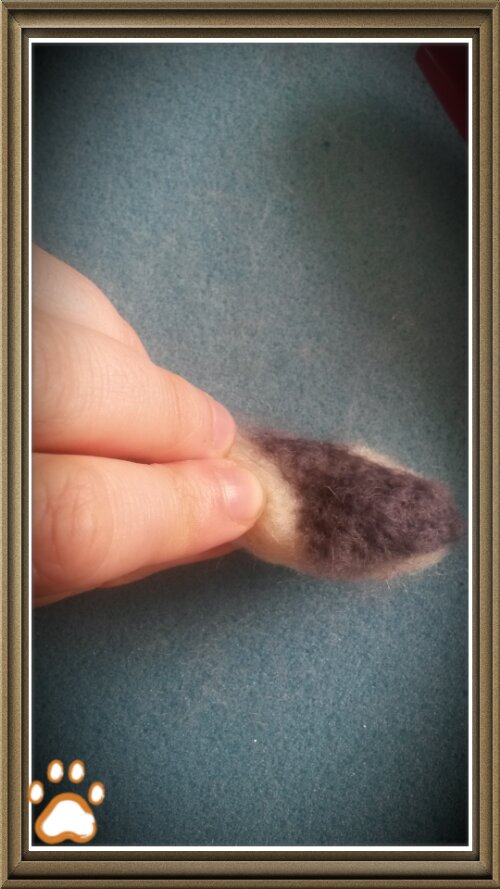
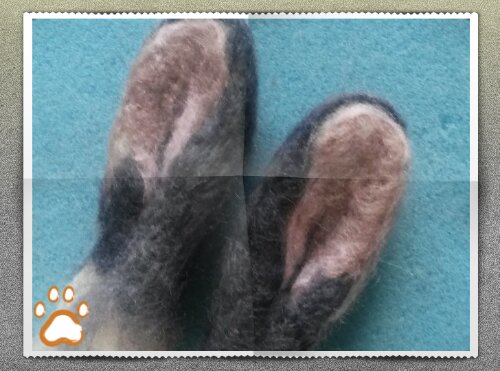
Forming ears.  See more about making ears in a tutorial here.

image

image

image

imageEars fixed

image

imageEyes alert

image

Can’t resist a cuddle

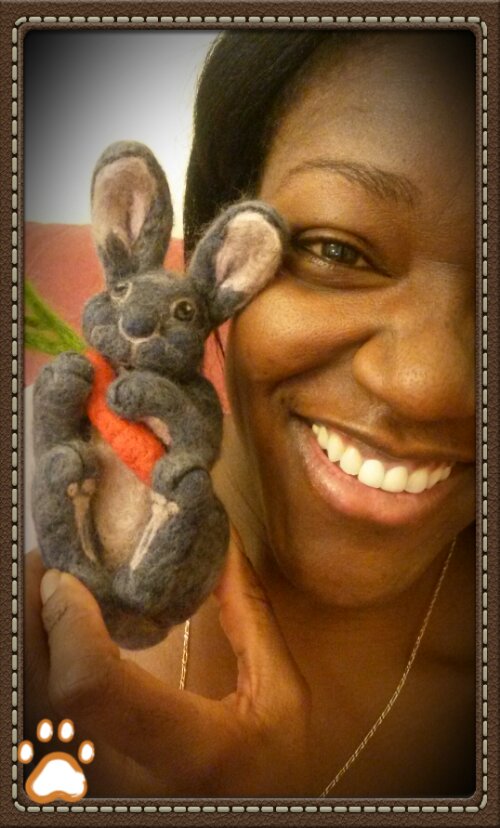
imageFront paws and holding a carrot.

imageMy sister in law popped by, bunny made her smile 🙂

imageAdventure for bunny in the garden for nature’s backdrop!

To see more pictures of this cute bunny and to order one as a gift just like him for someone you love, please visit my Etsy shop.

To follow my blog and receive email updates about latest fit to be loved creations and tutorials, simply enter your email address on the top right panel of my ‘find out more’ page.